Tea Basics
Water Temperature for Tea: The Right Heat for Every Type
Get the right water temperature for every tea type, from green to black. Includes a full brewing temperature chart in °C and °F.
Get the temperature wrong and it doesn't matter how good your tea is. Boiling water ruins green and white teas. Water that's too cool produces a weak, flat cup of black tea. Temperature is probably the single most controllable variable in home brewing, and most people never think about it past "hot."
The short answer: black and herbal teas want fully boiled water (100°C/212°F), oolong sits in the middle (85–95°C/185–203°F), green tea wants 70–80°C (158–176°F), and white tea is happiest around 75–85°C (167–185°F). Pu-erh and most roasted teas can take a full boil. Read on for the reasoning, the full chart, and how to hit these temperatures without any special equipment.
Why Temperature Matters More Than You Think
Tea leaves contain three main groups of compounds that dissolve at different rates: caffeine, catechins (including the bitter EGCG in green tea), and aromatic compounds responsible for floral or grassy notes.
Catechins and Bitterness
Catechins are aggressive extractors at high heat. In a green tea like sencha, boiling water pulls them out so fast the cup turns harsh and astringent within 30 seconds. Drop to 75°C and they extract slowly enough that sweetness and umami have time to come through. This is why green tea water temperature is treated so carefully in Japanese brewing traditions.
Caffeine Extraction
Caffeine is water-soluble across a wide temperature range, but it extracts faster at higher temperatures. If you're sensitive to caffeine, a cooler brew actually reduces your intake slightly, since you'll pull less caffeine in the same steeping time.
Aromatics
Volatile aromatic compounds are fragile. Very high heat can drive them off before they ever make it into your cup. White teas and lightly oxidized oolongs in particular have delicate floral aromatics that survive better at moderate temperatures.
Tea Brewing Temperature Chart
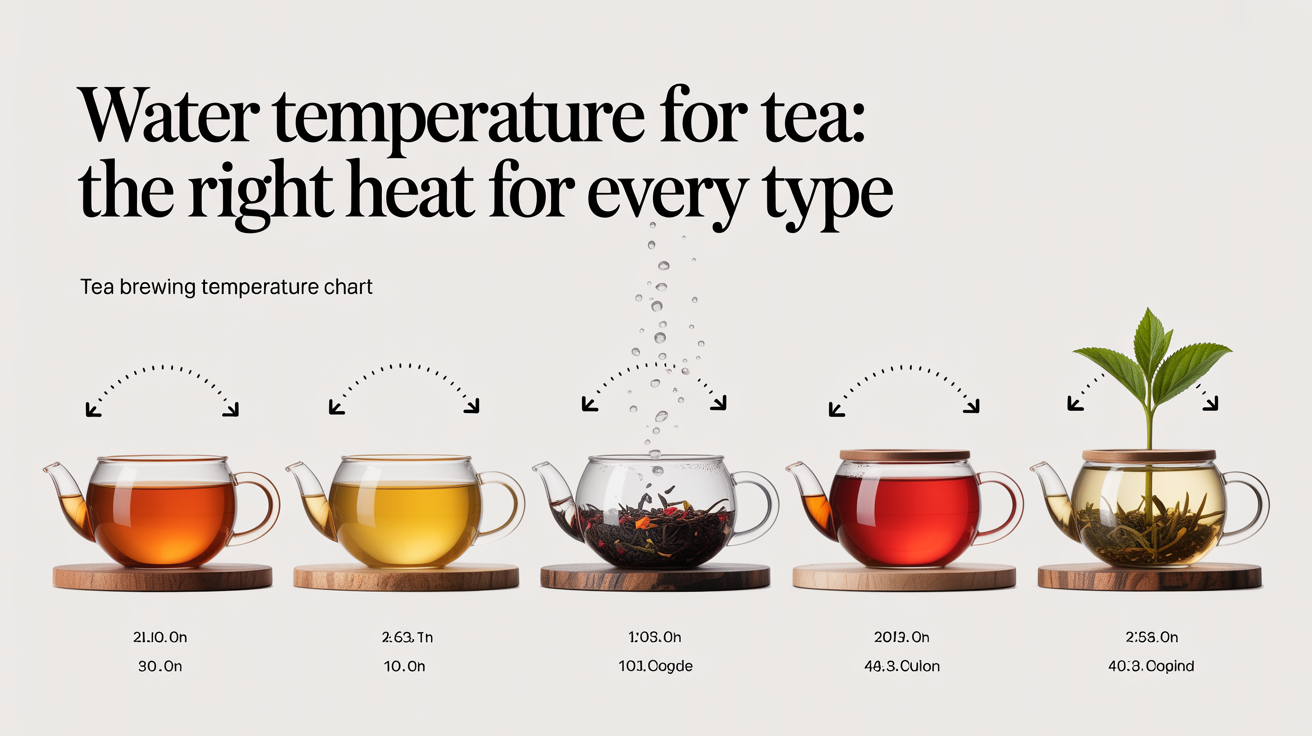
Use this as a reference. The ranges exist because individual teas vary. A heavily roasted oolong handles heat that would wreck a light jade oolong.
| Tea Type | Temperature (°C) | Temperature (°F) | Notes |
|---|---|---|---|
| White tea | 75–85°C | 167–185°F | Cooler for delicate silver needle; warmer for shou mei |
| Green tea (Japanese) | 70–80°C | 158–176°F | Gyokuro as low as 60°C / 140°F |
| Green tea (Chinese) | 75–85°C | 167–185°F | Dragon Well / Longjing handles slightly higher heat |
| Yellow tea | 75–85°C | 167–185°F | Treat like a light Chinese green |
| Light oolong | 85–90°C | 185–194°F | Tie Guan Yin, High Mountain Ali Shan |
| Dark / roasted oolong | 90–95°C | 194–203°F | Wuyi rock oolongs, Da Hong Pao |
| Black tea | 95–100°C | 203–212°F | Assam, Darjeeling, Ceylon, Keemun |
| Pu-erh (ripe/shou) | 100°C | 212°F | Full boil; rinse the leaves first |
| Pu-erh (raw/sheng) | 90–95°C | 194–203°F | Older raw pu-erh can handle full boil |
| Herbal / tisane | 100°C | 212°F | Roots and bark especially need full boil |
| Rooibos | 100°C | 212°F | Not a true tea; needs boiling for full flavor |
A few things this chart won't tell you: steeping times and leaf-to-water ratios interact with temperature. Cooler water generally means you can steep longer without bitterness. Hotter water extracts faster, so shorten the steep.
How to Hit the Right Temperature Without a Thermometer
A variable-temperature kettle solves this cleanly. Set it to the target and pour. If you don't have one, you have two reliable options.
The Cool-Down Method
Boil your kettle. Then:
- Pour the boiling water into your teapot or cup and wait.
- At sea level, water in an open vessel drops roughly 3–5°C per minute.
- For 80°C, wait about 4–5 minutes after boiling. For 70°C, wait 7–8 minutes.
- Pouring through a cold strainer or into a pre-warmed cup first takes off another 3–5°C instantly.
It's imprecise but workable. If you brew green tea daily, get a cheap probe thermometer (under $10) and check a few times until you know how long your specific kettle and vessel take to cool.
Using a Variable Kettle
Variable kettles let you set a target: 70°C, 80°C, 85°C, 95°C. They're worth the investment if you drink anything other than black tea or herbal. The ones with a "hold" function keep temperature stable for 30–60 minutes, which matters for multiple infusions in gongfu-style brewing.
Reading Visual Cues (the Old Way)
Traditional Chinese brewing used water movement as a temperature guide. This is genuinely useful once you've watched your kettle boil a few times:
- Small bubbles forming on the bottom: ~70–75°C
- Rising strings of bubbles, slightly hazy: ~80°C
- Larger rolling bubbles starting: ~85–90°C
- Full rolling boil: 100°C
Visual cues require watching a clear kettle (many stovetop kettles work; most electric ones don't). Take them as rough guides, not precise readings.
Common Temperature Mistakes
Most temperature errors fall into a few patterns:
- Pouring straight from a boiling kettle onto green or white tea. This is the most common mistake. The leaves scorch, and bitterness sets in within 30 seconds.
- Using tap water that's only "hot," not actually at temperature. Hot tap water is typically 40–55°C, which won't properly extract black tea or herbal blends. You'll get a weak, grassy cup.
- Letting the kettle sit for 20+ minutes and assuming it's still hot enough. Water in a kettle cools faster than most people expect, especially if the kitchen is cold. If you've walked away and come back, re-boil (or reheat to target).
- Using the same temperature for every tea in a collection. If you're drinking both Japanese greens and Assam in the same week, you need different approaches. Keep a simple note on what each tea needs.
- Reboiling water multiple times. Reboiling concentrates minerals and can produce a flat, slightly off taste. If your kettle has cooled down and you're starting a new session, empty it and refill with fresh water.
Learning to adjust temperature is also worth it when your tea tastes wrong. If a green tea that usually tastes fine suddenly seems bitter, the water was probably too hot. If it tastes thin and grassy, it wasn't hot enough, or you didn't steep it long enough.
For more on building a complete brewing method, how to brew loose-leaf tea covers the full process from equipment to pouring.
Frequently Asked Questions
What is the best water temperature for green tea?
For most Japanese green teas (sencha, gyokuro, matcha), 70–80°C (158–176°F) is the target. Gyokuro specifically benefits from going as low as 60°C (140°F) to bring out its characteristic sweetness. Chinese green teas like Dragon Well tolerate 80–85°C (176–185°F) without bitterness.
Can I use boiling water for black tea?
Yes. Black tea is fully oxidized and can handle 95–100°C (203–212°F). In fact, water that's cooled too much produces a weaker, less full-bodied brew. For Darjeeling first flush, some people prefer 90–95°C to preserve its lighter, muscatel notes, but for everyday Assam or Ceylon, full boil is fine.
How hot should tea water be for herbal teas?
Most herbal teas and tisanes should be brewed with fully boiled water (100°C/212°F). Roots, bark, seeds, and dried fruit need high heat to release their flavor and any active compounds. Chamomile and mint are softer and can handle slightly cooler water (90–95°C), but full boil won't hurt them.
Does water temperature affect caffeine content in tea?
Yes, but not dramatically within normal brewing ranges. Higher temperatures extract caffeine faster. A cup of green tea brewed at 70°C for 2 minutes will have somewhat less caffeine than the same tea brewed at 85°C for 2 minutes. The difference is real but modest, and steeping time matters as much as temperature for caffeine levels.
What if I don't have a thermometer or variable kettle?
The simplest method: boil your kettle, let it sit open for 4–5 minutes for green tea temperatures, or 1–2 minutes for oolong. Pour into a pre-warmed vessel to drop another few degrees. It's not precise, but green tea is the most temperature-sensitive, and you'll get close enough to avoid the burnt bitterness of boiling water. If you drink green tea regularly, a cheap digital thermometer is a worthwhile addition to your setup.