Tea Basics
How to Brew Loose-Leaf Tea: A Complete Beginner's Guide
Learn how to brew loose-leaf tea at home with the right tools, temperatures, ratios, and steep times for any tea type.
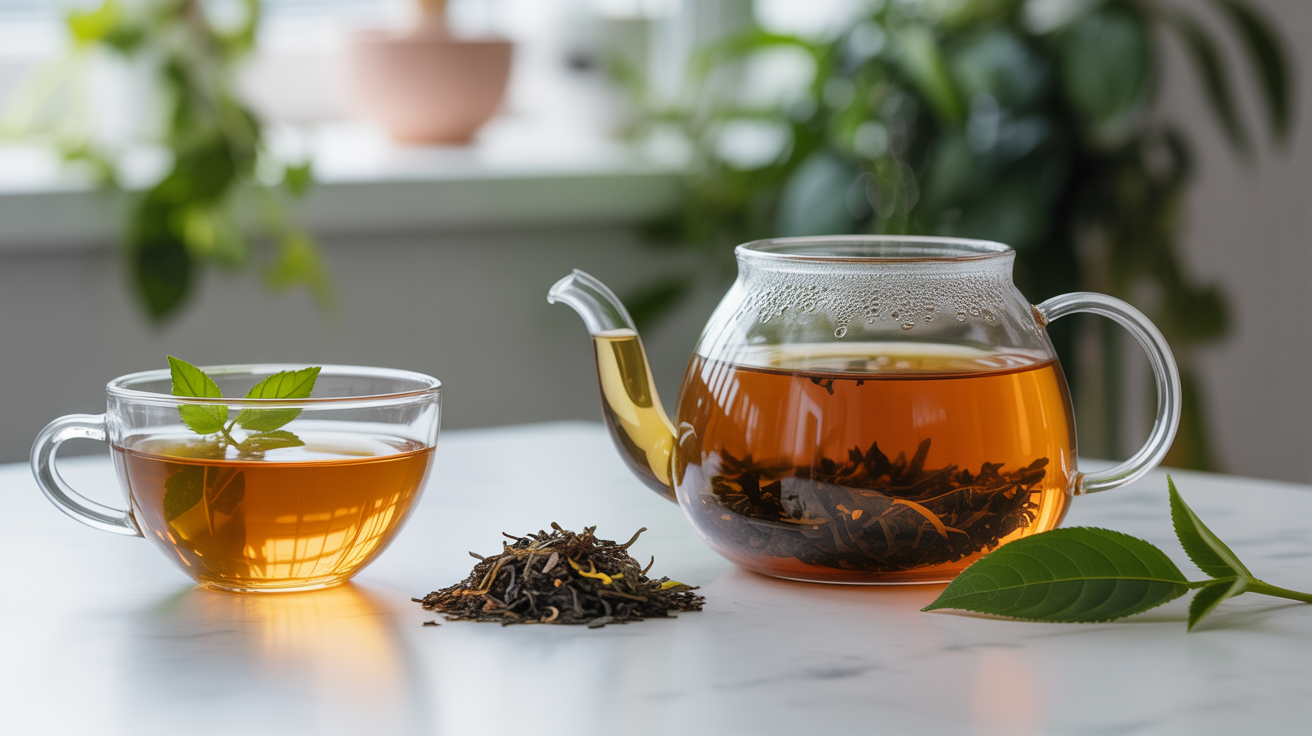
Brewing loose-leaf tea is easier than most people think. You need a few basic tools, some water at the right temperature, and a feel for how long to steep. That's the whole thing.
This loose tea brewing guide covers everything from the gear you need on day one to the small adjustments that separate a flat cup from a genuinely good one. No tea ceremony required.
What You Need to Get Started
You don't need to spend much to brew loose-leaf tea well. Here's the core kit:
- Infuser or strainer. A fine-mesh basket infuser that sits inside your mug works for most teas. A gaiwan (a lidded Chinese brewing bowl) is great for oolongs and greens. Avoid ball infusers with large holes; small leaves slip through and make a gritty cup.
- Kettle. A variable-temperature kettle is worth buying if you drink green or white teas regularly. Boiling water scorches delicate leaves. If you only have a standard kettle, let the water cool for 2–4 minutes after boiling before pouring.
- Scale. Optional but useful. A cheap kitchen scale lets you measure by weight (grams) rather than guessing with a teaspoon.
- Timer. Your phone works fine. Steep time matters more than most beginners expect.
A thermometer helps too, though you'll get a feel for temperature quickly enough that it becomes optional.
Water Temperature: The Variable Most Beginners Skip
Water temperature affects how fast compounds extract from the leaf. Too hot, and you pull bitter tannins before the sweeter, more complex flavors have a chance. Too cool, and the cup tastes flat and thin.
Different tea types need different heat. Robust black teas and herbal infusions handle boiling water. Green teas and white teas need cooler water, usually 70–80°C (158–176°F). Oolongs fall in the middle.
The detailed breakdown is in the water temperature guide, but the table below gives you the essentials:
| Tea Type | Water Temperature | Steep Time | Leaves per 250 ml |
|---|---|---|---|
| White | 70–75°C / 158–167°F | 2–3 min | 2–3 g |
| Green (Chinese) | 75–80°C / 167–176°F | 1–2 min | 2 g |
| Green (Japanese) | 70–75°C / 158–167°F | 1–1.5 min | 3 g |
| Oolong (light) | 80–85°C / 176–185°F | 2–3 min | 3–4 g |
| Oolong (dark) | 90–95°C / 194–203°F | 3–4 min | 4–5 g |
| Black | 95–100°C / 203–212°F | 3–5 min | 2–3 g |
| Pu-erh | 95–100°C / 203–212°F | 3–4 min | 3–5 g |
| Herbal / Tisane | 100°C / 212°F | 5–7 min | 3–5 g |
These are starting points, not rules. Your preference for strength and your specific tea both matter.
Leaf-to-Water Ratio
The standard starting ratio for most teas is 1 gram of leaf per 50 ml of water (roughly 2 g per 250 ml cup). That's a 1:50 ratio and it works well for black and oolong teas.
Green and white teas are lighter in character, so you can go slightly higher, around 2–3 g per 200 ml, to get a cup with presence. Japanese greens like gyokuro are often brewed at 1:20 or even 1:15 with small amounts of water and very short steeps.
If a tea tastes too strong, use less leaf or steep for less time. If it tastes watery, use more leaf before you reach for a longer steep, since longer steeps also extract more bitterness.
The leaf-to-water ratios guide goes deeper on this, including how to adjust for broken or fannings-grade loose leaf versus whole leaves.
How Long to Steep Loose-Leaf Tea
Steep time controls strength and bitterness. The two mistakes beginners make are steeping too long and not repeating steeps on good-quality tea.
Most black teas are ready in 3–4 minutes. Go past 5 minutes and the cup becomes astringent. Green teas often need only 60–90 seconds, especially Japanese varieties. White teas can go 2–4 minutes without going bitter because they're processed gently.
Good loose-leaf tea handles multiple infusions. A high-quality oolong or silver needle white tea can give 3–5 cups from the same leaves, with each steep tasting slightly different. Add 30–60 seconds to each successive steep.
See the steeping times reference for a full breakdown by tea family.
Step-by-Step: How to Brew Loose-Leaf Tea
Here's the actual process, start to finish, for a standard cup.
1. Heat Your Water
Fill your kettle and heat to the right temperature for your tea type. If using a standard kettle, boil and let it sit: 1 minute for black tea, 2–3 minutes for oolong, 4 minutes for green and white.
2. Preheat Your Cup
Pour a small amount of hot water into your mug, swirl it, and discard. This keeps the water temperature from dropping the moment it hits cold ceramic. It's a small step that makes a real difference with green teas especially.
3. Measure Your Leaves
Aim for 2 g per 250 ml as a baseline. If you don't have a scale, a loose teaspoon works for most teas, though rolled oolongs are denser and need closer to a tablespoon.
Place the leaves in your infuser or directly in the vessel if you're using a gaiwan or teapot with a built-in strainer.
4. Pour and Steep
Pour the water over the leaves, not the other way around. Set your timer. Don't guess.
For green tea, start with 90 seconds on your first try. You can always steep longer next time.
5. Remove the Leaves
Pull out the infuser or pour the tea into a separate vessel when the timer goes off. Leaving the leaves in the water means the tea keeps extracting and will turn bitter within minutes.
6. Drink and Adjust
Note what you got and tweak next time. Too astringent? Lower the temperature or shorten the steep by 30 seconds. Too light? Add more leaf or steep slightly longer. Keep adjusting until the cup is what you want.
Common Mistakes When Brewing Loose-Leaf Tea
Knowing how to brew loose leaf tea is one thing. Knowing what trips people up early is another.
- Using boiling water for green tea. This is the most common one. Boiling water on a delicate green leaf extracts chlorophyll breakdown products and bitter catechins fast. The result tastes harsh and grassy in a bad way. Use 75–80°C and the same tea tastes clean and slightly sweet.
- Steeping too long. A timer is not optional. Two extra minutes on a black tea changes the whole cup.
- Packing the infuser too tight. Leaves need room to expand. A ball infuser stuffed with rolled oolong pellets leaves them no room to open, so they under-extract. Use a bigger basket, or brew in a teapot.
- Using tap water when it's chlorinated. Heavily chlorinated water dulls the flavor of most teas. Filtered water makes a noticeable difference, especially with lighter teas.
- Judging the tea by one brew. Your first attempt with a new tea is a calibration run. Adjust and try again before writing off a variety.
Frequently Asked Questions
Do I need a special teapot to brew loose-leaf tea?
No. A mug with a fine-mesh basket infuser works for everyday brewing. A teapot or gaiwan gives you more control and is better for multiple infusions, but it's not where you should start. Get comfortable with a simple infuser first.
Can I reuse the same leaves more than once?
Yes, and you should with quality tea. High-grade oolongs, white teas, and pu-erhs are designed for multiple infusions. For each additional steep, add 30–60 seconds to the steep time. Most teas give 2–4 good infusions; some premium oolongs give 6–8.
Why does my green tea always taste bitter?
Almost always a temperature issue. Green tea brewed at 100°C will be bitter every time. Drop to 75–80°C and check your steep time, keeping it under 2 minutes for most Chinese greens and under 90 seconds for Japanese. If it's still bitter, try using slightly less leaf.
How do I store loose-leaf tea?
Keep it in an airtight container, away from light, heat, and strong smells. A tin or opaque jar on a shelf away from the stove is fine. Avoid clear glass jars on windowsills. Most teas stay fresh for 6–18 months stored properly. Pu-erh is an exception; it can age for years.
Is loose-leaf tea stronger than tea bags?
Not necessarily. Loose-leaf tea is often higher quality and more nuanced, but "strength" comes down to how much leaf you use and how long you steep. A bag steeped for 5 minutes in boiling water will produce a stronger, more tannic cup than a short steep of light-roast oolong. Leaf grade matters more than the format.