Matcha & Whisked
Usucha vs. Koicha: Thin and Thick Matcha Explained
Usucha is frothy everyday matcha; koicha is dense, smooth, and ceremonial. Learn the ratios, techniques, and grades that set them apart.
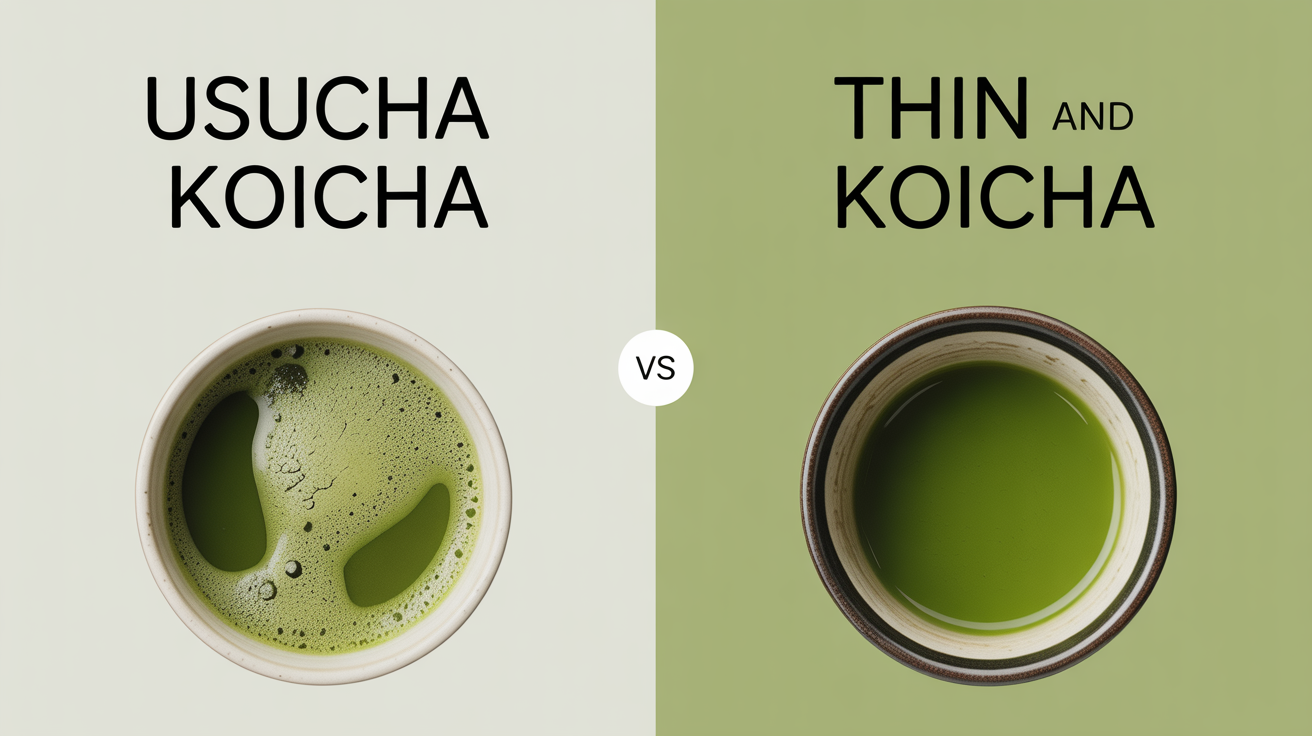
Usucha is a thin, frothy bowl of matcha made with a higher water-to-powder ratio, while koicha is a thick, smooth preparation using far more powder and very little water. Most home brewers make usucha without knowing it has a name; koicha is rarer, requires higher-grade powder, and demands a different hand entirely.
What Usucha Is (and Why It Is the Everyday Style)
Usucha translates roughly as "thin tea." It is what most people picture when they think of a bowl of matcha: a small ceramic bowl, a bamboo whisk, and a vibrant green froth on top.
Standard ratio: 1.5 to 2 grams of matcha (about one chashaku, the bamboo scoop) to 60 to 70 ml of water at around 75 to 80 C (167 to 176 F).
The goal with usucha is a light, even foam covering the surface. You whisk briskly in a W or M motion, keeping the tines of the chasen close to the surface rather than plunging them deep. The result is a slightly bitter, grassy, bright cup that most people find approachable.
For a detailed walkthrough of the usucha method, see how to make matcha: a step-by-step guide.
Usucha is the style served at most tea ceremonies outside of formal gatherings, and it is the right starting point for anyone new to matcha at home.
What Koicha Is (and How It Differs)
Koicha means "thick tea." The preparation uses roughly three to four times as much matcha powder with a similar or slightly smaller volume of water. That shift in ratio changes everything about the drink: its texture, flavor, and preparation technique.
Standard ratio: 3 to 4 grams of matcha (roughly three level chashaku) to 40 to 50 ml of water at 75 to 80 C.
Where usucha is frothy and light, koicha is dense and smooth. There should be no foam at all. The surface of a well-made bowl of koicha looks almost lacquered, with a deep, saturated green that pulls toward olive.
The taste is intense and rich, with a long, lingering sweetness and almost no bitterness when made with high-quality powder. The texture sits somewhere between a thick soup and a smoothie. Many people find it surprisingly sweet rather than harsh, provided the matcha grade is correct.
Comparing Ratios, Technique, and Grade Side by Side
Here is a quick reference for the two preparations:
| Usucha (thin) | Koicha (thick) | |
|---|---|---|
| Matcha powder | 1.5 to 2 g | 3 to 4 g |
| Water volume | 60 to 70 ml | 40 to 50 ml |
| Water temperature | 75 to 80 C / 167 to 176 F | 75 to 80 C / 167 to 176 F |
| Whisk motion | Brisk W/M strokes, surface foam | Slow kneading, circular strokes |
| Target texture | Light, frothy | Smooth, no foam |
| Matcha grade needed | Ceremonial or entry-level ceremonial | High-grade ceremonial only |
| Bitterness | Mild to moderate | Low when grade is right |
Whisking Thin vs. Kneading Thick
This is where the technique diverges most noticeably.
For usucha, you whisk fast and light, aiming to incorporate air. The chasen tines should never quite touch the bowl bottom, and you keep your wrist loose. A good bowl of usucha has a fine, consistent foam on top.
For koicha, there is no whisking in the usual sense. The powder and water are so concentrated that vigorous whisking would create unwanted bubbles. Instead, you move the chasen in slow, broad circular strokes, pressing the tines gently through the paste and folding it rather than aerating it. The motion is closer to kneading bread dough than beating eggs.
This slower technique takes practice. If bubbles appear, slow down. The aim is to fold and combine until the surface goes smooth and glossy.
For guidance on getting a lump-free result in either style, see how to whisk matcha without lumps.
The Grade of Matcha Required
Grade matters far more for koicha than for usucha.
Usucha is forgiving enough that a mid-range ceremonial powder works well. The higher water ratio dilutes any harsh or vegetal notes, and the foam softens the perceived bitterness.
Koicha is unforgiving. Because the ratio concentrates every quality of the powder, any bitterness, off notes, or astringency comes through clearly. Low-quality ceremonial grades that taste acceptable as usucha can turn gritty and harsh in thick tea.
For koicha, you want matcha from the first harvest (ichibancha), typically labeled as "ceremonial grade" from a reputable producer. The leaves should be shade-grown for at least three to four weeks before picking, which drives up L-theanine and chlorophyll while bringing down astringent catechins.
Bright, vivid green color is a good sign. Dull or yellowish powder usually indicates oxidation or a lower-grade blend.
For more on how to read grade labels before buying, see ceremonial vs. culinary matcha: which one to buy.
How to Make Koicha at Home
Koicha is simpler to prepare than it looks, but the sequence matters.
What you need:
- 3 to 4 grams of high-grade ceremonial matcha
- 40 to 50 ml of water at about 75 to 80 C (let boiled water cool for a few minutes, or use a temperature-controlled kettle)
- A wide chawan (tea bowl) with enough room to work
- A chasen (bamboo whisk)
- A fine-mesh sifter
Steps:
- Sift the matcha directly into the bowl. This removes clumps before they can form a lumpy paste.
- Add roughly half the water. Begin folding with the chasen in slow, circular strokes, working the powder into a smooth paste.
- Add the remaining water in one slow pour. Continue the circular folding motion.
- Once the surface is smooth and no dry powder remains, stop. Do not whisk for foam.
- Serve immediately. Koicha does not hold its texture once it sits.
The bowl should be warm before you begin. Rinse it with hot water and dry it quickly. A cold bowl cools the concentrate fast and makes the paste harder to work.
Koicha is traditionally paired with a small sweet (wagashi) served before drinking. The sweetness offsets the intensity of the tea and is worth keeping even in a casual home setting.
Be careful with the hot water: steam and water at this temperature can scald, so pour slowly and keep your hands clear.
Flavor and Texture: What to Expect
Usucha tastes green, slightly grassy, mildly bitter, and sometimes a little vegetal depending on origin. The foam creates a soft, light texture at the lips. It is bright and refreshing.
Koicha tastes rich, smooth, sweet, and full-bodied. A good bowl has an umami depth that lingers for minutes. There is almost no foam, and the liquid coats the mouth like a thin syrup. The bitterness is much lower per sip than usucha, largely because high-grade powder is used and the tea is sipped slowly in small amounts.
The two drinks are different enough that someone who dislikes the bitterness of usucha sometimes prefers koicha, and vice versa. It is worth trying both before assuming one is simply a stronger version of the other.
Frequently Asked Questions
Can I use the same matcha for both usucha and koicha?
You can use a high-grade ceremonial matcha for both. However, you should not use a culinary or mid-grade matcha for koicha. The concentration amplifies any off notes. If your matcha is only labeled "ceremonial" without further detail, taste it as usucha first. If it comes across as bitter or astringent, it will be worse in koicha.
Does koicha have more caffeine than usucha?
Yes, per bowl. Because you are using roughly twice the powder, the caffeine per serving is higher. A bowl of koicha made with 4 grams contains more caffeine than a bowl of usucha made with 2 grams. That said, koicha is typically consumed in smaller sips and less frequently than usucha.
Why does my koicha have bubbles on the surface?
Bubbles mean the chasen is moving too fast or the tines are catching air on the upstroke. Slow down and keep the motion smooth and circular, staying close to the surface rather than lifting the chasen out of the liquid with each pass. A pre-warmed bowl also helps the paste stay workable longer.
Is koicha only for formal tea ceremonies?
Koicha has deep roots in formal Japanese tea ceremony (chanoyu), but there is no reason it cannot be made at home on any occasion. The main barrier is sourcing high-grade matcha and practicing the folding technique. Outside of a ceremony context, there are no rules about when or how to enjoy it.
What kind of bowl works best for koicha?
A wide, deep chawan with a relatively flat base gives your chasen room to work without knocking the sides. Koicha is traditionally prepared and drunk from the same bowl, so a wider shape makes the folding motion easier and allows you to see the surface clearly as you work. Very narrow or tall bowls make the kneading stroke awkward.