Matcha & Whisked
Ceremonial vs. Culinary Matcha: Which One to Buy
Ceremonial or culinary matcha? Here's what the grades actually mean, how quality varies, and which to buy for your cup or latte.
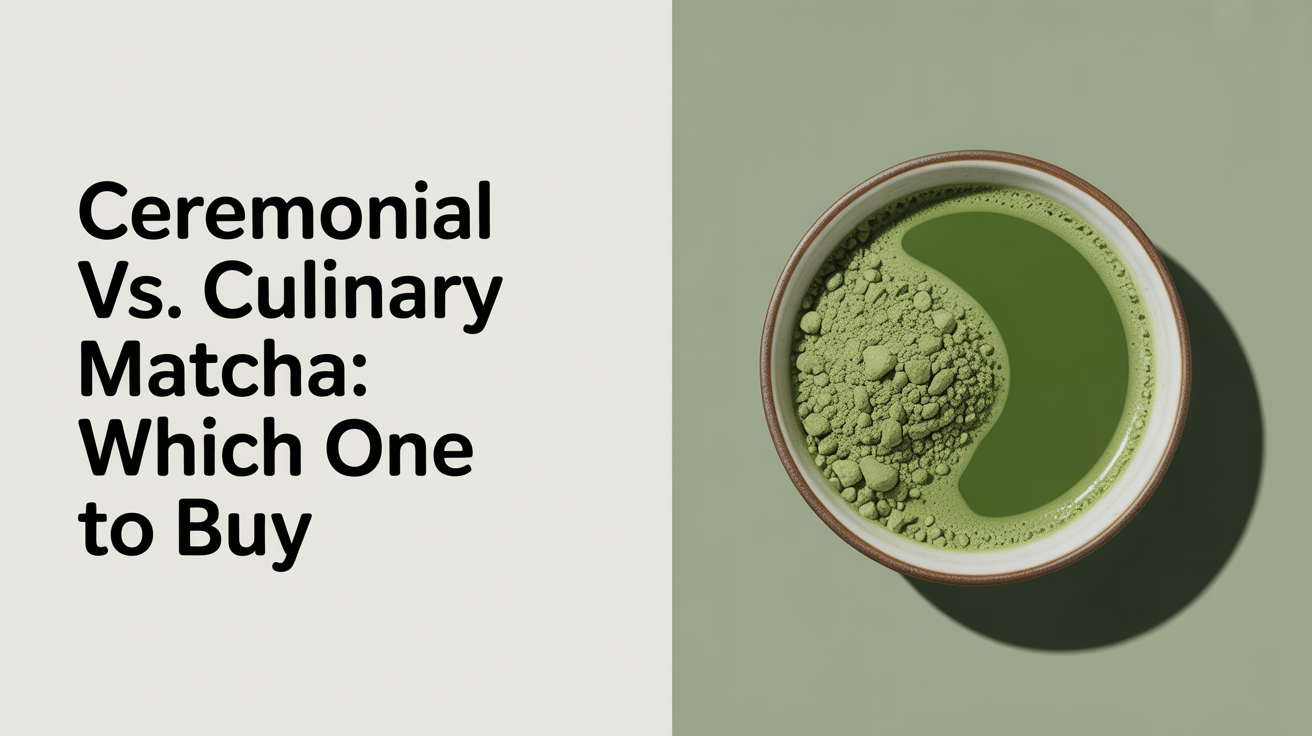
The short answer: if you're drinking matcha straight, whisked with water alone, buy ceremonial grade. If you're making lattes, smoothies, or baked goods, culinary grade is the smarter spend. That's genuinely most of the decision. The longer answer involves a bit of label skepticism, because "ceremonial" and "culinary" are marketing terms, not regulated standards, and the gap between a decent culinary grade and a mediocre ceremonial can be smaller than the price difference suggests.
Here's what actually matters when you're comparing the two.
What "Grade" Really Means (and What It Doesn't)
No official body governs matcha grades. A Japanese tea farm can label any product ceremonial grade; so can a bulk powder reseller in a warehouse in New Jersey. The terms exist to signal quality tiers to consumers, and they do roughly track real differences, but the label alone proves nothing.
What the grades are trying to describe is a combination of harvest timing, leaf selection, and processing. First-flush leaves picked in early May from shade-grown plants produce the sweetest, most amino-acid-rich matcha. Later harvests or lower-canopy leaves produce coarser, more bitter powder. Ceremonial grade is supposed to be the former; culinary grade covers everything else. In practice, producers set their own cutoffs.
When you see matcha grades explained on a product page, read past the grade label and look for: harvest date (or season), cultivar if listed, and region. That information is more reliable than a grade name.
Ceremonial Grade: What It Is and When It's Worth It
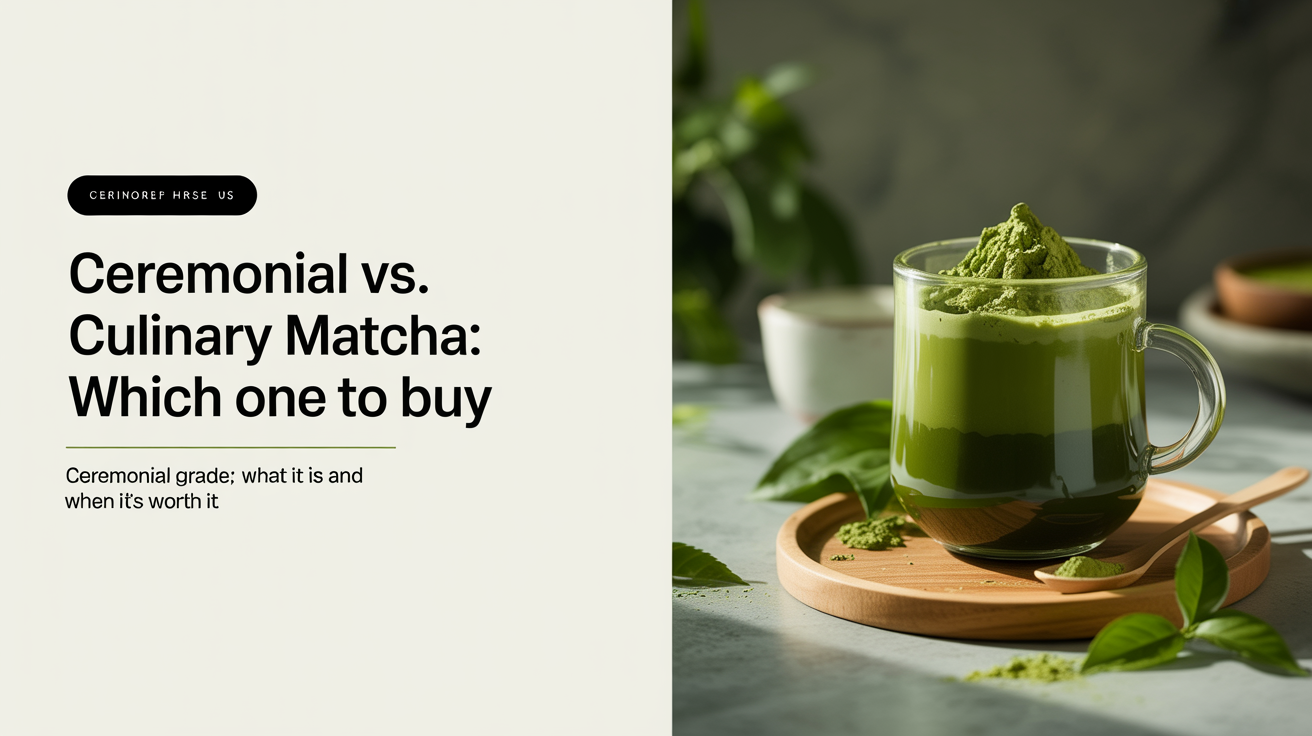
What is ceremonial grade matcha? It's first-harvest, shade-grown tencha leaves that have been stone-ground into a fine powder. The flavor profile is grassy, slightly sweet, and low in bitterness, which makes it pleasant to drink plain, whisked with nothing but hot water.
The umami comes from L-theanine, an amino acid that builds up in leaves grown under shade cloth for three to four weeks before harvest. Blocking sunlight forces the plant to produce more chlorophyll and amino acids. That's the mechanism behind the vivid green color and the mellow flavor.
When ceremonial grade makes sense
- You're drinking matcha traditionally, whisked into hot water, no milk or sweetener.
- You're following a practice similar to what you'd do in a Japanese tearoom, where bitterness would be a flaw, not a quirk.
- You're learning how to make matcha for the first time and want to understand what the tea actually tastes like on its own.
The drawback is price. Genuine ceremonial grade from a reputable Japanese source runs roughly $25-$40 for 30g, sometimes more. At that cost per gram, using it in a latte, where milk and sweetener will obscure the nuance, makes little sense.
Culinary Grade: Stronger, Cheaper, Built for Mixing
Culinary grade covers a wide range of matcha intended for cooking, baking, and blended drinks. It's typically later-harvest, less shade-grown, and coarser in grind. The flavor is more astringent and bitter, which sounds like a negative, but when you're adding oat milk and a pump of vanilla syrup, that assertive flavor holds up rather than disappearing.
The best matcha for lattes is usually a mid-to-high culinary grade, sometimes labeled "latte grade" or "barista grade" by savvier brands. These sit between the two main categories in terms of price and quality.
When culinary grade makes sense
- You're making matcha lattes, smoothies, or matcha cookies.
- You're baking with matcha and need larger quantities without spending $1.50 per gram.
- You're new to matcha and want to experiment before committing to a premium product.
- You're adding sweetener or milk regardless, so the raw flavor of the powder matters less.
Culinary grade typically runs $8-$18 for 30g, though quality varies enormously at the low end. Some cheap culinary grades are visibly yellow-green or smell like dried seaweed rather than fresh grass. Skip those.
How to Read Quality: Color, Smell, Price, and Origin
No matter the grade label, these four signals tell you more about what you're actually buying.
Color
Fresh, high-quality matcha is vivid green, the color of spring grass. If the powder looks khaki, olive, or brownish, the leaves were harvested late in the season, stored poorly, or ground months ago. Oxidation dulls the color. Even culinary grade matcha should look genuinely green, not army drab.
Smell
Open the tin before you use it. Good matcha smells fresh and grassy, faintly vegetal, sometimes with a slight sweetness. Poor matcha smells flat, musty, or like dried hay. If the first whiff doesn't make you want to make a cup, the powder is old or low quality.
Price
Genuine stone-ground matcha from Japan involves expensive equipment, skilled labor, and a limited harvest window. A 30g tin priced at $4 from a supermarket shelf is telling you something about what it is. That doesn't mean the most expensive option is always better, but a floor of around $15-$20 for ceremonial and $10-$15 for a decent culinary grade is a reasonable starting point.
Origin
Japan produces the benchmark. The main growing regions, Uji (Kyoto), Nishio (Aichi), and Yame (Fukuoka), have distinct flavor profiles. Chinese matcha is cheaper and sometimes fine for baking but rarely matches the best Japanese ceremonial grades. If origin isn't listed, that itself is information.
Comparison Table: Ceremonial vs. Culinary Matcha
| Ceremonial Grade | Culinary Grade | |
|---|---|---|
| Best use | Plain whisked tea | Lattes, smoothies, baking |
| Harvest | First flush (early May) | Later harvests |
| Color | Vivid bright green | Medium to olive green |
| Taste | Sweet, umami, low bitterness | More astringent, stronger |
| Price (30g) | $25-$40+ | $8-$18 |
| Where it shines | Traditional preparation | Mixed drinks and recipes |
Which One to Buy for Your Use
Buy based on how you'll actually use it, not on what sounds premium.
Drink it plain with water? Ceremonial grade, from a Japanese producer who lists the harvest season. You'll taste the difference. For technique, see how to whisk matcha without lumps before you brew your first bowl.
Making lattes or adding milk? A high culinary or latte-grade powder is the right call. Save the ceremonial budget for when you want to drink straight.
Baking or cooking? Standard culinary grade. Color and flavor intensity matter; amino acid nuance does not. Buy in larger quantities if you bake regularly.
Don't own a chasen (bamboo whisk)? Culinary grade is more forgiving in alternative prep methods. If you're using a frother or jar method, check matcha without a whisk first, since technique affects how the powder dissolves regardless of grade.
Quick buying checklist
- Origin listed as Japan (Uji, Nishio, or Yame preferred)
- Harvest date or season on the label
- Vivid green color visible in product photos
- Airtight tin packaging, not a bag or loose container
- No filler ingredients (100% tencha, nothing else)
- Price in a realistic range for the grade
- Refrigerate after opening and use within 4-6 weeks
Price Expectations: What You're Actually Getting
Paying more does not guarantee better matcha; it raises the odds. Around $30-$40 for 30g of ceremonial grade from a reputable Japanese importer, you're likely getting a genuinely first-harvest product. Below $15 for ceremonial grade, especially from a brand you've never heard of, you're likely getting culinary grade with a premium label.
For culinary use, $10-$15 for 30g from a Japanese source is the sweet spot. You'll find decent matcha at the lower end and diminishing returns above $20 for anything going into a latte.
One practical note: buying in 30g tins rather than bulk 100g bags makes sense unless you're using matcha daily. Matcha oxidizes after opening. A smaller tin used within a month beats a big bag that sits open for six.
Frequently Asked Questions
Can I use ceremonial matcha in lattes?
You can, but it's wasteful. Milk mutes the delicate flavors you're paying for in a ceremonial grade. Use a good culinary grade for lattes. Reserve ceremonial for plain whisked preparation.
Is ceremonial grade matcha better for you?
Both grades contain L-theanine, caffeine, and antioxidants. Ceremonial grade typically has higher concentrations of L-theanine because of the shade-growing process, but the nutritional differences are modest. The health claims used to market ceremonial grade are often exaggerated.
Why does my matcha taste bitter?
Water temperature is the most common culprit. Matcha brewed with boiling water tastes sharper and more astringent. Use water around 70-80C (160-175F). Clumping is the second issue; sifting before whisking helps. Grade matters less than technique for bitterness.
What's the difference between Japanese and Chinese matcha?
Japanese matcha comes from tencha leaves processed under strict shade-growing practices, then stone-ground. Chinese matcha is often made from different cultivars with less shade time and different processing, resulting in a more bitter, less vibrant powder. For drinking plain, Japanese is the standard. For baking color and volume, Chinese can work.
Does organic matcha taste better?
Not necessarily. Organic certification affects farming practices, not flavor directly. Some excellent matcha is not certified organic; some mediocre matcha is. Focus on origin, harvest timing, and color before worrying about the organic label.