Matcha & Whisked
How to Make Matcha: A Step-by-Step Guide
Learn how to prepare matcha at home with the right ratio, water temperature, and whisking technique for a smooth, frothy cup every time.
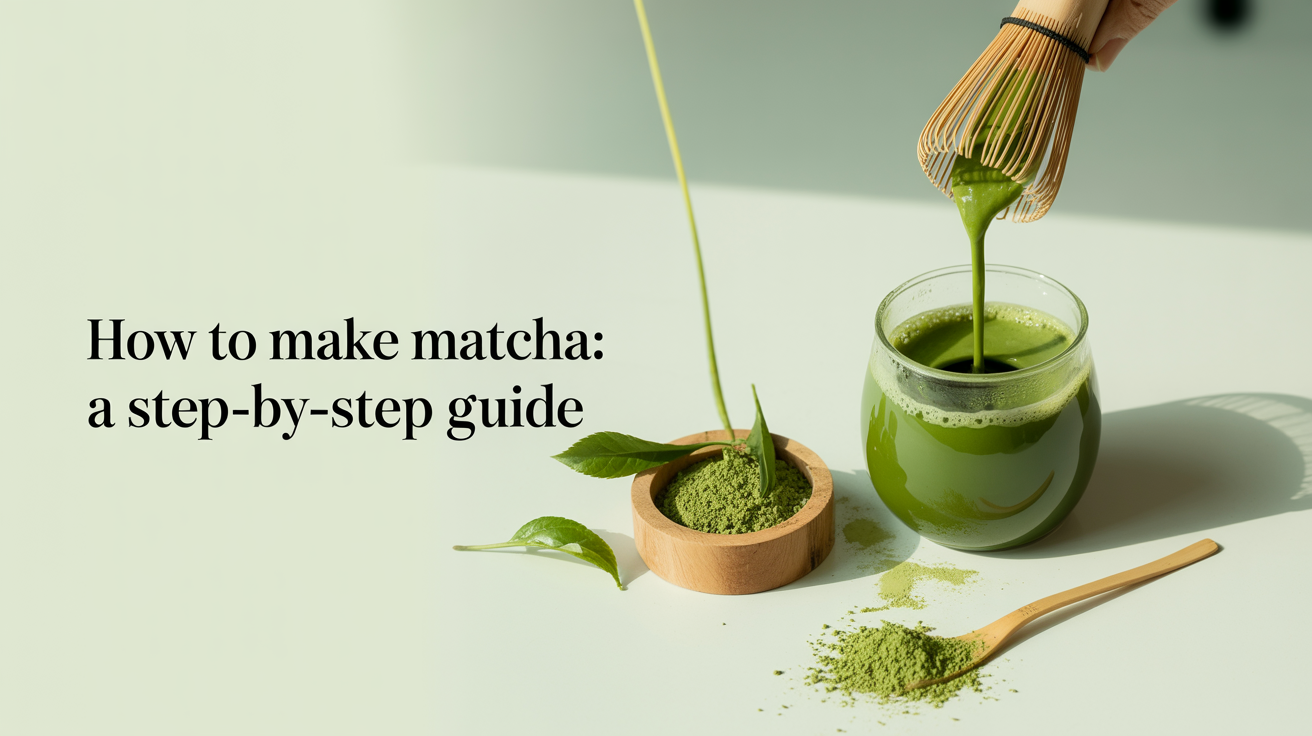
Matcha is one of those drinks that looks complicated until you do it once. The process takes about four minutes from start to finish, and once the muscle memory is there, it becomes one of the more meditative parts of a morning. What trips most people up early on is skipping the sift, using water that's too hot, or whisking without a proper chasen. Fix those three things and most other problems disappear.
This guide covers everything you need for matcha for beginners: the gear, the ratios, the temperature, and how to whisk without ending up with a lumpy green puddle.
What You Need
You don't need a full Japanese tea ceremony setup. A few specific tools make a real difference, though. The wrong bowl or a fork in place of a chasen will fight you.
Gear Checklist
- Chasen (bamboo whisk): The only tool that creates genuine microfoam. A chasen has 60, 80, or 100 tines that aerate the matcha in a way nothing else replicates. 80-tine (80-hon) is a good all-around choice.
- Chawan (tea bowl): Wide, flat-bottomed bowls give the whisk room to move in the W/M motion without hitting the sides. A standard cereal bowl works in a pinch, but a proper chawan makes whisking much easier.
- Fine-mesh sifter: A small 100-mesh stainless sifter, ideally one that fits over your chawan. Essential for preventing clumps.
- Kitchen scale: Matcha is dense and variable. A teaspoon can be anywhere from 1 g to 3 g depending on how packed it is. A scale gives you consistency.
- Thermometer or kettle with temperature control: Water temperature is critical. More on that below.
- Small scoop (chashaku): Optional if you're using a scale, but a chashaku holds about 1 g per scoop and is a pleasant ritual tool.
On matcha itself: the quality you choose matters more for drinking straight than for lattes. If you're just getting started, ceremonial vs culinary matcha covers what to look for and where the money is actually worth spending.
Ratios and Amounts
The standard thin matcha (usucha) is what most people drink at home. Thick matcha (koicha) is a more concentrated, traditional preparation used in formal ceremonies.
| Style | Matcha | Water | Consistency |
|---|---|---|---|
| Usucha (thin) | 1.5–2 g | 60–75 ml | Frothy, liquid |
| Koicha (thick) | 3–4 g | 30–40 ml | Paste-like, barely pourable |
| Matcha latte base | 2 g | 30 ml | Concentrate for adding milk |
For day-to-day preparation at home, start with 2 g of matcha and 70 ml of water at 75°C (167°F). That's the matcha ratio water combination that hits balance between flavor, bitterness, and foam.
Measuring by weight rather than volume is the single most reliable thing you can do to get consistent results. A kitchen scale that reads to 0.1 g is ideal; most digital pocket scales work fine.
Water Temperature
This is where a lot of people quietly ruin good matcha. Boiling water (100°C / 212°F) scalds the amino acids responsible for matcha's characteristic sweetness and umami. The result is thin, bitter, and harsh.
The right range is 70–80°C (158–176°F). A few ways to get there:
- Temperature-controlled kettle: Set it and forget it. Worth the investment if you drink tea daily.
- Boil and cool: Bring water to a boil, then let it sit uncovered for 3–4 minutes. It drops roughly 10°C per minute in a standard kettle spout environment.
- Pour into a cold vessel first: Pouring boiling water into a room-temperature bowl drops the temperature by about 5–8°C before you whisk.
If you're in a hurry and don't have a thermometer, aim for water that stopped steaming aggressively. Gentle wisps are fine; hard rolling steam is too hot.
Sifting: Don't Skip It
Matcha clumps. It's finely ground and hygroscopic, which means it pulls moisture from the air and forms micro-aggregates that won't dissolve no matter how hard you whisk. Sifting breaks those up before they get wet.
Place your fine-mesh sifter over the chawan. Add 2 g of matcha. Use the back of a small spoon or the chasen's handle to press it through. This takes about 15 seconds. You'll see the difference immediately: sifted matcha sits in the bowl as a fine, even powder with no visible clumps.
If you're still getting lumps after sifting, there's a useful technique in whisking matcha without lumps that covers the paste-first method in more detail.
How to Whisk
The chasen creates foam through rapid lateral movement, not a circular stir. The standard motion is often described as writing a W or M, and that's accurate: the goal is to break surface tension and incorporate air with quick, shallow strokes.
Step-by-Step
- Warm the chawan. Pour a small amount of hot water into the bowl, swirl it, then discard. This brings the ceramic to temperature so your matcha doesn't cool too fast.
- Wet the chasen. Dip the chasen in that warm water and swirl gently. It softens the bamboo tines and prevents cracking.
- Sift the matcha into the dry, warmed bowl.
- Add a splash of water first (5–10 ml). Use a few ml of your 70–75°C water to form a paste. Work the chasen in slow circles to dissolve the powder completely before adding the rest of the water. This paste step prevents clumps far better than trying to whisk everything from dry powder.
- Add the remaining water (60–65 ml) and hold the bowl steady with your non-dominant hand.
- Whisk in the W/M motion. Move the chasen rapidly back and forth in the center of the bowl, keeping it near the surface. You're not trying to stir the whole volume; you're creating foam at the surface. Thirty to forty-five seconds of active whisking is usually enough.
- Finish with a slow circle. Slow your motion to a single smooth circle around the bowl, then lift the chasen straight up from the center. This consolidates the foam into a tight, even layer.
Drink immediately. Matcha settles quickly and the foam collapses within a few minutes.
Troubleshooting
Lumps in the cup
Almost always a sifting or paste issue. Sift every time, no exceptions. If lumps persist even after sifting, try the paste method more deliberately: use only 5 ml of water, make a smooth paste with the chasen (slow circles, not whisking), then add the rest of the water. Also check your matcha age; old matcha clumps more aggressively. Matcha without a whisk has some alternative approaches if you're consistently struggling.
No foam, or foam that collapses immediately
Three causes: water too hot (above 80°C), not enough whisking speed, or matcha that's past its prime. Check your temperature first. If the water is right, focus on keeping the chasen near the surface rather than dragging it through the full depth of liquid. Deep stirring moves volume; surface whisking creates air.
Tastes bitter or thin
Water temperature is the most common culprit. If you're using water above 80°C, the catechins that cause bitterness extract faster than the umami compounds. Drop the temperature to 70–75°C and taste the difference. Low-grade matcha also tastes more bitter at any temperature; that's a sourcing issue, not a preparation one.
Matcha clumping in storage
Store matcha in its original tin (or an airtight container) in the refrigerator, away from light and moisture. Bring it to room temperature before opening so condensation doesn't form inside the tin. Most ceremonial-grade matcha is best used within 4–6 weeks of opening.
Frequently Asked Questions
How much matcha per cup?
For a standard usucha (thin matcha), use 1.5–2 g per serving. That's roughly one level chashaku scoop or one very flat teaspoon. More matcha doesn't make a stronger, better cup; it usually makes a more bitter one. If you want more intensity, use 2 g rather than 1.5 g, but don't go much beyond that for usucha.
What water temperature is best for matcha?
70–80°C (158–176°F). The sweet spot for home preparation is 75°C: hot enough to dissolve the powder fully, cool enough to protect the L-theanine and amino acids that give matcha its depth. Boiling water is too aggressive for anything except culinary uses (baking, cooking).
Can I use a milk frother instead of a chasen?
A handheld milk frother will dissolve the powder and create some foam, but the texture is coarser and less stable than a chasen's. It's a workable substitute for lattes or when you're traveling. For straight usucha where foam quality matters, there's no real replacement for a 80-tine bamboo chasen. They cost $10–15 and last a year or more with reasonable care.
Why does my matcha look dull or yellowish?
Fresh, high-quality matcha is a vivid, saturated green. Dull or yellowish color usually means the matcha is old or was stored poorly (heat and light degrade chlorophyll fast). If your tin has been open more than two months, or sat near a window or stove, the color change is a reliable indicator that flavor has also degraded. Fresh ceremonial-grade matcha from a reputable source should look almost unnaturally green.
Do I need to add sweetener?
No, though personal preference varies. Good ceremonial-grade matcha has natural sweetness from L-theanine that balances the bitterness without any additions. If you're new to straight matcha and find it too intense, a small amount of honey or a half-teaspoon of sugar is fine. As your palate adjusts, you'll likely use less over time.