Teaware & Ritual
The Best Kettle for Tea: Variable-Temp and Gooseneck Options
How to choose the right electric kettle for tea — variable temperature, gooseneck spouts, and what features actually matter.
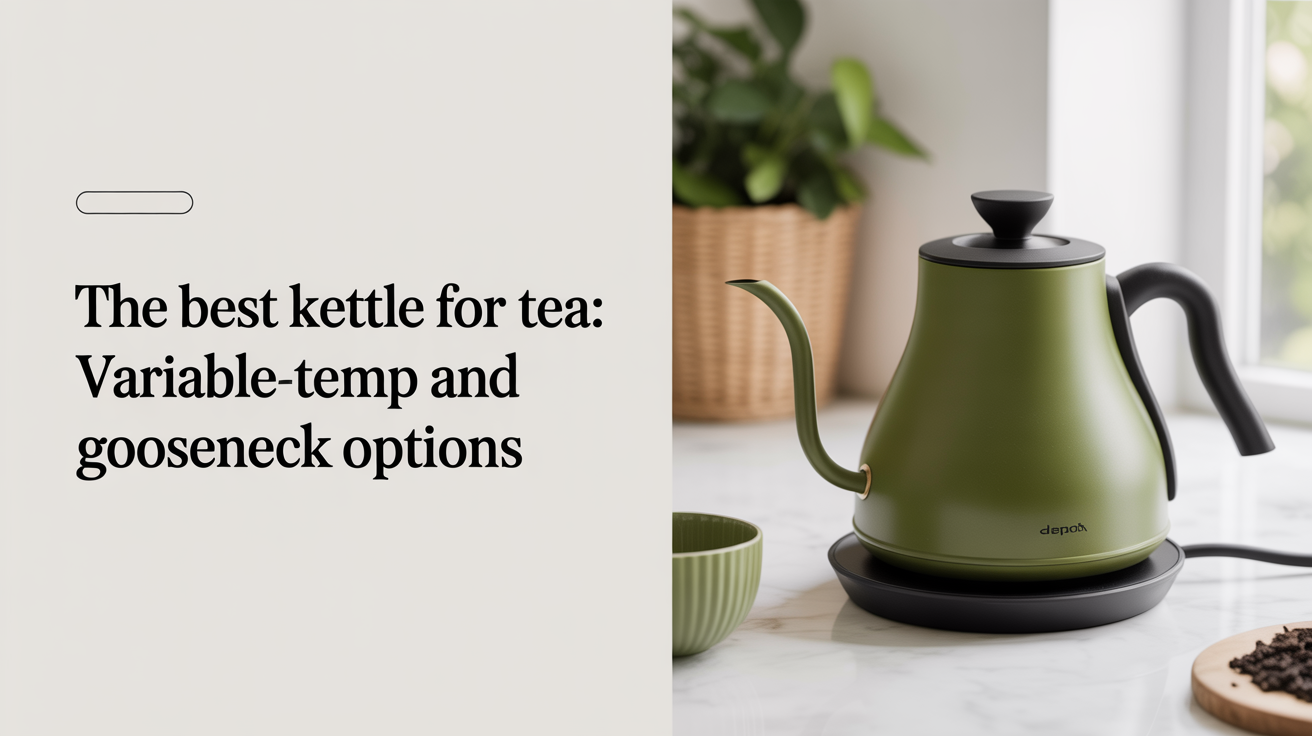
Boiling water is the wrong move for most tea. Green, white, and oolong teas are particularly sensitive: water at a rolling boil (212°F / 100°C) scalds delicate leaves and produces a flat, bitter cup. Depending on the style, you want somewhere between 160°F and 195°F, and hitting that range reliably is hard with a stovetop kettle and a thermometer. A variable temperature kettle solves this without the guesswork.
That said, not every electric kettle for tea is worth the counter space. Features pile up fast, prices swing from $30 to $250, and plenty of kettles marketed at tea drinkers are just rebadged coffee gear. This guide covers what actually matters, what you can ignore, and how to match the kettle to how you brew.
Features That Actually Matter
Temperature Control
This is the core reason to buy a variable temperature kettle instead of a basic model. Look for a kettle that holds at least four preset temperatures — 160°F, 175°F, 185°F, and 212°F covers the main categories. Some models let you dial in any degree, which sounds appealing but adds complexity without much practical benefit unless you're deep into competition-level brewing.
The accuracy claim on the box matters less than the range of presets and whether the display is readable. A kettle that heats to 175°F within 3°F is fine; you'd need a calibrated thermometer to tell the difference in the cup.
Keep-Warm Function
Most variable temperature kettles include a hold function that maintains the set temperature for 30 to 60 minutes. This is genuinely useful if you brew multiple small steepings of the same tea, which is the standard approach with oolongs and many greens. Without it, you either reheat between rounds or let the temperature drop.
Sixty minutes is the practical ceiling. After that, you're better off reboiling.
Gooseneck Spout
A gooseneck kettle for tea offers a narrow, curved spout that gives you fine control over the pour rate and where the water lands. For brewing in a gaiwan vs teapot, especially with small vessels, that control matters: you can pour in a slow circle around the leaves without disturbing them, or aim for the vessel wall to slow the water entry. With a standard wide spout, you're dumping water in and hoping.
Goosenecks are a real advantage for gongfu-style brewing. They're less critical if you're using a basket infuser in a large mug.
Material: Stainless Steel vs Glass
Stainless steel is the more durable choice and easier to clean. It doesn't show water spots and holds heat slightly better. The downside is you can't see the water level without checking the gauge, and cheaper stainless units sometimes have a metallic taste for the first few months of use.
Glass kettles look clean on a counter and make water level obvious at a glance. They're more fragile, especially the lid and spout junction, and the heating element usually sits at the bottom inside the glass chamber, which some people find harder to descale. Borosilicate glass is meaningfully better than basic glass if you're choosing a glass model.
Capacity
A 1.0-liter kettle is practical for one to two people. A 1.7-liter model is the standard large size and suits households that brew frequently throughout the day. Smaller is faster to heat, easier to maneuver, and takes up less counter space. If you're regularly doing multiple gongfu sessions back-to-back, the larger capacity is worth it.
Heating Speed
Most electric kettles for tea in the $50-150 range heat at 1200-1500 watts. The difference between models at the same wattage is usually small. What slows you down more than wattage is filling the kettle to capacity every time; heat only what you need.
Who Actually Needs a Gooseneck
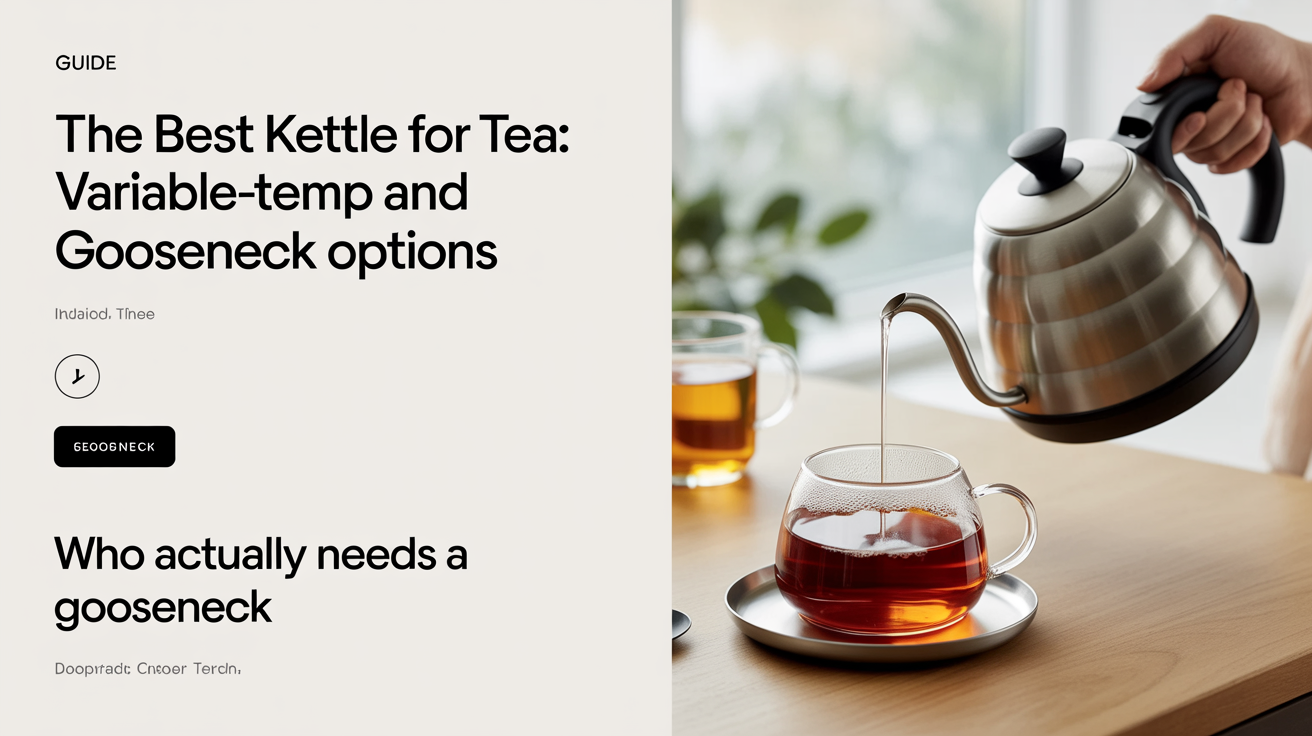
If you brew any of the following, a gooseneck spout will noticeably improve your results:
- Gongfu-style oolong or puerh in a gaiwan or small teapot
- Japanese greens (sencha, gyokuro) where low-and-slow pours preserve sweetness
- Specialty white tea in a small clay or porcelain vessel
If you brew mostly British-style black tea in a 6-cup teapot, a standard wide-spout kettle is fine. The pour precision matters less when you're filling a large vessel quickly with fully boiling water.
A gooseneck also helps when your teaware is small and a standard spout would overshoot. Pair your kettle choice with whatever you're brewing in. If you're still figuring out your vessel setup, reading about tea infusers and strainers alongside kettle shopping will help you avoid redundant gear.
Stovetop vs Electric
Stovetop kettles heat on any burner including induction, don't need a base or power cable, and tend to be better-looking in a traditional way. The practical tradeoff: no temperature presets, slower if you're on a low-BTU electric range, and you need a thermometer to hit anything below boiling with consistency.
For variable temperature control, electric wins without question. The exception is if you have a gas range, travel frequently, or genuinely prefer the ritual of a stovetop kettle and don't mind using a thermometer. A good instant-read thermometer and a stovetop kettle is a legitimate pairing; it's just slower.
There's also a middle option: a basic electric kettle plus a temperature-controlled server or thermos. Some Japanese-style brew setups use this, but it adds steps and equipment.
What to Skip
- Preset-only kettles with only 2-3 temperatures. These usually cover boiling and one green tea preset. Not flexible enough.
- Plastic-lined interiors. Cheap kettles with plastic heating chambers leach flavor into the water, especially noticeable with delicate greens.
- Oversized capacity if you brew solo. A 1.7L kettle you fill to 400ml twice a day wears the heating element faster and takes longer.
- Bluetooth and app connectivity. Genuinely adds nothing. You're standing at the kettle when you start it.
- Double-wall glass for the main chamber. Looks good on paper for heat retention, but makes cleaning the interior difficult and is usually thinner glass to offset the double construction.
Price Tiers and How to Choose
| Feature | Why It Matters | Who Needs It |
|---|---|---|
| Variable temperature presets | Prevents scalding delicate teas | Anyone brewing green, white, or oolong |
| Keep-warm (60 min) | Maintains temp across multiple steepings | Gongfu brewers, frequent steepers |
| Gooseneck spout | Precise, slow pours into small vessels | Gongfu-style, Japanese tea, small teapots |
| 1200W+ heating element | Faster boil to temperature | High-volume brewers |
| Stainless interior | Durability, no flavor transfer | Daily use, multi-year ownership |
| Glass chamber | Water level visible at a glance | Occasional users, aesthetics preference |
Under $50: Expect basic presets (usually 3-4 fixed temperatures), standard spout, plastic or thin stainless. Fine for someone who wants better than boiling water but isn't doing careful brewing.
$50-100: This is where most usable variable temperature kettles live. Stainless steel construction, 4-6 presets or a dial, keep-warm function, and sometimes a gooseneck option. The best kettle for tea at the everyday level lands here.
$100-175: Better build quality, more accurate temperature control, longer keep-warm, and usually better gooseneck ergonomics if that's the style. Some models in this range offer true degree-by-degree adjustment.
Above $175: Professional-grade kettles aimed at specialty coffee and tea. Precise to within 1-2°F, excellent pour control, robust construction. Worth it if you're doing competition brewing or have specific gongfu clay teaware that demands precise temperatures. For most home brewers, the $75-120 range is the ceiling of returns.
Buying Checklist
- Does it have at least four temperature presets (or dial control)?
- Is the interior stainless steel or borosilicate glass (not plastic)?
- Does it include a keep-warm function of at least 30 minutes?
- Does the spout style match how you brew (gooseneck for small vessels, standard for large pots)?
- Is the capacity right for your household (1.0L for solo, 1.7L for multiple people)?
- Can you read the temperature display without leaning over the counter?
- Is the handle comfortable and the lid easy to open one-handed?
If you're building out a full brewing setup, consider how the kettle pairs with your teaware. A gooseneck matters more when you're working with a gaiwan; for a clay teapot, the temperature consistency and the vessel itself do most of the work. For anyone using a Yixing teapot specifically, read about seasoning a yixing teapot before worrying too much about pour precision.
Frequently Asked Questions
What temperature should I use for different teas?
A rough guide: white tea brews well at 160-175°F; Japanese greens (sencha, gyokuro) at 160-175°F; Chinese greens at 175-185°F; oolongs at 185-205°F depending on oxidation level; black tea and puerh at 200-212°F. These aren't fixed rules; more oxidized and rolled teas tolerate higher temperatures. A variable temperature kettle lets you test your way to what tastes right for the specific tea you're using.
Is a gooseneck kettle actually necessary?
For most casual home brewers, no. A standard electric kettle for tea with temperature control covers the main need. A gooseneck becomes noticeably useful when you're brewing in small vessels (under 200ml) and want to control the pour rather than just hitting a temperature. If you're doing multiple short steepings of oolong or Japanese green tea, the gooseneck will improve things. If you're making a pot of breakfast tea, it won't.
How long does a variable temperature kettle last?
Most decent models run 3-5 years with regular daily use. The heating element is usually the failure point, and stainless steel kettles tend to outlast glass ones simply because the vessel is more durable. Descaling every 1-3 months (depending on your water hardness) extends lifespan noticeably. Kettles in the $75+ range generally use better-grade elements than budget models.
Can I use a variable temperature kettle for both tea and coffee?
Yes. The overlap is mainly with pour-over coffee, which also benefits from gooseneck spouts and temperature control (around 195-205°F for most roasts). If you drink both, a quality variable temperature gooseneck kettle covers both use cases well. Just verify the capacity works for your typical brew volume; coffee pour-over often requires 600-900ml in one go.
Does water quality affect the kettle choice?
Hard water scales any kettle faster, but it doesn't change which kettle to buy. It does mean you should check that your model is easy to descale (wide opening, accessible interior). If you're in a hard water area and using a glass kettle, the scale buildup is also more visible, which some people find motivating and others find annoying.