Teaware & Ritual
Gaiwan vs. Teapot: Which Should You Brew With
Gaiwan or teapot? Compare brewing vessels for loose tea, find what suits your teas and skill level, and learn which to buy first.
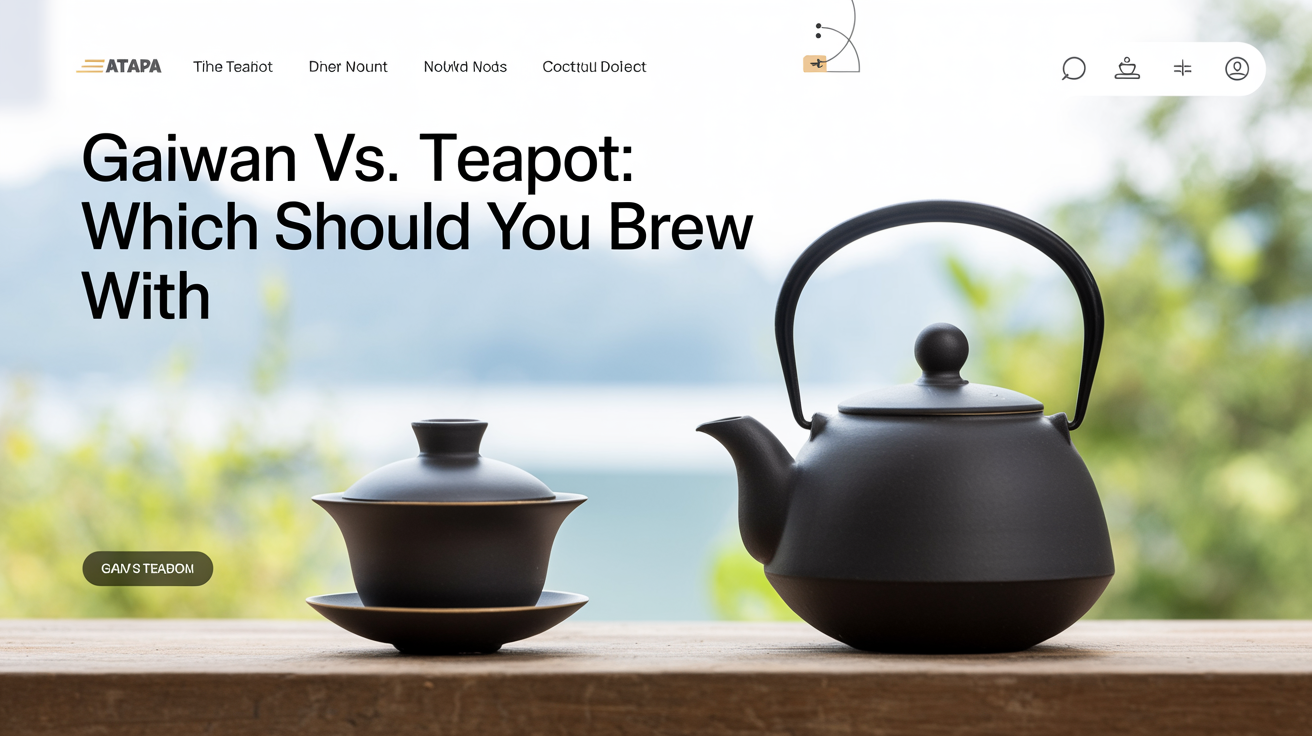
Most loose-leaf brewers reach a moment where they realize a mug and an infuser basket are limiting what they taste in the cup. The next step is usually a dedicated brewing vessel, and the two most practical options are a gaiwan and a teapot. They do the same basic job. The differences in how they do it matter quite a bit depending on the teas you drink, how you want to brew, and whether you enjoy fussing with technique.
Neither is objectively better. A gaiwan suits some teas and some people better; a teapot suits others. The choice is not permanent, and serious tea drinkers eventually own both. But if you are deciding where to put your first 30 to 60 dollars, the details below should make the answer clear.
What a Gaiwan Is and How It Works
A gaiwan (蓋碗, "lidded bowl") is a three-piece set: a wide bowl, a saucer, and a lid. Standard sizes run 100 to 150 ml, though 80 ml and 200 ml versions exist. The shape is intentionally open, with a wide mouth and no spout. You fill it with tea and water, hold the saucer with two fingers and the lid edge with your thumb, tilt the lid to create a small gap, and pour the brew directly into a cup or pitcher.
The learning curve is real. Pouring without scalding yourself takes a few sessions to get comfortable, and the hold is awkward at first. White and green teas brewed at 75 to 85°C are forgiving; oolongs brewed at 95°C are less so. Using a variable temperature kettle helps here because you can set the exact temperature and avoid letting water sit too long in a gaiwan without pouring.
Because the bowl is unglazed or lightly glazed porcelain in most cases, it absorbs nothing and retains no flavor. You can brew a roasted oolong in the morning and a delicate green in the afternoon without crossover. This makes the gaiwan the single most versatile vessel in tea.
Gaiwan Materials
Most gaiwans are white porcelain, which is neutral and easy to inspect for leaf condition and liquor color. Glass gaiwans exist and are nice for watching leaves open, but they cool faster. Yixing clay gaiwans are uncommon; the porous material works against the vessel's main advantage (neutrality). Stick with porcelain unless you have a specific reason not to.
What a Teapot Does Differently
A teapot holds more water, pours through a spout, and keeps heat better because of its closed shape. Practical sizes for solo brewing start around 150 ml (traditional gongfu-style pots) and go up to 400 to 600 ml for larger Western-style pots. The spout includes a filter, usually a row of holes at the base, which catches most loose-leaf tea without extra tools.
The tradeoff is that a teapot is less flexible. If you brew many different teas, you need multiple pots or accept some flavor carryover. Ceramic and glass pots are neutral enough to use for various teas. Yixing and other unglazed clay pots absorb flavor oils and are traditionally dedicated to one tea type, sometimes one specific tea.
A teapot is easier to handle than a gaiwan. You fill it, wait, and pour. There is no technique to learn. For someone brewing at a desk while working, or for anyone who finds gaiwan pouring stressful, a teapot is the lower-friction option.
Teapot Materials
- Porcelain and ceramic: Neutral, durable, good for any tea. Easy to clean.
- Glass: Neutral, good for watching the brew, loses heat faster. Works well for green and white teas.
- Yixing clay: Porous, season it over many brews, dedicate it to one tea family (oolongs, pu-erh, etc.). See how to season and care for a Yixing teapot before buying one.
- Cast iron: Holds heat well, but heavy and often lined with enamel (not raw iron). Good for black teas brewed at full boil.
Pros and Cons of Each
Gaiwan
Pros
- Brews any tea style without flavor carryover
- Lets you see leaf condition throughout the brew
- Easy to clean (wide mouth, no interior corners)
- Cheap: a solid porcelain gaiwan costs 10 to 25 dollars
- Compact; fits in a small kitchen or office setup
Cons
- Burns fingers until you develop the hold
- Small capacity (100 to 150 ml) means frequent refills when sharing
- No built-in strainer; requires a separate strainer over the cup unless you are very steady
- Not well-suited to large-leaf teas that need room to expand
Teapot
Pros
- Easier to handle; no special technique
- Larger capacity options available
- Built-in filter catches most leaves
- Better heat retention, especially in clay or cast iron
- Yixing pots improve some teas over time (once seasoned)
Cons
- Narrow spout is harder to clean thoroughly
- Porous clay pots require a dedicated tea type
- Mid-range Yixing pots cost 40 to 100 dollars; quality clay pots more
- Less visibility into the brewing leaf
Which Teas Suit Which Vessel
This is where the gaiwan vs teapot decision gets concrete.
Gaiwan works best for:
- White teas (Bai Hao Yinzhen, Bai Mudan): delicate flavor; the wide bowl lets leaves breathe
- Green teas (Longjing, Gyokuro): needs lower temperatures; neutrality protects flavor
- High-fragrance oolongs (Tie Guan Yin, Da Hong Pao): aromas lift out of the wide mouth before you pour; you can sniff the lid
- Yellow teas: rare but similar to greens in handling
Teapot works best for:
- Pu-erh: benefits from Yixing absorption; high heat retained through long steeps
- Heavy-roasted oolongs: Yixing or ceramic holds heat well for 95°C+ brews
- Black teas in Western style: a 400 ml ceramic pot at full boil, steeped 3 to 4 minutes, works well here
- Any situation where you are sharing tea with two or three people
Some teas, like Taiwan high-mountain oolongs or Phoenix dancong, are brewed excellently in either vessel. Experienced drinkers often own a 120 ml gaiwan for daily gongfu brewing and a dedicated Yixing pot for a specific aged pu-erh they drink in the evenings.
Comparison Table
| Gaiwan | Teapot | |
|---|---|---|
| Versatility | Highest; any tea, no carryover | Medium; clay pots require dedication |
| Ease of use | Moderate; requires technique | Easy; fill and pour |
| Price range | $10 to $25 (porcelain) | $20 to $100+ (clay pots higher) |
| Best teas | Greens, whites, fragrant oolongs | Pu-erh, black teas, roasted oolongs |
| Cleaning | Easy (wide opening) | Harder (narrow spout) |
| Heat retention | Lower (open, wide shape) | Higher (closed, thicker walls) |
| Capacity | 80 to 200 ml typical | 150 to 600 ml depending on type |
Price and What to Buy First for a Beginner
If you are new to loose-leaf tea and trying to figure out what gear actually matters, start with a gaiwan. A 120 to 150 ml white porcelain gaiwan from a reputable Chinese ceramics brand runs 12 to 25 dollars. It will brew every tea you try in the next year without flavor compromise. The technique takes a few sessions to get comfortable, but it is not difficult, just unfamiliar.
Beginner recommendation list:
- Buy a 120 ml porcelain gaiwan (Jingdezhen-made white porcelain is a safe default)
- Add a small pitcher (chahai/fairness cup, 150 to 200 ml) so you can pour out the gaiwan into a neutral vessel before distributing
- Use a simple mesh strainer if leaves escape through the lid gap; a 3-inch stainless strainer costs under $5
- Skip the Yixing pot until you know which teas you brew most; the seasoning investment only makes sense with committed use
If you already drink mostly pu-erh or heavily roasted teas and want something you will use daily for the next decade, a quality Yixing teapot in the 50 to 80 dollar range is a better first purchase. But for the person still exploring, the gaiwan gives you more information about what you like before you specialize.
For the do I need a gaiwan question: you do not need one, but for the best brewing vessel for loose tea across many tea types, it is the most practical single piece of gear you can own. A teapot can do many things a gaiwan does; a gaiwan can do a few things a teapot cannot (primarily: true neutrality + wide-bowl aroma).
Heat and Handling Tips
Gaiwan handling gets easier with a few small adjustments:
- Use two fingers (not the palm) on the saucer; the air gap between the saucer rim and the bowl base insulates your fingers
- Tilt the lid back toward you at about 30 degrees; the gap at the far edge lets water flow without leaves escaping
- For 95°C brews, hold for no more than 5 seconds before starting the pour; the bowl conducts heat quickly
- Let your temperature-controlled kettle cool to the target before pouring; attempting to cool water in the gaiwan by waiting leads to overextraction
For teapots:
- Pre-heat the pot with a rinse of boiling water; this matters especially in clay, which absorbs heat before the brew starts
- Narrow-spout pots are easier to clean with a small bottle brush; rinse thoroughly and let dry open-top down
- Avoid soap on unglazed clay pots; hot water rinse only
Frequently Asked Questions
Can I brew gongfu style in a teapot?
Yes. A 100 to 150 ml teapot (common in Yixing brewing) handles gongfu parameters, short steeps, and high leaf-to-water ratios fine. Many traditional gongfu setups use a clay teapot rather than a gaiwan. The main limitation is that you cannot watch the leaves and the pot absorbs flavor over time. If you want to brew multiple tea types gongfu-style, the gaiwan is more practical; if you have one dedicated tea, the pot is great.
Is a gaiwan or teapot for beginners easier to learn on?
A teapot requires no technique and is genuinely easier to use on day one. But for understanding how a tea actually tastes, a gaiwan is better, because you can adjust steep time and see the leaves clearly. The best answer depends on what you want from the learning process: lowest friction, or most control and feedback.
How do I know if I am oversteeping in a gaiwan?
Taste as you go. Gongfu steeps in a gaiwan run 15 to 45 seconds for the first few infusions. If the cup is bitter or astringent, you steeped too long, used too much leaf, or the water was too hot. The gaiwan's advantage here is that you can see leaf condition and adjust in real time. A thermometer or variable kettle removes the temperature variable so you can isolate steep time.
Do gaiwans work for Western-style (long steep) brewing?
They can, but they are not ideal. Western-style brewing is 200 ml or more of water steeped 3 to 5 minutes; a standard 120 ml gaiwan is too small and the open shape loses heat fast. A ceramic or glass teapot in the 350 to 500 ml range handles this much better. If you mostly brew Western-style, buy a teapot first.
Is it safe to use a gaiwan every day?
Yes, with normal care. Porcelain is durable if handled carefully; it chips if knocked against hard surfaces. Avoid thermal shock (do not pour boiling water into a cold, room-temperature gaiwan in winter; warm it first with a rinse of hot water). A decent gaiwan bought for $20 should last years with reasonable handling.