Brewing Methods
Sun Tea: How to Brew It in Direct Sunlight Safely at Home
How to make sun tea safely: the real food-safety risk of warm-water steeping, step-by-step instructions, and a cold brew method that skips the risk.
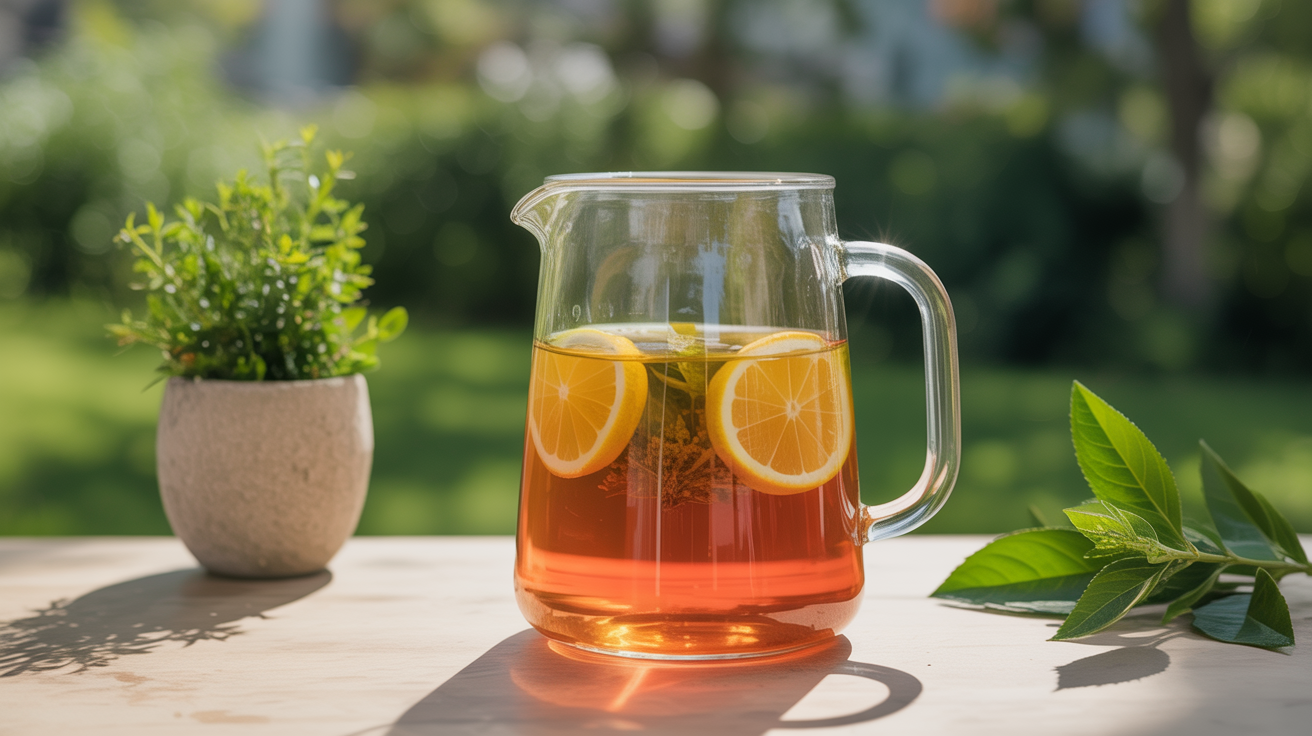
There's something appealing about setting a jar of tea and water on the porch railing and letting the sun do the work. No kettle, no timer standing over the stove, just a mellow amber jug by the time you get home from work. Knowing how to make sun tea safely, though, means understanding what actually happens inside that jar while it sits, because the method has a real weak spot that most recipe cards skip over entirely.
This guide walks through the classic sun tea method step by step, explains the food-safety concern in plain terms, and gives you a couple of alternatives that get you the same soft, mellow flavor without the multi-hour wait in a warm jar.
What Sun Tea Actually Is
Sun tea is loose leaf or bagged tea steeped in room-temperature water that sits in direct sunlight for several hours, usually two to five, until the color and flavor develop. The sun doesn't brew the tea through heat exactly; a jar left outside on a warm day climbs into a lukewarm range, somewhere in the neighborhood of 90 to 110°F depending on the weather, and that gentle warmth combined with time is what pulls flavor and color out of the leaves.
That's also why the flavor differs from a mug brewed with boiling water. Lower temperatures extract tannins more slowly, so sun tea tastes rounder and less astringent than a rushed hot cup, similar to what you get from patient cold brewing, just sped up by warmth.
How to Make Sun Tea Step by Step
What you need
- A clean glass jar with a lid, one gallon works well for a family batch
- Cool, filtered water
- Loose leaf tea or tea bags (roughly 8 to 10 bags, or about 1/3 cup loose leaf, per gallon)
- A spot in direct, unobstructed sun
The steeping window
Fill the jar with cool water, add your tea, and put the lid on loosely so it can vent a little. Set it somewhere that gets full, direct sun for the whole steeping period, a deck rail or open patio works better than a windowsill behind glass, which cuts down on warmth. Check the color after about two hours. Black and oolong teas are usually ready between three and four hours; green or white teas can turn bitter past two to three hours, since they're more sensitive to over-extraction.
The single most important rule here is time. The longer the jar sits, the more the water spends in a range that isn't hot enough to be self-sterilizing and isn't cold enough to slow bacterial growth. More on that below.
Straining and chilling
Once the color looks right, strain out the leaves or pull the bags, and get the tea into the refrigerator right away. Don't leave it on the counter to cool first; every extra hour at room temperature after steeping adds to the same risk window you were trying to end. Pour it into a clean pitcher, chill it, and serve over ice within a few days.
If you want a head start on flavor without babysitting a jar, western style brewing with hot water and a quick chill afterward gets you a comparable iced tea with far less time in the danger zone described below.
The Real Food Safety Concern
This is the part worth taking seriously, because it's the actual reason some longtime tea drinkers skip sun tea entirely rather than a matter of old-fashioned caution.
Why warm water for hours matters
Food safety guidance from authorities like the USDA describes a broad temperature range, roughly between 40°F and 140°F, where bacteria that can already be present on tea leaves or bags multiply fastest. Boiling water is hot enough to knock most of that risk down immediately. Refrigerator temperatures slow bacterial growth to a crawl. A sun tea jar sitting for three to five hours lands squarely in between those two safe zones, warm enough to encourage growth, not hot enough to prevent it.
Tea leaves aren't sterile. They're a dried plant product that has passed through farms, processing floors, and packaging, so a small amount of bacteria can reasonably be assumed present even in a sealed box. That's not usually a problem with boiling water, or in a jar that sits an hour or two on a mild day. It becomes more of a concern the longer the water stays warm and the hotter and more humid the day is.
What the guidance actually recommends
None of this means sun tea is dangerous every time, and there's no need for alarm if you've made it for years without issue. It does mean a few practical habits matter more than recipe tradition:
- Limit the steeping time. Favor two to three hours over stretching to five or six, especially on hot, humid days.
- Refrigerate immediately after straining. Don't let the tea sit out "to cool down" first.
- When in doubt, boil first. Bring the water to a boil, let it cool to warm, then set it in the sun for the remaining steep. This removes the water-quality question while keeping most of the gentle-extraction flavor.
- Don't reuse the leaves for a second round. Start fresh rather than topping off an old jar with more water.
- Skip it during heat waves. The jar can climb into the riskier part of that range faster than expected, and it isn't worth it for a pitcher of iced tea.
None of this is about specific bacteria counts, it's the same qualitative logic that applies to leaving any food or drink out at warm room temperature for an extended stretch, the instinct that already makes most people cautious about, say, leaving cooked rice on the counter all afternoon.
Cold Brew: The Safer Way to Get the Same Flavor
If the appeal of sun tea is really the smooth, low-bitterness flavor rather than the sunshine itself, cold brew tea gets you there without the warm-water question. Cold brewing steeps tea in the refrigerator, usually eight to twelve hours, so the water never leaves the cold end of the range. It's slower but hands-off, and the extraction is even gentler than sun tea, meaning less bitterness and a naturally sweeter cup, especially with green tea or fruity herbal blends.
The tradeoff is planning ahead. Sun tea can be ready by dinner if you start after breakfast; cold brew usually needs to go in the fridge the night before. If you want iced tea today without either wait, flash-chilling a hot brew over ice is the fastest safe option, since the leaves are steeped at full boiling temperature and then cooled almost immediately.
| Method | Water temperature | Typical time | Food-safety profile |
|---|---|---|---|
| Sun tea | Warm (roughly 90 to 110°F) | 2 to 5 hours | Weakest; extended time in the warm range |
| Cold brew | Cold (refrigerator) | 8 to 12 hours | Strongest; stays cold throughout |
| Flash-chill (hot brew over ice) | Boiling, then rapid cooling | 3 to 5 minutes brewing | Strong; minimal time at warm temperature |
Storing Your Tea After Brewing
However you brew it, sun tea keeps best when it goes straight from the strainer into a clean, covered pitcher in the refrigerator, and gets used within about three to four days. If you're brewing in bulk for the week, it also helps to store your dry tea leaves properly beforehand, away from heat, light, and moisture, since stale or damp leaf can carry more bacteria into the jar to begin with and won't taste as good either.
Frequently Asked Questions
Is sun tea actually safe to drink?
It can be, if you keep the steeping time short, use clean equipment, and refrigerate it promptly after straining. The risk isn't guaranteed harm, it's that warm water sitting for hours creates conditions where bacteria can grow more than they would in boiling water or a cold refrigerator. Shortening the steep and chilling quickly are the two habits that matter most.
How long can sun tea sit out before it's a problem?
There's no single precise cutoff, but food-safety guidance generally points toward keeping any food or drink out of the 40 to 140°F range for as short a time as reasonably possible. For sun tea, that means favoring the shorter end of the typical two to five hour steeping window rather than the longer end, particularly in hot weather.
Does boiling the water first ruin the "sun tea" idea?
Not really. Bringing water to a boil and letting it cool to warm before setting it in the sun still gives you a slow, gentle extraction and a similar flavor to true sun tea. It just removes the uncertainty around untreated water sitting at room temperature for hours, since boiling knocks down the bacteria the sitting time would otherwise let multiply.
What's the real difference between sun tea and cold brew?
Sun tea steeps in warm water from ambient sunlight for a few hours; cold brew steeps in cold refrigerator water for closer to half a day. Cold brew is the safer of the two because the water temperature never rises out of the cold zone, though it does require planning further ahead since it needs an overnight rest.
Can I use tea bags instead of loose leaf for sun tea?
Yes, tea bags work fine and are actually the more common choice for sun tea since they're easy to fish back out. Choose a plain black, green, or herbal bag without added dairy or cream flavoring, since those ingredients spoil faster than tea leaves on their own.