Brewing Methods
Iced Tea From Hot-Brewed Leaves: The Flash-Chill Method
Learn how to make iced tea using the flash-chill method: brew a hot concentrate over ice for a bright, clear glass in under five minutes.
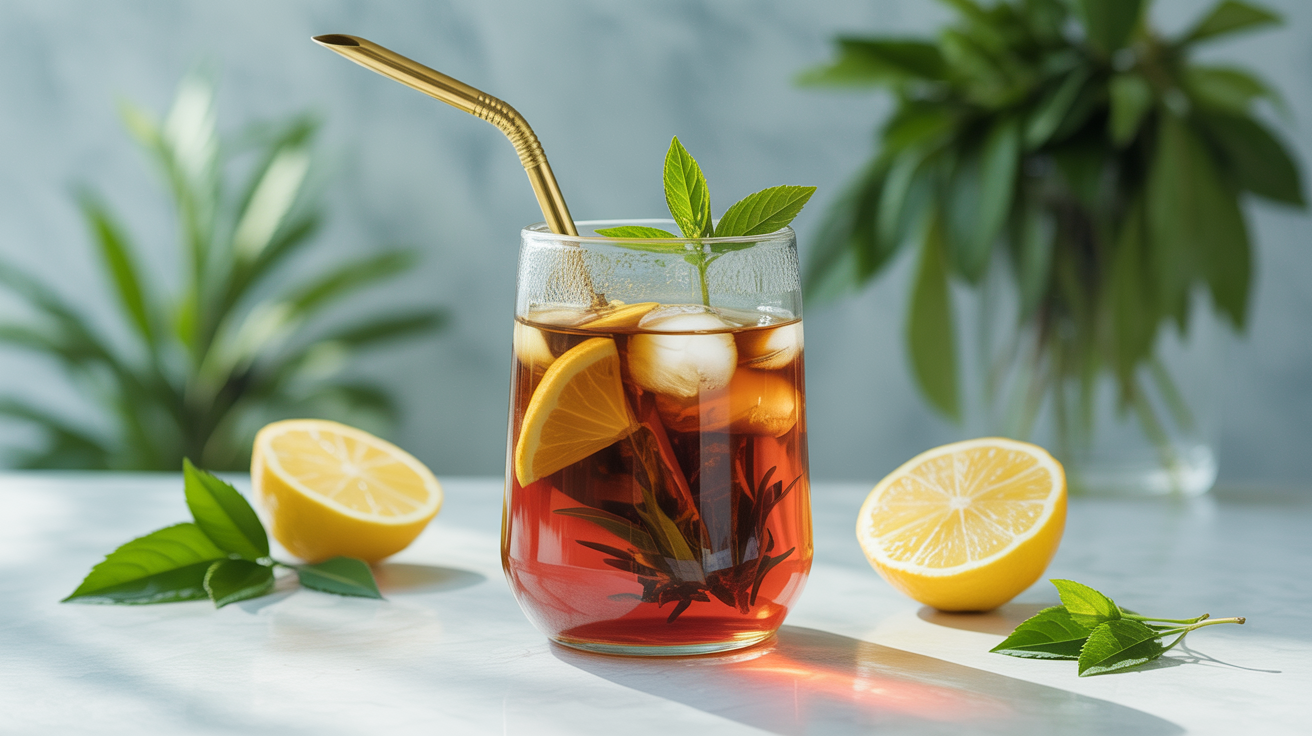
The flash-chill method lets you make iced tea in under five minutes: brew a hot concentrate directly over a glass half-full of ice, and the rapid chill locks in aroma while keeping the liquor clear and bright.
Quick answers
- Brew at roughly double strength (half the usual water), then pour over ice to dilute back to normal.
- Green and white teas benefit most: slow cooling turns them murky and bitter, flash-chilling keeps them clean.
- Black tea can look slightly cloudy even when done right. That is tea cream, a harmless effect of tannins and caffeine binding as the liquid cools.
- Sweeten while the tea is still hot, before it hits the ice, since sugar dissolves far faster in hot liquid.
- Finished tea keeps 24-48 hours in the fridge; green and white are best the same day.
Why Flash-Chill Works Better Than Cooling a Hot Pot
When you brew a full pot of tea at normal strength, then let it cool on the counter or in the fridge, several things go wrong. Tannins continue extracting as the tea slowly drops in temperature. The result is a dull, often cloudy glass with a flat, slightly bitter taste.
Flash-chilling solves both problems at once. Because the hot concentrate hits ice immediately, the steep time is effectively finished the moment pouring begins. The fast temperature drop halts tannin development before it can muddy the cup. Japanese tea shops have used this technique for sencha and gyokuro for generations, and it translates just as well to black, green, white, or herbal teas at home.
The other benefit is aroma. Volatile aromatic compounds escape quickly from hot liquid. When you pour over ice, those aromatics are captured in the cold glass before they have a chance to off-gas into the air. The result tastes noticeably more fragrant than slow-cooled tea.
If you prefer a no-heat approach altogether, cold brew tea produces a similarly smooth result, though it takes several hours rather than minutes.
Core Ratios and Brewing Parameters
The key difference from a normal hot brew is concentration. You are brewing with roughly half the usual water volume, so the tea ends up the right strength once diluted by the ice.
How Much Ice to Use
Fill your serving glass or pitcher about halfway with ice before you brew. As you pour the hot concentrate over it, roughly half the ice will melt and become part of the drink. The remaining ice keeps everything cold for serving. If you use too little ice, the tea stays warm and the dilution is off. If you pack in too much, the final drink comes out thin.
Leaf-to-Water Ratios
| Tea Type | Leaf per Cup of Hot Water | Water Temp | Steep Time |
|---|---|---|---|
| Green (sencha, Dragon Well) | 2 tsp (4 g) | 75-80 C / 165-175 F | 45-60 seconds |
| White (silver needle, bai mu dan) | 2 tsp (3 g) | 75-80 C / 165-175 F | 60-90 seconds |
| Oolong (light to medium roast) | 2 tsp (4 g) | 85-90 C / 185-195 F | 60-75 seconds |
| Black (Assam, Darjeeling, Ceylon) | 2 tsp (5 g) | 95-100 C / 205-212 F | 2-3 minutes |
| Herbal (hibiscus, rooibos, chamomile) | 1 tbsp (6 g) | 95-100 C / 205-212 F | 3-4 minutes |
These times are shorter than a normal hot steep because the concentrate is stronger to begin with and the chill will halt extraction at the end. For green teas especially, erring on the shorter side keeps bitterness in check.
How to Make Iced Green Tea with Flash-Chill
Green tea benefits most visibly from this method. Hot-brewed and slow-cooled green tea often turns murky and bitter. Flash-chilled, it stays pale gold or green-gold, with grassy and sweet notes that stay clean.
Use water at 75-80 C rather than boiling. Pour about 240 ml (one cup) of water over 4 g of leaves in a small pot or directly through a fine-mesh strainer into a warm-safe vessel. Steep for 45-60 seconds, then pour the concentrate immediately over the ice-filled glass. The ice melts partway, the temperature drops within seconds, and you end up with about 360-400 ml of finished iced tea ready to drink.
Step-by-Step: Flash-Chilling Any Loose Leaf Tea
- Fill a heat-safe glass or pitcher halfway with ice cubes.
- Measure your leaves at double the usual ratio (see the table above).
- Heat water to the correct temperature for your tea type.
- Steep the concentrate for the shortened time.
- Pour the hot liquid slowly and steadily over the ice.
- Stir gently to help even out the temperature.
- Taste and add ice if you want it colder, or a small splash of cold water if the flavor is too concentrated.
That is the whole process. No waiting. No refrigerator time. No cloudy glass.
For loose leaf specifically, use a fine-mesh strainer, a basket infuser, or a small teapot with a built-in strainer. The goal is a clean pour with no leaf debris falling into the ice glass.
Adjusting for Different Tea Types
Black Tea
Black tea is the most forgiving tea for flash-chilling. It holds up well to the brief strong steep and still produces a clear, amber glass over ice. Assam varieties give a malty sweetness that tastes especially good cold. Ceylon tends toward a brighter, slightly citrusy finish. Keep steep time to 2-3 minutes at full boil (or near-boil), and pour the moment time is up.
Black tea iced this way is also the base for most homemade sweet teas. If you want sweetened iced tea, stir in your sweetener while the liquid is still hot (before pouring over ice), since sugar dissolves far more easily in hot water than cold.
Oolong
Lightly oxidized oolongs -- think jade tieguanyin or Taiwanese high-mountain styles -- flash-chill beautifully, producing a floral, slightly creamy cold tea. Medium-roasted styles (like a traditional tieguanyin or wuyi rock oolong) give a roasted sweetness that is less common in store-bought iced teas and worth trying at home.
Use 85-90 C water and keep the steep short (60-75 seconds for the first pour). If you are working with a gaiwan or small pot, you can also use the gongfu-cha brewing approach for multiple short steeps, pouring each one over the same ice glass to build up the drink gradually.
Herbal Teas
Herbal infusions need the full boil and a longer steep than true teas. Hibiscus is vivid crimson and tart over ice. Rooibos turns caramel-sweet and very drinkable cold. Chamomile can be delicate, so use a slightly heavier hand with the leaves.
Because herbals have no tannins in the same sense as Camellia sinensis teas, the cloudiness risk is lower, but flash-chilling still pays off in aroma and color vibrancy.
Common Mistakes and How to Fix Them
The drink tastes watery. You used too much ice or too little leaf. Increase the leaf ratio next time, or reduce the ice volume slightly.
The drink is bitter. The steep ran long, or the water was too hot for a green or white tea. Try a shorter steep and drop the temperature.
The glass is cloudy. Some cloudiness in black tea iced this way is normal and harmless. Food scientists call it tea cream, and it comes from tannins and caffeine binding together into tiny particles as the liquid drops below room temperature, the same reaction that makes a slow-cooled pot turn cloudy on the counter. If it bothers you, western-style brewing at lower leaf ratios with a short steep can reduce it, or use a lighter-colored tea like a Darjeeling first flush.
The cup smells flat. The hot liquid may have been left sitting too long before pouring over ice. Once steep time is done, pour immediately.
Frequently Asked Questions
Can I use tea bags instead of loose leaf? Yes. Two standard tea bags brewed in 240 ml of hot water work well for one large glass. The flash-chill method is not limited to loose leaf, though loose leaf typically gives more fragrance and flavor depth.
How long will flash-chilled iced tea keep in the fridge? Drink it within 24-48 hours for best flavor. Green and white tea teas are best finished the same day. Black and herbal teas hold a bit longer but still taste noticeably fresher in the first day.
Do I need special equipment? Nothing beyond what you likely already have: a small pot or teapot, a fine-mesh strainer, and a heat-safe glass or pitcher. A thermometer helps you hit the right water temperature for green and white teas, but a kettle with temperature control or a simple cool-down wait works fine without one.
Can I make a large batch for a party? Yes. Scale up proportionally. Brew the concentrate in a large heat-safe pitcher or pot using the same ratios, pour it over a pitcher half-full of ice, then transfer to the fridge. Make it the same day for best results.
Is flash-chilled iced tea lower in caffeine? No. Shorter steep times do reduce caffeine somewhat compared to a long steep, but the higher leaf ratio used for the concentrate largely offsets that. If you want a low-caffeine cold tea, herbal options like hibiscus or rooibos are naturally caffeine-free.
Further Reading
- Iowa State University Extension and Outreach: Celebrating Iced Tea covers the same cloudiness issue from the opposite angle, what happens when you cool a hot pot gradually instead of flash-chilling it, and confirms tannins as the cause.
- Wikipedia: Tannins in tea has more on the astringent, bitter compounds behind both the puckery mouthfeel of an over-steeped cup and the cloudiness discussed above.
- Wikipedia: Tea notes that a typical 250 ml cup carries roughly 30 to 90 mg of caffeine depending on the tea type and brewing method, useful context for the caffeine question above.