Brewing Methods
How to Make Cold Brew Tea
Learn how to make cold brew tea at home with the right ratio, timing, and tea types for a smoother, sweeter cup every time.
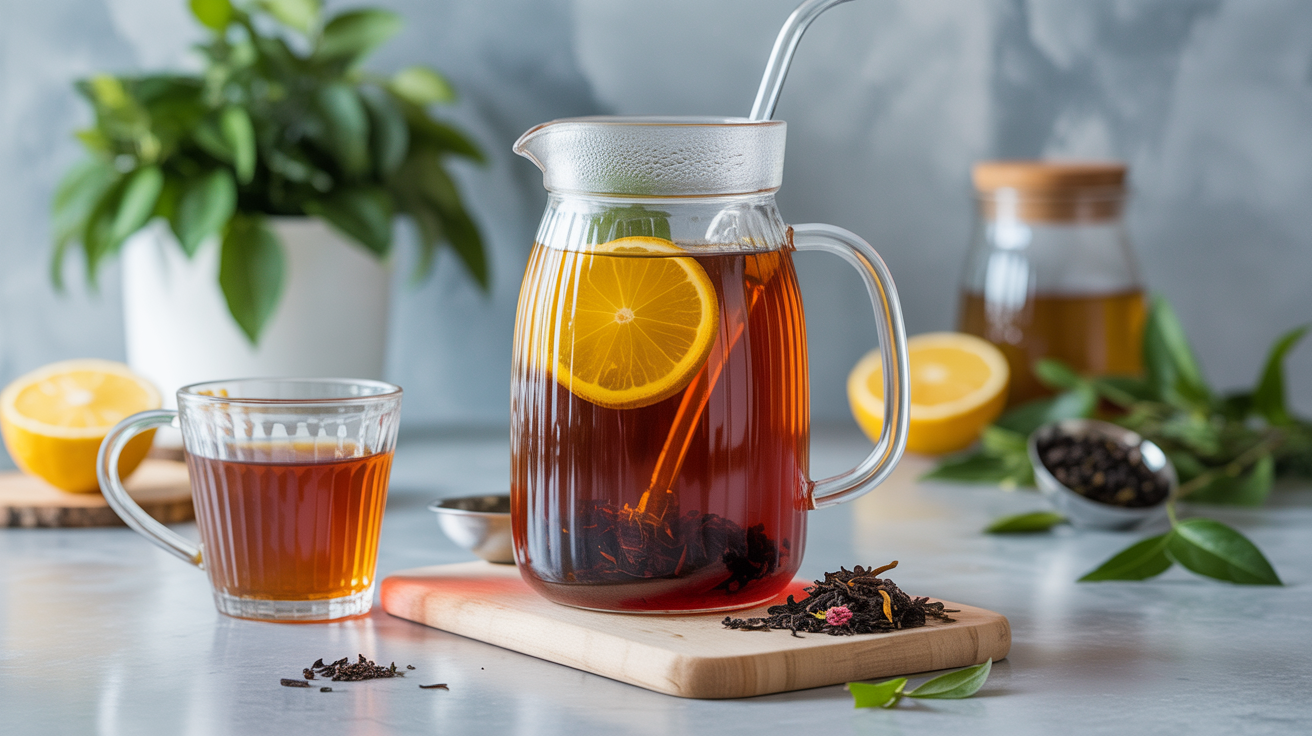
Cold brew tea is about as simple as it sounds: dry leaves, cold water, a jar, and time in the refrigerator. No kettle. No thermometer. No watching the clock while your water heats. You measure your tea, add cold or room-temperature water, seal the container, and come back 6–12 hours later to something genuinely different from hot-brewed tea.
The result is smoother and noticeably sweeter, with less bitterness and less caffeine than the same leaves brewed hot. Cold water extracts flavor compounds more slowly and selectively, pulling out the sweetness and lighter floral notes while leaving many of the harsh tannins and a portion of caffeine behind. It is not a shortcut to iced tea. It is a different drink.
Why Cold Brewing Changes the Flavor
Temperature controls which compounds dissolve and how fast. Hot water is aggressive: it extracts caffeine, catechins, and tannins quickly, which is why a hot-steeped green tea left too long turns bitter. Cold water is selective. Given enough time, it pulls out sugars, amino acids like L-theanine, and volatile aromatics, but it extracts significantly fewer tannins and somewhere between 60–90% of the caffeine compared to a standard hot brew.
The practical result: a cold brew green tea is sweet and grassy without the astringency that puts a lot of people off green tea. A cold-brewed oolong can taste almost floral. Black teas come out mellow rather than brisk. None of this happens by accident. It is just chemistry at low temperature and patient time.
If you want to compare methods, western-style brewing is the workhorse approach for hot cups, and gongfu cha is the intensive, multi-steep alternative. Cold brew sits in its own category: hands-off, forgiving, and best suited to situations where you are planning ahead.
Cold Brew Tea Ratio and Timing
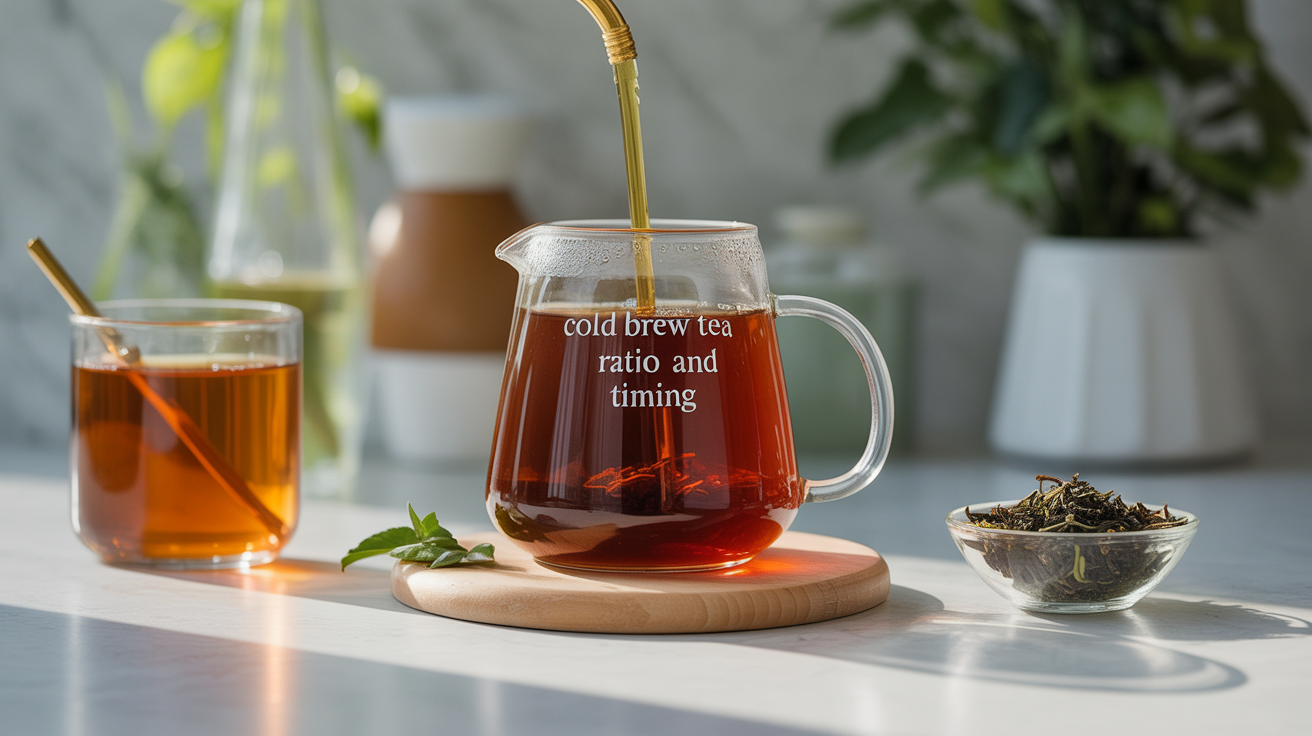
The standard cold brew tea ratio is 5–8 grams of dry leaf per 1 liter of water. Start at 6 g/L and adjust from there. The range exists because leaf density varies: rolled oolongs are compact, while certain white teas or large-leaf greens are bulky and measure very differently by volume. A kitchen scale takes the guesswork out.
Steep time depends on the tea and your preference:
| Tea Type | Steep Time (Cold) | Notes |
|---|---|---|
| Green tea | 6–8 hours | Sweeter and smoother than hot; don't go past 12 h |
| White tea | 8–12 hours | Delicate; can go overnight with good results |
| Oolong (light) | 8–10 hours | Floral and silky; rolled balls work well |
| Oolong (roasted) | 10–12 hours | Deeper, slightly nutty; robust to longer steeps |
| Black tea | 6–8 hours | Watch the clock; can go astringent past 10 h |
| Herbal / fruit blends | 6–10 hours | Virtually no tannin risk; very forgiving |
| Pu-erh (ripe) | 8–10 hours | Earthy and smooth; rinse the leaves first |
All times assume refrigerator temperature (3–5°C). At room temperature the process moves faster; you can cold steep at room temp for 2–4 hours, but it is riskier from a food safety standpoint for longer steeps (more on that below).
Step-by-Step: How to Make Cold Brew Tea
You need a clean glass jar or pitcher with a lid, a kitchen scale, and loose leaf tea or whole-leaf tea bags. Filtered water makes a noticeable difference in delicate teas.
- Weigh your tea. 6 g per liter is a reliable starting point. Scale up or down to match your container.
- Add cold or room-temperature filtered water. Cold is safer for overnight steeps; room temp speeds things up if you need it faster.
- Stir once to make sure all the leaves are wet.
- Seal the container and place it in the refrigerator.
- Wait. Check the reference table above for your tea type. Set a timer if you tend to forget.
- Strain out the leaves using a fine-mesh strainer, a cloth filter, or a mesh tea basket. Press gently on the leaves to recover the last bit of liquid.
- Taste and adjust. Too light? Use more leaf or steep longer next time. Too strong or grassy? Reduce steep time.
- Store the finished tea in a sealed jar in the refrigerator. Drink within 3–4 days.
That is the whole process. Cold steeping tea does not require precision the way gongfu brewing does. Once you have a ratio and timing that works for a particular tea, it becomes a near-automatic routine.
Which Teas Work Best for Cold Brewing
Green Tea
Cold brew green tea is where many people first realize what cold steeping can do. Hot green tea, brewed carelessly, can be grassy and bitter. The same leaves brewed cold for 7 hours come out sweet, light, and clean. Japanese greens like sencha and gyokuro work especially well. Gyokuro in particular, which can taste intensely savory hot, becomes something almost honeyed when cold brewed overnight.
Avoid fannings and low-grade green tea bags here. Fine, whole-leaf teas reward cold brewing; cheap, over-processed leaf does not have much to offer.
White Tea
White teas like bai mu dan (white peony) and silver needle are fragile and lose something when brewed hot carelessly. Cold brewing is almost ideal for them. Steep for 8–12 hours and you get a pale golden cup with a delicate sweetness and no trace of bitterness. Silver needle at 12 hours in the fridge, strained and chilled, is one of the quietest, most refreshing things you can drink on a hot day.
Oolong
The range within oolong is wide. Light, green oolongs (like Taiwanese high-mountain types) produce a floral, almost transparent brew. Darker, roasted oolongs come out deeper and slightly toasty. Both work well. Rolled-ball oolongs are particularly practical because the compact shape is easy to measure and strain.
Black Tea
Black tea cold brews well but is less forgiving than greens and whites. Tannin extraction does happen, just slowly. An 8-hour steep on a robust Assam or a malty Yunnan black produces a deep, smooth cup. Push to 12 hours and you start to get an edge. Keep to the lower end of the timing range and taste before you strain.
Fruity Blends and Herbals
These are genuinely low-stakes. Hibiscus, rosehip, dried fruit blends, and most herbal infusions have no tannin problem. A hibiscus cold brew steeped overnight turns a brilliant magenta with a tart, lightly floral flavor. These are also the easiest place to start if you are new to cold steeping tea.
Food Safety: How Long Does Cold Brew Tea Keep?
Cold brew tea is food, and it follows the same rules as other cold liquids. Refrigerate it consistently. Drink it within 3–4 days of straining. If it smells off or looks cloudy in a way it didn't before, discard it.
Room-temperature cold steeping is riskier for longer times. Up to 3 hours at room temperature is generally fine; overnight at room temperature is not recommended, especially for plain green and white teas, which have little antimicrobial character.
Glass containers are preferable to plastic for longer storage: glass does not absorb odors or leach anything into the tea. A wide-mouth mason jar works perfectly.
Cold Brew vs. Iced Tea vs. Hot-Brewed-and-Chilled
These are three distinct drinks made through three different processes.
Hot-brewed-and-chilled tea is simply hot tea cooled down. The hot extraction is fully completed; you are just serving it cold. This method is fast (ready in under 30 minutes if you brew strong and pour over ice) but preserves all the bitterness and tannins of a hot steep.
"Iced tea" from a hot brew is frequently oversimplified: brew hot, add ice, serve. The result is often diluted by melting ice and can be harsh if the hot steep was too long.
Cold brew tea is extracted entirely in cold water over time. The flavor profile is genuinely different, not just the same tea at a lower temperature. For anyone who finds hot-brewed tea too astringent, cold brew is often the answer, not a weaker brew or added milk.
If you want something even more stripped-down and hands-off, grandpa style is worth knowing: leaves directly in a glass, topped with water, drunk down and refilled. Cold grandpa style is effectively cold brew in a single glass, no straining required.
Frequently Asked Questions
Can I cold brew tea with tap water?
Yes. Cold brew tea works with tap water, but filtered water is noticeably better for delicate teas like silver needle or high-mountain oolong. Chlorine and mineral content in tap water can flatten the flavor. For everyday iced black tea it rarely matters much.
What is the best cold brew tea ratio for a strong cup?
Go to 8–10 g per liter and steep toward the upper end of the time range for your tea type. For a concentrate (useful if you are serving over ice and expect dilution), use 15–20 g per liter and steep for the full recommended time, then dilute 1:1 with water or pour directly over ice.
Can I reuse the leaves for a second cold brew?
Often yes, especially with higher-quality teas. The second steep will be lighter. Add 2–4 more hours to the steep time to compensate. Some teas, particularly high-grade oolongs and whites, give a better second cold steep than others. Cheap or broken-leaf teas are largely spent after the first pull.
Does cold brew tea have less caffeine?
Yes, but the reduction is not zero. Cold water extracts caffeine more slowly and less completely than hot water. Published estimates vary, but a cold brew generally delivers 60–80% of the caffeine of the same tea brewed hot at full strength. If you are specifically trying to reduce caffeine, cold brewing helps, but it is not a caffeine-free preparation.
My cold brew came out cloudy. Is that normal?
A slight haze is common, especially with black teas and some oolongs. It is caused by polyphenols and caffeine forming a complex as the brew chills further. It is harmless and clears somewhat at room temperature. If the cloudiness appeared after several days of storage and is accompanied by an off smell, discard the batch.