Types of Tea
Pu-erh Tea: Sheng vs. Shou and How to Drink It
Learn what pu-erh tea is, the real difference between sheng and shou, and how to brew both styles at home with the right water, temperature, and ratios.
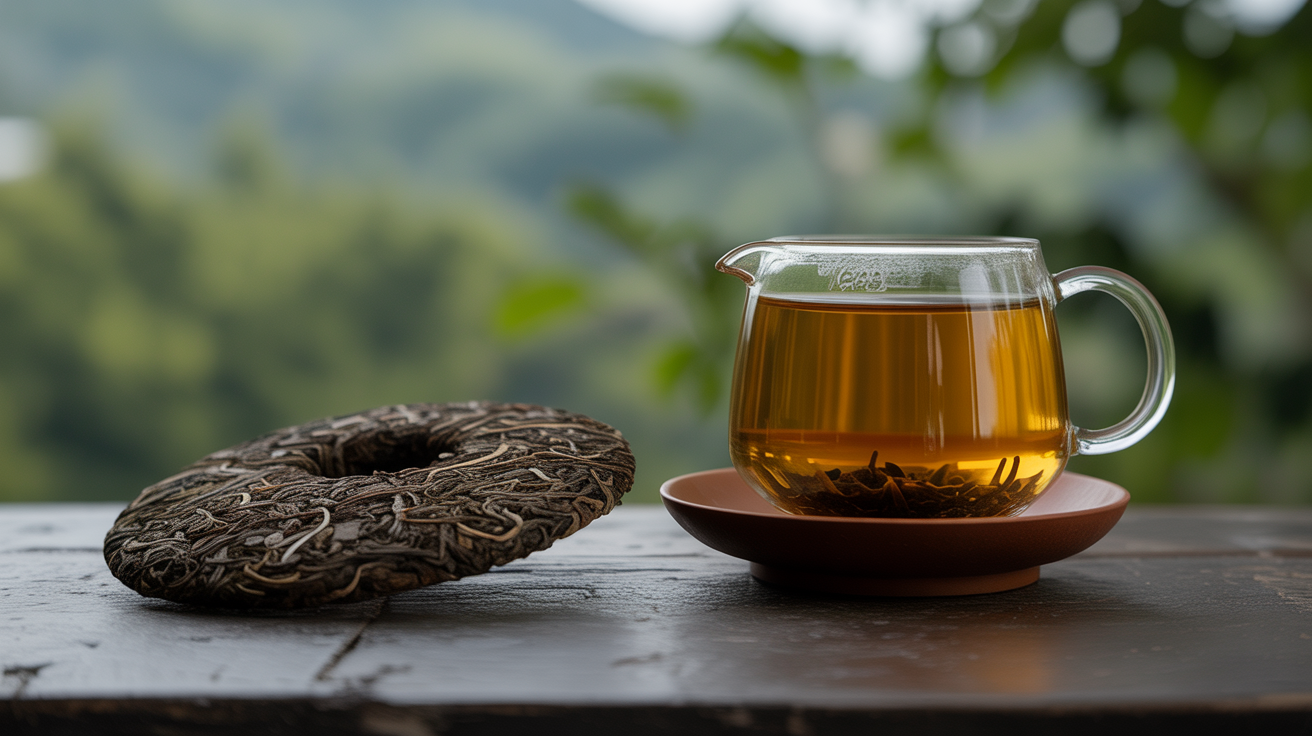
Pu-erh is a fermented tea from Yunnan, China, and it's the one style that genuinely changes with age. Whether you're buying a cheap cake to experiment with or a pressed disc that spent a decade in a warehouse, the same basic logic applies once you understand the two main types.
What Is Pu-erh Tea?
Pu-erh (also spelled "puerh" or "pu'er") is made from large-leaf tea plants grown in Yunnan Province. Unlike green or black tea, pu-erh goes through a microbial fermentation process that alters its chemistry over time. The leaves are dried, compressed into various shapes (cakes, bricks, tuocha nests), and can be stored for years or decades.
The result is a tea with earthy, sometimes mushroomy, sometimes smooth and woody flavors that you simply don't get from other categories. It also contains a mix of caffeine and aged compounds that many drinkers describe as a steadier, less jittery lift than a cup of strong black tea.
Two main forms exist on the market: sheng (raw) and shou (ripe). They start from the same leaf but diverge completely in processing.
Sheng vs. Shou: The Real Difference
Understanding sheng and shou is the key to buying and brewing pu-erh with any confidence.
Sheng (Raw) Pu-erh
Sheng pu-erh is the original form. After harvest, leaves are sun-dried and compressed, then left to age naturally. Young sheng is green-ish in appearance and sharp in flavor: bitter, astringent, floral, sometimes smoky. It's lively and aggressive on the palate.
As sheng ages, it mellows. A five-year cake softens considerably. A fifteen-year cake can be smooth, complex, and sweet at the finish. Properly stored aged sheng (kept in stable humidity and temperature, away from strong odors) is genuinely something different from anything else in the tea world. This is what pu-erh collectors seek.
Young sheng is more affordable and widely available. Aged sheng gets expensive quickly once you pass the ten-year mark.
Shou (Ripe) Pu-erh
Shou pu-erh was developed in the 1970s as a way to produce aged-tasting tea quickly. The leaves go through a pile fermentation process called wo dui, where they are stacked, moistened, and turned regularly for several weeks. Microbial activity accelerates the aging that would otherwise take years.
The result is a dark, earthy tea that tastes more like an aged sheng than a young one. Good shou is smooth, full-bodied, and low in bitterness. Lower-quality shou can smell like a wet barn or compost, which is often described as "fishy" by beginners. That character generally fades with a few years of resting after production.
Shou is the everyday drinking pu-erh for most people. It's approachable, consistent, and relatively affordable.
Quick Comparison
| Sheng (Raw) | Shou (Ripe) | |
|---|---|---|
| Processing | Natural aging | Accelerated pile fermentation |
| Young flavor | Bitter, astringent, floral | Earthy, smooth, sometimes funky |
| Aged flavor | Smooth, complex, sweet | Mellow, woody, full-bodied |
| Color in cup | Amber to orange-red | Deep reddish-brown to near-black |
| Price range | Varies widely; aged = expensive | Generally affordable |
| Good for beginners? | Start with older sheng | Yes, especially mid-range shou |
How to Brew Pu-erh
Pu-erh is almost always brewed gongfu style, which means small vessels, high leaf-to-water ratios, and short steep times. A gaiwan (lidded bowl) or small clay teapot are the traditional tools. A 100ml vessel is a common starting size.
Water and Temperature
Use filtered water if your tap water is heavily chlorinated. Pu-erh can handle near-boiling water, and most brewers use it at 95 to 100°C (203 to 212°F). The full heat helps extract the earthy depth of shou and opens up the more complex layers in aged sheng. Only young sheng with pronounced bitterness benefits from slightly cooler water, around 90°C (194°F), if you find the bitter edges too sharp.
Leaf-to-Water Ratio
A typical starting point is 5 to 7 grams of leaf per 100ml of water. Compressed cakes require breaking off leaves carefully with a pu-erh pick or flat knife; try to pry in layers rather than crushing the leaf into powder.
The Rinse
Always rinse pu-erh before the first drinking steep. Pour hot water over the leaves, let them sit for 5 to 10 seconds, then discard. This wakes up compressed leaves, removes any dust or storage residue, and reduces the initial earthiness in shou. Some brewers do a second rinse.
Steep Times
Pu-erh brewed gongfu style works in short, sequential steeps:
- Steeps 1 through 3: 15 to 30 seconds
- Steeps 4 through 6: 30 to 45 seconds
- Steeps 7 through 10: 60 seconds, increasing by 15 to 20 seconds each steep
A good pu-erh cake can yield 8 to 12 steeps before the flavor fades. This makes the per-cup cost much lower than it first appears.
If You Don't Have Gongfu Gear
You can brew pu-erh in a standard teapot or even a large mug. Use about 3 grams per 250ml, steep for 2 to 3 minutes at near-boiling water, and strain carefully. You'll get fewer total steeps from the leaves but a perfectly drinkable cup.
Shou pu-erh also works well brewed in a French press. Fill with hot water, steep 3 minutes, and press slowly.
How Pu-erh Ages and What Storage Does
Aged tea is not simply "old tea." Proper aging requires specific conditions.
Good storage keeps relative humidity between 60 and 80%, temperature stable (roughly 20 to 30°C), and the tea away from light and anything with a strong odor. Tea is absorbent and will pick up smells from its surroundings, which is why pu-erh stored near spices or cleaning products develops off notes.
Two storage styles exist in the collector world: "wet storage" (higher humidity, faster transformation, associated with Hong Kong warehouses) and "dry storage" (lower humidity, slower and cleaner aging, more common in Kunming and Taiwan). Wet-stored teas develop a particular "storehouse" character. Some drinkers love it; others find it too damp-smelling. Dry-stored aged sheng tends toward camphor, dried fruit, and wood.
If you buy compressed pu-erh to store at home, keep it unwrapped (or loosely wrapped in the original paper) in a ceramic or wooden container in a stable room. A dedicated tea cabinet with a small humidity regulator is ideal if you get serious about it.
For context on how pu-erh differs from oxidized but non-fermented teas, see black tea explained and the oxidation spectrum covered in oolong tea.
Buying Pu-erh: What to Look For
The pu-erh market ranges from cheap loose shou sold by weight to aged single-origin cakes priced at hundreds of dollars. For beginners, a few practical pointers:
- Start with shou. A mid-range shou tuocha or small cake (200g) from a known vendor will cost $8 to $20 and let you understand the category before spending on aged sheng.
- Buy from vendors with storage information. Good sellers will tell you how and where a cake was stored. "Factory stock" with a production date is more trustworthy than something described vaguely as "aged."
- Check the compression. A well-pressed cake should hold together but not be rock hard. Crumbling edges mean over-dried storage.
- Smell before you buy. Shou should smell earthy, perhaps woody or slightly sweet. A sharp ammonia smell in fresh shou indicates incomplete fermentation; it usually needs 1 to 2 years of open-air resting.
- Young sheng is an acquired taste. Start with sheng that's at least 3 to 5 years old if you're new to it.
For comparison with other leaf categories, green tea types and brewing covers the unoxidized end of the spectrum.
Frequently Asked Questions
Does pu-erh contain caffeine?
Yes. Both sheng and shou contain caffeine, generally in a range similar to other teas made from Camellia sinensis. Aged pu-erh may have slightly different caffeine levels than fresh tea due to changes over time, but no reliable figure applies across all teas. These are general notes, not medical guidance.
How do I break apart a compressed pu-erh cake without destroying it?
Use a pu-erh pick or a flat butter knife. Insert the tip along a natural crease near the edge of the cake, then gently pry upward. Work in layers, pulling apart flat sections rather than digging into the center. Crushed powder brews differently (more astringent) than intact leaves.
Why does my shou pu-erh smell fishy or like a wet basement?
This is common in freshly produced shou from pile fermentation. The odor usually comes from residual microbial activity and dissipates with resting. If you bought a cake or tuocha recently made, leave it unwrapped in a dry, well-ventilated spot for 6 to 12 months. The smell will fade significantly.
Can I cold-brew pu-erh?
Yes, and shou works particularly well cold-brewed. Use about 4 grams per 250ml of cold filtered water, steep in the refrigerator for 8 to 12 hours, and strain. The result is smooth and low in bitterness. Young sheng can become quite tannic cold-brewed, so taste after 6 hours and adjust steeping time.
What's the difference between pu-erh and black tea?
The main distinction is fermentation. Black tea is fully oxidized but not fermented by microorganisms. Pu-erh undergoes genuine microbial fermentation (and, in the case of sheng, continues to change over years), which produces entirely different compounds and flavors. In China, black tea refers to what the West calls black tea (hong cha, or "red tea"). Pu-erh is its own category, hei cha, meaning "dark tea."