Types of Tea
Black Tea Explained: Regions, Styles, and How to Brew It
A practical guide to black tea: major growing regions, flavor profiles, classic blends, and exactly how to brew a great cup.
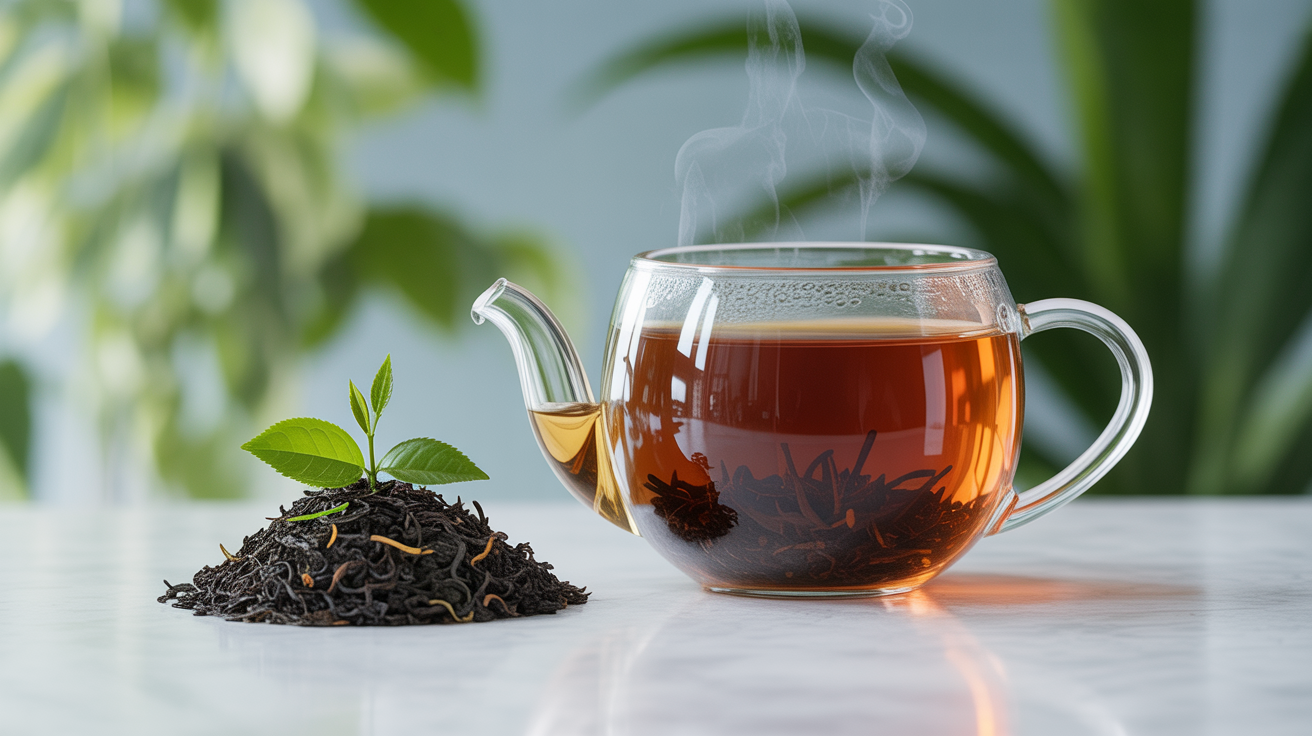
Black tea is fully oxidized, which separates it from every other category. That oxidation process turns the leaf from green to copper-brown and produces the bold, malty, sometimes brisk flavors that most people picture when they think of tea. It holds up to milk, sugar, and long steeping in ways that greener teas simply cannot.
At a glance
- Black tea is 100 percent oxidized. Green tea skips oxidation almost entirely; oolong lands somewhere in between.
- Assam is malty and built for milk. Darjeeling is floral and best drunk straight. Ceylon sits in between and irons out clean when iced.
- Most black tea calls for 95 to 100 C water and a 3 to 5 minute steep, first-flush Darjeeling and Keemun want it a touch cooler.
- CTC tea bags brew fast and strong but are essentially spent after one steep. Whole-leaf orthodox teas can often go twice.
- Bitterness almost always traces back to steeping too long or brewing too hot for that particular tea.
If you drink tea regularly, black tea is probably already in your cabinet. But there is real variety inside that category, and the difference between a first-flush Darjeeling and a robust Assam breakfast blend is large enough that they barely taste like the same thing. This guide runs through how black tea is made, where the best ones come from, how the major blends fit in, and how to brew black tea well at home.
How Black Tea Is Made
All tea comes from the same plant, Camellia sinensis. What makes black tea different is a deliberate and complete oxidation step after the leaves are harvested.
Withering and Rolling
Freshly picked leaves are spread out and allowed to wither for 12 to 20 hours, losing 30 to 40 percent of their moisture. Rolling follows, which bruises the leaf cells and releases enzymes. Those enzymes react with oxygen and start the oxidation clock.
Oxidation
Black tea is left to oxidize at controlled humidity until the leaves are uniformly brown. This can take 2 to 4 hours depending on the style. The process converts catechins into theaflavins and thearubigins, compounds responsible for the amber color in the cup and the brisk, sometimes astringent character on the palate.
Compare this to green tea, where oxidation is halted almost immediately with heat, or oolong tea, which sits somewhere in between at 15 to 85 percent oxidation. Black tea goes all the way.
Firing and Drying
Once oxidized, the leaves are fired, typically in ovens or with forced air, to lock in the flavor and bring moisture below 5 percent. CTC (crush-tear-curl) processing, developed in the 1930s and common for commodity teas and tea bags, creates tiny pellets that brew fast and strong from medium and lower grade leaf. Whole-leaf orthodox production, done by hand or with gentler machinery, keeps the leaf intact and usually yields more complexity.
Major Black Tea Regions and Styles
Geography matters more with black tea than most people realize. Soil, altitude, rainfall, and temperature all shape the cup. Here is a quick comparison:
| Region | Typical Flavor | Brew Temp | Steep Time |
|---|---|---|---|
| Assam, India | Malty, bold, slightly brisk | 95–100°C / 203–212°F | 3–4 min |
| Darjeeling, India | Floral, muscatel, lighter body | 90–95°C / 194–203°F | 3–4 min |
| Ceylon (Sri Lanka) | Bright, citrusy, medium body | 95–100°C / 203–212°F | 3–5 min |
| Keemun, China | Winey, fruity, gentle smokiness | 90–95°C / 194–203°F | 3–4 min |
| Yunnan (Dian Hong), China | Earthy, cocoa, golden tips | 90–95°C / 194–203°F | 3–4 min |
| Kenya | Bold, bright, very consistent | 95–100°C / 203–212°F | 3–4 min |
Assam
Assam sits in a low-elevation river valley in northeast India. The heat and humidity there produce a leaf with high theaflavin content, which translates to that characteristic malty punch and reddish-brown cup. Most breakfast blends are built on Assam for exactly this reason. It holds up to milk and does not go flat in a blend.
Darjeeling
Darjeeling grows at 600 to 2000 meters in the foothills of the Himalayas. The cool air and distinct seasonal flushes (first flush in spring, second flush in early summer) give the tea a lighter body and a notable muscatel quality, a fruity, almost grape-skin note. That muscatel character is not just a tasting note invented by marketers. It develops when tiny leafhoppers feed on the leaf between flushes, and the plant's response to that damage triggers compounds that read as fruity once the leaf is oxidized. First-flush Darjeeling is closer in character to a light oolong than a classic breakfast black. It does not need milk.
Ceylon
Ceylon is the colonial-era name for Sri Lanka, and it persists as a tea category. High-grown Ceylon from regions like Nuwara Eliya tends to be bright and slightly citrusy with a clean finish. Lower-grown estates produce something fuller and earthier. Ceylon is the base for most commercial iced tea because of its clarity and bright color when chilled.
Keemun
Keemun comes from Anhui province in China and has a reputation in Britain as the basis for high-grade English Breakfast blends. It has a winey, slightly fruity character with a gentle smokiness that is more suggestion than statement. The oxidation in Keemun production is often stopped a little earlier than other blacks, giving it a subtlety that rewards attention.
Yunnan (Dian Hong)
Yunnan province produces a distinctive black tea made from larger-leaf Camellia sinensis var. assamica plants. High-grade Dian Hong contains golden or silver tips and brews to a dark, rich cup with cocoa notes and an earthy sweetness. It is less brisk than Assam and works well without milk.
Kenyan Black Tea
Kenya is the third-largest tea producer in the world after China and India, and most of it is CTC Assam-type tea grown at elevation in the Rift Valley. Kenyan tea is consistent, strong, and highly soluble, which makes it a common blending component and a solid everyday cup. Premium single-origin Kenyan teas are increasingly available and show a brightness that the standard commodity crop does not.
Breakfast Blends and Earl Grey
Most black tea sold globally is blended, not single-origin. Blending gives manufacturers control over consistency regardless of seasonal variation.
- English Breakfast is the most common, typically a blend of Assam, Ceylon, and sometimes Kenyan leaf. Robust enough to drink with milk.
- Irish Breakfast skews even heavier toward Assam, producing a very strong cup that tradition calls for with a splash of milk.
- Scottish Breakfast is similar to Irish but varies by blender; it tends to be malty and full-bodied.
- Earl Grey adds bergamot oil (from a citrus fruit grown in Calabria, Italy) to a black tea base, usually Ceylon or a light blend. The floral-citrus aroma is the point; the tea itself is secondary.
- Lapsang Souchong is smoke-dried over pine wood. It tastes like a campfire in the best possible way and is not for everyone.
For contrast, white tea sits at the opposite end, barely processed and subtly sweet. Black tea and white tea occupy different planets on the oxidation spectrum.
How to Brew Black Tea
The mechanics are straightforward, but getting the temperature and timing right makes a real difference.
Water Temperature
Use near-boiling water for most black teas, 95–100°C (203–212°F). The exception is first-flush Darjeeling and delicate Keemun, which can taste harsh at a full boil; 90–95°C works better. If you do not have a variable-temperature kettle, boiling and resting for 30 seconds brings most water close to 95°C.
Leaf Ratio
A standard ratio is 2.5–3 grams of leaf per 200 ml (about 7 oz) of water. Tea bags typically contain 1.5 to 2 grams and are designed for smaller 150–170 ml cups; using a full mug with a single bag often produces a weak result.
Steeping Time
3 to 5 minutes covers almost every black tea. Start with 3 minutes for whole-leaf styles and 4 minutes for CTC and blends. Longer steeping increases bitterness and astringency, which is fine if you are adding milk but can make a straight cup unpleasant.
Do not stir aggressively during steeping; it can make CTC teas go cloudy and bitter faster than you want.
With or Without Milk
Whether you add milk is personal preference, but some teas suit it better than others:
- Assam, Irish Breakfast, English Breakfast, Kenyan: these take milk well and are often flat without it.
- Keemun, Dian Hong, Ceylon high-grown: they have enough complexity to drink straight; milk mutes what makes them interesting.
- Darjeeling first flush: skip the milk entirely; you paid for the muscatel character and milk erases it.
Add milk after pouring if you are using a teapot; the temperature drop helps anyway.
Frequently Asked Questions
Does black tea have more caffeine than green tea?
Generally yes, though the difference is smaller than most people think. Black tea typically contains 40–70 mg of caffeine per 200 ml cup; green tea runs 20–45 mg. Brewing time and leaf-to-water ratio affect it more than the type of tea. A 5-minute steep of a strong Assam will have noticeably more caffeine than a 2-minute steep of a lighter green.
What is the difference between Assam, Darjeeling, and Ceylon?
This is the core of the assam vs darjeeling vs ceylon question. Assam is bold and malty, grown low, and built for blending or strong breakfast cups. Darjeeling is lighter, floral, and muscatel, grown high in the Himalayas, and best drunk straight. Ceylon sits in the middle, bright and clean with good clarity, useful in blends and good iced. They are three different products that happen to share the same basic production method.
Can you re-steep black tea?
Whole-leaf black teas, especially Keemun and Dian Hong, give a reasonable second steep if you increase the time by 1 to 2 minutes. CTC teas and tea bags are essentially spent after the first infusion; the pellets extract almost everything in one go. The second steep from a tea bag will taste like warm colored water.
Why does my black tea taste bitter?
Bitterness in black tea almost always comes from steeping too long or using water that is too hot for the particular tea. Tannins extract aggressively past the 5-minute mark, especially with CTC leaf. Try 3 minutes first, taste, then extend from there. For Darjeeling and Keemun, drop the water temperature to 90–92°C and see if that smooths things out.
What is the best black tea for beginners?
A mid-range Assam or a straightforward English Breakfast blend is the easiest entry point. They are consistent, affordable, and forgiving. Once you know what you like about those, try a single-estate Darjeeling second flush or a golden-tip Dian Hong, both of which show how varied this types of black tea category actually is.
Further Reading
- Wikipedia: Black tea has more detail on the oxidation process and the difference between CTC and orthodox manufacture referenced above.
- Wikipedia: Darjeeling tea covers the growing region's elevation, the four flush seasons, and the leafhopper-driven chemistry behind the muscatel note.