Types of Tea
Green Tea: Types, Flavors, and How to Brew Each One
A practical guide to green tea varieties—Japanese and Chinese—with flavor notes, brew temps, and tips for avoiding bitterness.
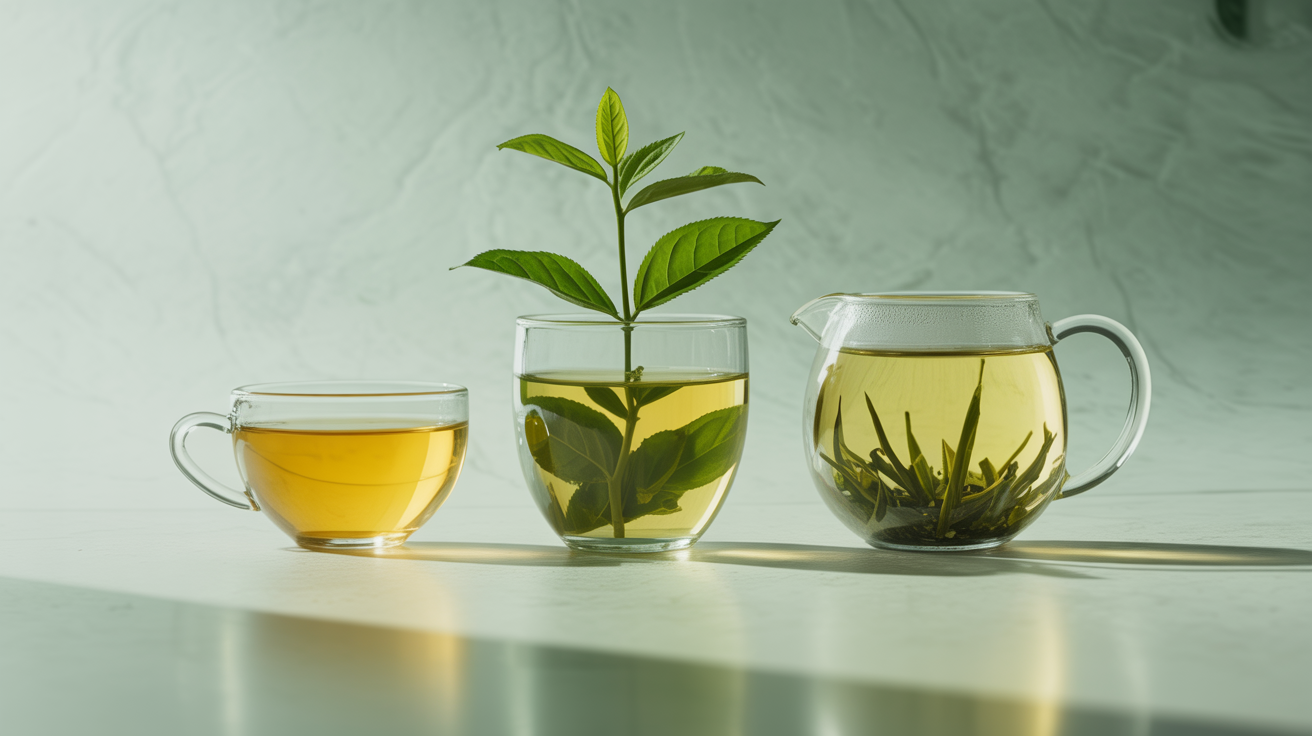
Green tea covers more ground than most people expect. It's not a single flavor profile or a single preparation style, it's a category that spans grassy and umami-rich Japanese senchas, roasted and nutty hojichas, delicate Chinese longjings with their chestnut sweetness, and matcha, which is in a category of its own in terms of how you make and drink it. Knowing what you're working with changes how you brew it, and getting the brew right is the difference between a cup that's bright and satisfying and one that's thin, flat, or bitter.
This guide covers the major green tea varieties, what makes each one taste different, and the specific temperatures and times that bring out the best in each. If you've been curious how green tea compares to the fuller oxidation of black tea or the complexity of oolong tea, the answer starts with how these leaves are processed.
How Green Tea Stays Green: The Processing Difference
All tea comes from the same plant, Camellia sinensis. What separates green tea from black or oolong is oxidation, specifically, the lack of it. When tea leaves are picked, naturally occurring enzymes begin reacting with oxygen, darkening the leaf and developing flavor compounds. Green tea makers stop this process almost immediately, before any meaningful oxidation occurs.
The two main methods are:
- Steaming (Japan): Leaves are steamed for 20–60 seconds right after picking. This locks in chlorophyll and produces flavors that tend toward grassy, vegetal, and umami.
- Pan-firing (China): Leaves go into a dry, hot wok or pan. This stops oxidation with dry heat, which drives off moisture and creates slightly toasty, nutty, or chestnut-like notes instead of the raw grassiness of steamed teas.
That single processing difference, steam versus pan-fire, explains most of the flavor contrast between Japanese and Chinese green teas.
Japanese Green Teas
Japan has a tightly developed green tea tradition, almost entirely built around steamed processing. The country grows a handful of varieties that are distinct enough to treat separately.
Sencha
Sencha is Japan's everyday green tea, accounting for around 70% of domestic production. The leaves are steamed briefly, rolled into needles, and dried. Flavor is fresh and grassy with a mild vegetal edge, some bitterness, and a clean, slightly sweet finish. Quality varies widely: a mid-grade sencha is pleasant and easy to drink; a high-grade first-flush sencha (shincha) can be remarkably nuanced.
Brew at 70–75°C (158–167°F) for 60–90 seconds with about 3–4g per 200ml. Hotter water or longer steeping amplifies bitterness fast.
Gyokuro
Gyokuro is shaded for 20–30 days before harvest. Blocking sunlight causes the plant to produce more chlorophyll and L-theanine (an amino acid that contributes to umami) and less of the catechins responsible for bitterness. The result is thick, deeply savory, and sweet, one of the most distinctive flavors in the types of green tea lineup.
Brew at 50–60°C (122–140°F) for 90–120 seconds with about 5g per 60ml. Gyokuro uses a very small volume of water relative to leaf. Too hot and the umami disappears into bitterness; too cool and it's flat. This is the most temperature-sensitive green tea you'll encounter.
Genmaicha
Genmaicha blends sencha (or sometimes bancha, a lower-grade base tea) with roasted brown rice. Some of the rice kernels puff and pop during roasting, giving the tea an earthy, toasty, slightly nutty character. It's mild, warming, and low in caffeine relative to gyokuro or matcha. A good everyday option for people who find straight sencha too sharp.
Brew at 80°C (176°F) for 60–90 seconds. Less fussy than most Japanese greens.
Hojicha
Hojicha is roasted over charcoal or in a drum roaster after the initial processing. The roasting dramatically reduces caffeine and catechins, mutes the grassiness, and introduces flavors closer to caramel, brown bread, and cocoa. The cup is pale amber rather than green. If you find green tea bitter or overly grassy, hojicha is often the variety that changes that impression.
Brew at 90°C (194°F) for 30–60 seconds. The roasted leaves are forgiving, you can even do a cold brew overnight with good results.
Matcha
Matcha deserves its own category under types of green tea because you consume the entire ground leaf, not an infusion. Gyokuro and matcha share the same shading technique, but matcha leaves (tencha) are dried flat, stems and veins removed, then stone-ground into a fine powder. You whisk the powder directly into water, no steeping, no straining.
Flavor is intense: thick, savory, grassy, with a persistent sweetness and a slight astringency on the finish. Quality matters more with matcha than almost any other tea. Ceremonial-grade matcha is intended for drinking straight; culinary-grade is fine for cooking or lattes.
For a straight bowl: 2g matcha into a preheated bowl, add 75ml of water at 70–75°C (158–167°F), and whisk in a "W" motion for 20–30 seconds until a light foam forms. Don't let the water boil, it scorches the powder and turns the flavor harsh.
Chinese Green Teas
Chinese green teas are almost entirely pan-fired, which gives them a distinct flavor profile from Japanese varieties. They tend to be drier, more subtly sweet, and less grassy.
Longjing (Dragonwell)
Longjing from Hangzhou's West Lake area is probably the most famous Chinese green. The flat, sword-shaped leaves are pan-fired by hand in curved iron woks, developing a characteristic chestnut and light vegetal sweetness with almost no bitterness when brewed correctly. Pre-Qingming longjing (picked before April 5) is the most prized, small leaves, concentrated flavor.
Brew at 75–80°C (167–176°F) for 60–90 seconds. Works well in a glass cup, you can watch the leaves unfurl.
Gunpowder
Gunpowder tea is rolled into tight pellets that look like, well, gunpowder. The rolling slows oxidation and helps the leaves keep longer. Flavor is bolder than most Chinese greens, smoky, full-bodied, slightly earthy. It forms the base of traditional Moroccan mint tea.
Brew at 80–85°C (176–185°F) for 2–3 minutes. More forgiving than other green teas and holds up well with a mint infusion.
Bi Luo Chun (Green Snail Spring)
Bi Luo Chun comes from Jiangsu province and is picked very early in spring, when the leaves are tiny and coiled into tight spirals. The flavor is delicate, floral, and fruity, stone fruit and osmanthus are common tasting notes, with a clean, refreshing finish. The leaves are covered in fine white hairs from the young growth.
Brew at 70–75°C (158–167°F) for 45–60 seconds. The small, tender leaves release flavor quickly and turn bitter fast with heat.
Quick Reference: Green Tea Varieties at a Glance
| Tea | Origin | Flavor Profile | Brew Temp | Brew Time |
|---|---|---|---|---|
| Sencha | Japan | Grassy, fresh, slight bitterness | 70–75°C / 158–167°F | 60–90 sec |
| Gyokuro | Japan | Savory, umami, sweet | 50–60°C / 122–140°F | 90–120 sec |
| Genmaicha | Japan | Nutty, toasty, mild | 80°C / 176°F | 60–90 sec |
| Hojicha | Japan | Roasted, caramel, low bitter | 90°C / 194°F | 30–60 sec |
| Matcha | Japan | Thick, grassy, sweet, intense | 70–75°C / 158–167°F | Whisk 20–30 sec |
| Longjing | China | Chestnut, sweet, clean | 75–80°C / 167–176°F | 60–90 sec |
| Gunpowder | China | Bold, smoky, earthy | 80–85°C / 176–185°F | 2–3 min |
| Bi Luo Chun | China | Floral, fruity, delicate | 70–75°C / 158–167°F | 45–60 sec |
Why Green Teas Taste Different from Each Other
The sencha vs matcha vs gyokuro comparison is a useful way into this question. The three share the same basic plant and the same steaming method (matcha's tencha is steamed before drying), but they diverge at two key points: shading and preparation.
Shading raises L-theanine and chlorophyll while reducing catechins. More L-theanine means more umami and sweetness; fewer catechins means less bitterness. That's why gyokuro and matcha taste so different from unshaded sencha despite coming from the same gardens, sometimes the same cultivar.
Preparation format matters too. Brewing sencha as an infusion means you're extracting a fraction of the leaf's compounds into water. With matcha, you're consuming everything, fiber, protein, caffeine, and all. The flavor is more concentrated because it is more concentrated.
Chinese greens taste different again because pan-firing produces different volatile compounds than steaming. Pyrazines and furans from the Maillard reaction create the chestnut and roasted notes you find in longjing that simply don't appear in a steamed sencha.
Compared to the gentle minimalism of white tea, green teas are more deliberately shaped by their processing. Each step, shading, steaming or pan-firing, rolling, drying, leaves a fingerprint in the cup.
How to Brew Green Tea Without Bitterness
Most bad cups of green tea come from two mistakes: water that's too hot and leaves that steep too long. Green teas are high in catechins, which are the antioxidant compounds responsible for bitterness. Catechins extract quickly and extract more aggressively at higher temperatures.
A few concrete guidelines:
- Use a thermometer, at least until you have your setup dialed. Guessing water temperature is the single biggest source of bitter green tea. "A bit off the boil" is vague enough to land you at 90°C when the tea wants 70°C.
- Start with less leaf than you think you need. 2–3g per 200ml is a reasonable starting point for most green teas. You can always add more next time.
- Keep steeping times short. Most green teas want 60–90 seconds on the first steep. Pull the leaves (or decant) on time, leaving them in a small pot or gaiwan while you drink is enough to over-extract.
- Rinse high-grade loose leaf with 5–10 seconds of water at brew temperature before the real steep. This wakes up the leaves and flushes out fine particles without wasting much of the first infusion's flavor.
- Re-steep. Good loose-leaf green teas, especially gyokuro, longjing, and bi luo chun, give excellent second and third infusions. Increase time by 20–30 seconds for each subsequent steep.
The approach to brewing green tea is the same whether you're using a gaiwan, a small Japanese kyusu, or a regular teapot with a removable infuser: control temperature, control time, decant promptly. The vessel matters less than those two variables.
Frequently Asked Questions
Does green tea have more or less caffeine than black tea?
Generally less, but it depends on the variety and how it's prepared. A typical cup of sencha has roughly 20–30mg of caffeine per 200ml; black tea tends to run 40–70mg. Gyokuro and matcha are exceptions on the green side, gyokuro can reach 40–50mg due to shading, and matcha, consumed as a suspension of the whole leaf, can hit 50–70mg per serving.
What's the difference between Japanese and Chinese green tea?
The main difference is processing method. Japanese greens are steamed right after harvest, which preserves a grassy, vegetal, umami character. Chinese greens are almost always pan-fired, which creates drier, nuttier, and sometimes floral or chestnut-like flavors. Neither is better, they're genuinely different experiences.
Can I use boiling water for green tea?
For most green teas, boiling water (100°C / 212°F) is too hot. It extracts bitterness aggressively and can scorch delicate leaves. The one exception is hojicha, the roasting has already transformed the catechins and tannins, so it handles high temperatures well. For everything else, cool the water down to the range listed in the table above.
How should I store green tea?
Green tea oxidizes and goes stale faster than black tea. Store it in an airtight, opaque container away from heat and moisture. The refrigerator works well for large quantities of Japanese greens, but bring the tea to room temperature before opening the container to prevent condensation from hitting the leaves. Ground matcha especially benefits from refrigeration and should be used within 6–8 weeks of opening.
Is there a caffeine-free green tea option?
Hojicha comes closest among green teas. The roasting process breaks down caffeine, and a typical cup has only 7–10mg, low enough that most people don't notice any stimulant effect. There's no fully decaffeinated version that tastes like good green tea, but hojicha is genuinely mild and works well as an evening drink.