Matcha & Whisked
Matcha Without a Whisk: Methods That Still Work
No bamboo whisk? No problem. Here are the best tools for smooth, frothy matcha at home, from shaker jars to frothers.
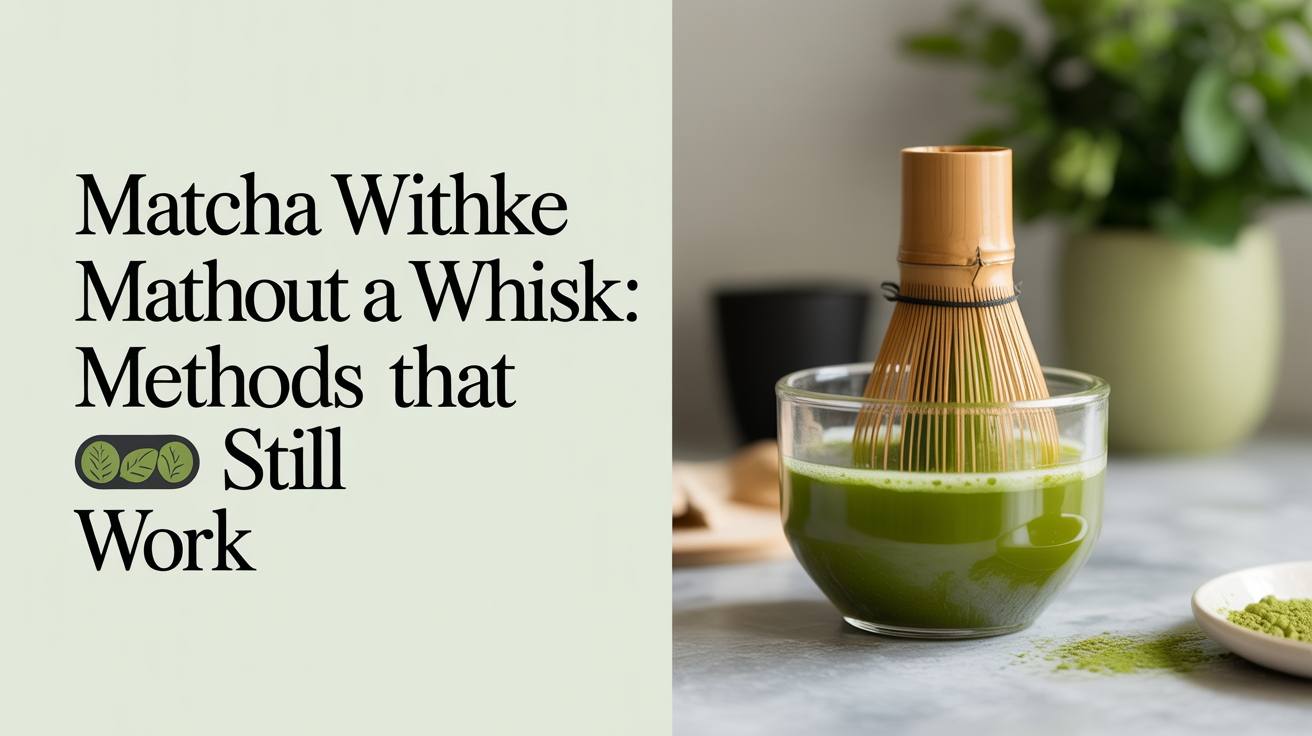
A bamboo chasen is purpose-built for matcha, and there's no arguing with that. But plenty of people make excellent matcha every day without one, using tools already in the kitchen. The trick isn't finding a perfect substitute; it's understanding what the chasen actually does so you can approximate it with something else.
The chasen does two things: it breaks up clumps and it introduces air. Any method that accomplishes both will give you a decent cup. Some methods do one better than the other. Knowing which is which helps you pick the right tool for the moment.
Why Sifting Matters More When You Skip the Whisk
A chasen is forgiving of clumps because its 100-plus tines tear through them aggressively. Alternative tools are not as forgiving. A frother or shaker jar will trap small lumps instead of dissolving them, and you'll end up with green specks floating in your cup.
Sift your matcha through a fine mesh strainer before you do anything else. A small cocktail strainer or tea strainer works. Press the powder through with the back of a spoon. This takes 20 seconds and it makes a real difference, especially with culinary-grade powder, which tends to clump more than ceremonial. If you're curious about which grade to use for everyday drinking, the breakdown in ceremonial vs culinary matcha is worth reading before you buy.
After sifting, add a small amount of water around 80°C (176°F), not boiling. Hot water scalds the powder and turns the cup bitter. About 30-40 ml to start, just enough to form a paste. This paste stage is where the real work happens.
The Shaker Jar Method
This is the most reliable method for making matcha without a chasen. It takes almost no technique, and if your lid is tight, it produces a surprisingly frothy result.
You need a small jar with a screw-top lid. A mason jar works. A protein shaker bottle works better because the plastic mesh insert breaks clumps on the way through. Even a clean jam jar will do.
Step-by-step for the matcha shaker method:
- Sift 1-2 grams of matcha into the jar.
- Add 30 ml of hot water (around 80°C). Screw on the lid and shake for 10-15 seconds.
- Open, add another 60-70 ml of hot water.
- Screw the lid back on and shake for another 10-15 seconds.
- Pour into your cup. The foam rises to the top naturally.
The result is a cup with visible froth and no lumps. It lacks the layered microfoam a chasen produces, but it's genuinely good. For lattes, this method is ideal because you can shake the matcha with a small amount of water, pour it over ice, and add cold milk without losing much foam.
One caution: hot liquid in a sealed jar builds pressure. Don't fill more than halfway, and hold a folded towel over the lid when you shake. Let some pressure out before fully opening.
The Electric Milk Frother Method
A handheld frother for matcha is probably the most popular chasen alternative, and for good reason. It's fast, the results are consistent, and the cleanup is a single rinse. Frothers are widely sold as milk frothers, but they work just as well on matcha.
Use the paste technique here. Sift the matcha, add 30 ml of hot water, and whisk briefly with a spoon to dissolve. Then submerge the frother and run it for 15-20 seconds, keeping the head near the surface to pull in air. Add the remaining hot water and froth again for 10 seconds.
What to Look For in a Frother
A frother with a fine wire coil produces more foam than one with a single loop. Battery-powered models are fine for occasional use, but if you're making matcha daily, a USB-charged frother is worth the extra few dollars. The batteries in budget models drain faster than you'd expect.
The main limitation of a frother is control. It's hard to get a fine, consistent foam in a small bowl. In a tall glass or mug it works better because the frother has room to move. For traditional preparation in a matcha bowl, a frother feels awkward. For everything else, it's a practical daily tool.
The Small Whisk or Fork Method
This one has real limits, and it helps to know them upfront. A standard kitchen whisk has far fewer tines than a chasen and moves more water than matcha, so it produces some froth but not a lot. A fork barely works at all.
That said, a small balloon whisk, the kind used for sauces, can produce a serviceable cup if you use the paste technique and whisk briskly for 60-90 seconds. The motion should be a quick back-and-forth across the bottom of the bowl, not a circular stir. The goal is agitation, not mixing.
If you want to understand the correct technique in more detail, the guide on how to whisk matcha without lumps covers the motion and angles clearly. Most of those principles apply here even with a different tool.
A fork is a last resort. It can break up clumps if you work at it, but the result will be flat and a bit grainy. Fine for adding matcha to a smoothie where texture is less important.
The Blender Method for Batches and Lattes
For anyone making matcha lattes in larger quantities or prepping a batch for iced drinks, a blender is the clearest choice. It produces a smooth, evenly mixed result with good foam, and you can make two or three servings at once.
Add your sifted matcha, hot water, and any milk or sweetener directly to the blender. Blend on high for 20-30 seconds. The result is fully integrated, with no powder settling at the bottom. This is also the best method when you're using a culinary-grade matcha that has a slightly coarser texture.
Blender Considerations
A full-size blender works, but a personal blender is easier to manage for a single serving. Some people use a small immersion blender in a tall cup, which also works well.
The blender doesn't work well for traditional thin matcha (usucha), where you want a lighter, more delicate foam. It over-emulsifies the texture. For lattes, ceremonial lattes, and matcha mixed with oat milk or cream, it's genuinely the right tool.
Comparing the Methods
| Method | Gear Needed | Result | Best For |
|---|---|---|---|
| Shaker jar | Mason jar or protein shaker | Frothy, no lumps | Quick prep, iced lattes |
| Electric frother | Handheld frother | Consistent foam, fast | Daily hot matcha |
| Small whisk | Balloon whisk | Decent foam, more effort | No special gear on hand |
| Fork | Fork | Flat, some lumps remain | Mixing into food or smoothies |
| Blender | Blender or immersion blender | Very smooth, good foam | Batch lattes, culinary use |
Each method has a clear use case. The shaker and frother are the most reliable for a standard cup. The blender makes the cleanest latte. The whisk is fine if you have one and don't mind the extra time.
If you want a full grounding in the basics before experimenting with these methods, how to make matcha covers the water temperature, ratios, and timing that apply regardless of which tool you use.
Frequently Asked Questions
Can I make matcha without any special equipment at all?
Yes. A tight-lidded jar is enough. Sift the matcha, shake it with a small amount of hot water to form a paste, then shake again with the remaining water. You don't need a frother or a whisk. The result won't be as refined as a chasen cup, but it's smooth and drinkable.
Does the quality of matcha affect these methods?
It does, but not in the way most people expect. Lower-quality powder clumps more and has a coarser texture, which means it's harder to dissolve without a chasen. Sifting helps significantly. Higher-quality ceremonial grades tend to dissolve more easily with any method because the particle size is finer.
Will a French press work for matcha?
It's not ideal. The mesh in a French press is too coarse to aerate the matcha properly, and the barrel makes it hard to create the motion you need. It can break up clumps if you press and pull the plunger rapidly, but the result is flat. A shaker jar is faster and produces better foam.
Can I use cold water instead of hot?
Cold water doesn't dissolve matcha powder well. You'll get more clumps and less flavor extraction. If you want an iced drink, prepare the matcha with a small amount of hot water first using any of the methods above, then pour it over ice and add cold liquid. This two-step approach gives you a smooth base without heating the full drink.
How much matcha should I use per cup?
For a standard 100-120 ml cup of thin matcha, 1.5-2 grams is typical. That's roughly three-quarters to one teaspoon. For a matcha latte with 200-250 ml of milk, use 2-3 grams so the flavor carries through the dairy. These ratios apply regardless of which preparation method you use.