Brewing Methods
How to Use a Gaiwan: A Step-by-Step Guide
Learn gaiwan brewing for beginners: how to hold a gaiwan, water temps, ratios, steep times, and a full step-by-step technique for any tea.
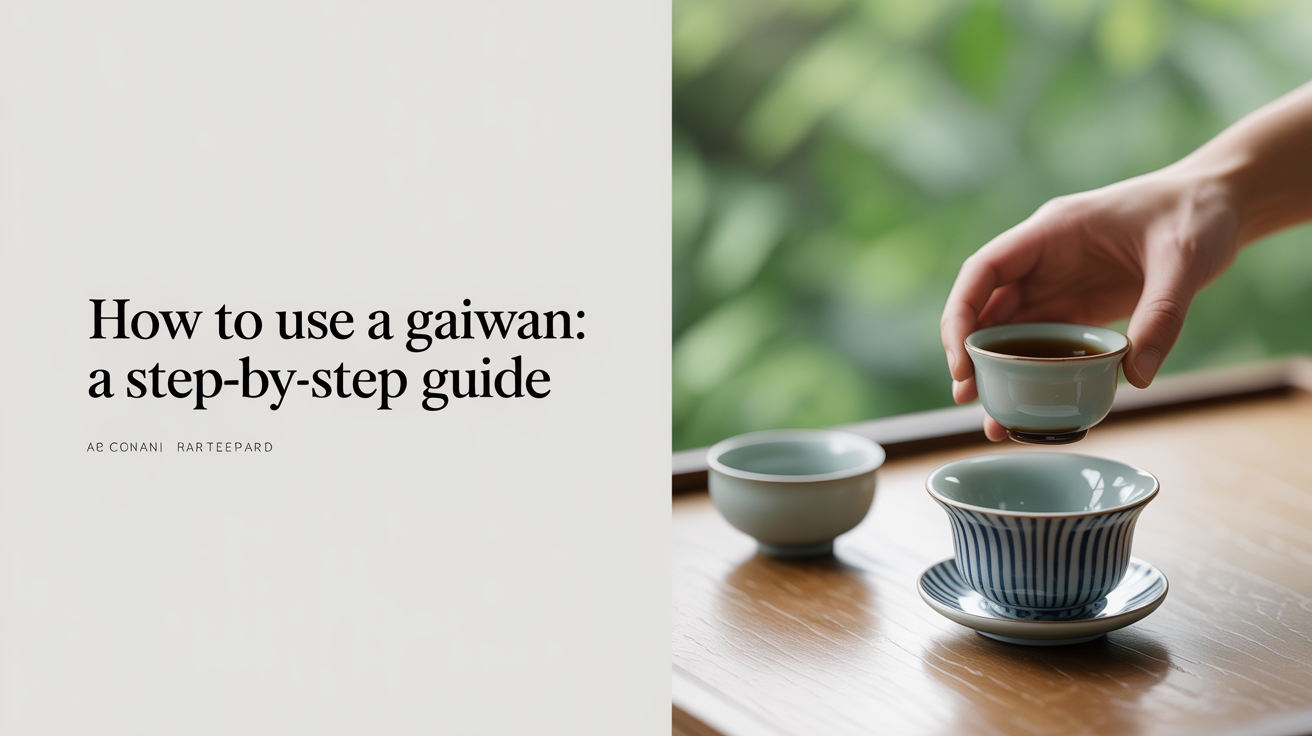
A gaiwan is a lidded bowl, a saucer, and a cup rolled into one vessel, and once you know the grip, it brews better tea than most teapots at a fraction of the cost. The whole process takes about three minutes to learn and pays off for years.
What Is a Gaiwan and Why Use One
The word "gaiwan" translates roughly as "lidded bowl." It has three parts: the saucer, the bowl, and the lid. Traditional Chinese gongfu brewing uses this vessel because it gives you direct control over every variable in the cup: leaf amount, water temperature, steep time, and how you tilt the lid as you pour.
Gaiwans are commonly made from porcelain, glass, or clay. For beginners, porcelain or glass are the most practical choices because they are neutral (they do not absorb flavors), easy to clean, and affordable. A 100 to 150 ml gaiwan is the standard size for solo brewing or for the short, repeated steeps that suit oolongs, green teas, and white teas.
The main advantage over a teapot is transparency. You see the leaves unfurl, watch the color of the liquor, and can smell the wet leaf under the lid before you pour. That feedback loop helps you learn what different teas look and smell like when they are ready.
How to Hold a Gaiwan Without Burning Yourself
This is the first thing beginners worry about, and for good reason. A full gaiwan of water just off the boil is genuinely hot. The correct grip minimizes contact with the heated ceramic.
The two-finger hold (most common):
- Place the gaiwan on its saucer on a flat surface.
- Use your dominant hand. Place your thumb on one edge of the rim and your middle finger on the opposite edge.
- Rest your index finger lightly on top of the lid knob to keep the lid in place as you tilt.
- Lift from the saucer.
The key is that your thumb and middle finger only touch the very rim of the bowl, not the sides, and the contact is brief as you tilt and pour. You are not gripping the whole vessel.
Tips to reduce heat:
- Do not fill the gaiwan completely. Leaving about a centimeter of space at the top lowers the chance of splashing hot water onto your fingers.
- Tilt the bowl away from you as you pour so steam does not rise toward your wrist.
- Wait ten seconds after the pour before lifting if the ceramic feels too hot at first.
Most people get comfortable with the grip after three or four sessions.
Step-by-Step Gaiwan Brewing Technique
The process below works for most teas. Adjust temperature and steep times based on the specific tea you are using (see the table in the next section).
What you need:
- A gaiwan (100 to 150 ml)
- A fairness pitcher or a second cup to collect the pour
- Your tea
- Filtered water, freshly boiled and rested to the right temperature
Step 1: Warm the gaiwan
Pour a small amount of hot water into the bowl, swirl it briefly, then discard into your fairness pitcher or a waste bowl. This preheats the ceramic so it does not shock the temperature of your brewing water. It also rinses the vessel.
Step 2: Add the leaf
Add your tea directly to the warmed, empty gaiwan. A general starting ratio is 5 grams of leaf per 100 ml of water. Oolongs and tightly rolled teas often work best at 6 to 7 grams per 100 ml. Light green teas sit well around 4 to 5 grams. Use a scale the first few times until you develop an eye for it.
Step 3: Rinse the leaves (optional but recommended)
For most rolled oolongs, aged teas, and compressed teas, pour water over the leaves, replace the lid, and immediately pour the water out after five to ten seconds. This brief rinse loosens the leaves and cleans any dust from processing. Do not do this with young green teas or white teas where you would lose too much of the delicate aromatics.
Step 4: First steep
Pour water in a slow circular motion over the leaves. Replace the lid. Start timing. Your first steep will generally be shorter than you expect, often ten to twenty seconds for a rolled oolong, thirty to forty seconds for a white tea, and fifteen to twenty-five seconds for a young green.
Step 5: Pour
Tilt the lid slightly so there is a narrow gap at the front. Using the two-finger hold described above, tilt the gaiwan over your fairness pitcher and let the tea drain fully. Getting all the liquid out prevents the leaves from continuing to steep and going bitter.
Step 6: Repeat steeps
This is where gaiwan brewing for beginners surprises people. You are not done after one steep. Quality loose-leaf teas typically yield four to eight steeps from a single dose of leaf. Add five to ten seconds to each successive steep to account for the leaves tiring slightly. Pour, smell, taste, and adjust from there.
Water Temperature and Ratio Reference
Different teas require different temperatures. Using water that is too hot for a green tea will make it astringent; using water that is too cool for a roasted oolong will leave it flat.
| Tea Type | Water Temperature | Leaf-to-Water Ratio | First Steep Time |
|---|---|---|---|
| Young green tea | 70 to 80 C (158 to 176 F) | 4 to 5 g per 100 ml | 20 to 30 seconds |
| White tea | 75 to 85 C (167 to 185 F) | 5 to 6 g per 100 ml | 30 to 45 seconds |
| Lightly oxidized oolong | 85 to 90 C (185 to 194 F) | 6 to 7 g per 100 ml | 10 to 20 seconds |
| Heavily roasted oolong | 90 to 95 C (194 to 203 F) | 6 to 7 g per 100 ml | 15 to 25 seconds |
| Black tea | 90 to 95 C (194 to 203 F) | 5 to 6 g per 100 ml | 15 to 25 seconds |
| Ripe pu-erh | 95 to 100 C (203 to 212 F) | 6 to 8 g per 100 ml | 10 to 15 seconds |
These are starting points. The best steep time is the one that produces a cup you enjoy, so trust your palate over the numbers as your experience builds.
How Gaiwan Brewing Compares to Other Methods
The gaiwan sits within the broader tradition of gongfu cha, a style of brewing that uses a high leaf-to-water ratio and very short steeps to produce multiple concentrated cups. Gongfu cha: how to brew tea the small-pot way covers how a teapot-based session works and how it differs from single-steep approaches.
For a cooler, slower drink, how to make cold brew tea sits at the opposite end of the spectrum: twelve hours with cold water versus twenty seconds with near-boiling water.
For days when you want simplicity without multiple steeps, western-style brewing: getting the most from a single steep covers how to adjust ratios and time for a full-flavored cup in one go.
Common Beginner Mistakes
Using too much water. If the gaiwan is too full, you will burn your fingers when you pick it up. Fill to about 80 to 85 percent of the vessel's capacity.
Steeping too long on the first pour. Beginners tend to steep gaiwan teas as if they were using a Western mug. A three-minute steep with a 7-gram-per-100-ml ratio will produce an undrinkably astringent cup. Start short and adjust upward.
Not draining fully. Leaving liquid in the gaiwan while you drink means the leaves keep steeping. Always tip the gaiwan until the last drops fall out.
Skipping the rinse on compressed teas. Storage dust on pu-erh or aged teas goes straight into your first cup if you skip the rinse. It takes ten seconds and is worth doing every time.
Giving up after one or two steeps. Many teas hit their peak at the third or fourth steep, not the first. A first steep from a new oolong can taste grassy or sharp; by the third, the same leaf is often floral and smooth. Give the leaf time to open.
Frequently Asked Questions
Can I use a gaiwan for all types of tea?
Yes. A gaiwan works for any loose-leaf tea. It is particularly well suited to teas that reward multiple steeps, such as oolongs, white teas, and pu-erh. It can also be used for green and black teas, though you will want to keep steeps short and temperatures accurate to avoid bitterness.
What size gaiwan should a beginner buy?
A 100 to 120 ml gaiwan is the most practical starting size. It is small enough to pour in a single motion and large enough to evaluate flavor across several steeps. Larger gaiwans (over 200 ml) are harder to control with the standard two-finger grip.
How do I know when to stop steeping a session?
Taste is the reliable guide. When the flavor becomes thin, faint, or watery rather than lighter and cleaner, the leaves have given what they have. For most teas this happens somewhere between the fifth and ninth steep depending on leaf quality and how tightly you rolled your early steeps.
Do I need a fairness pitcher?
You do not strictly need one, but it helps. Pouring directly from the gaiwan into one cup means the pour runs slowly at first and faster at the end, so the last cup in a group is stronger. A fairness pitcher catches everything and equalizes the concentration. If you are brewing just for yourself, a second small cup works fine.
Is a gaiwan dishwasher safe?
A quick rinse with hot water after each session is all a gaiwan needs. Repeated dishwasher cycles shorten the life of the glaze over time, so hand rinsing is the better habit.