Matcha & Whisked
How to Store Matcha to Keep It Green
Keep matcha vivid and fresh by blocking its four enemies: air, light, heat, and moisture. Learn the right containers, fridge vs freezer rules, and how to spo...
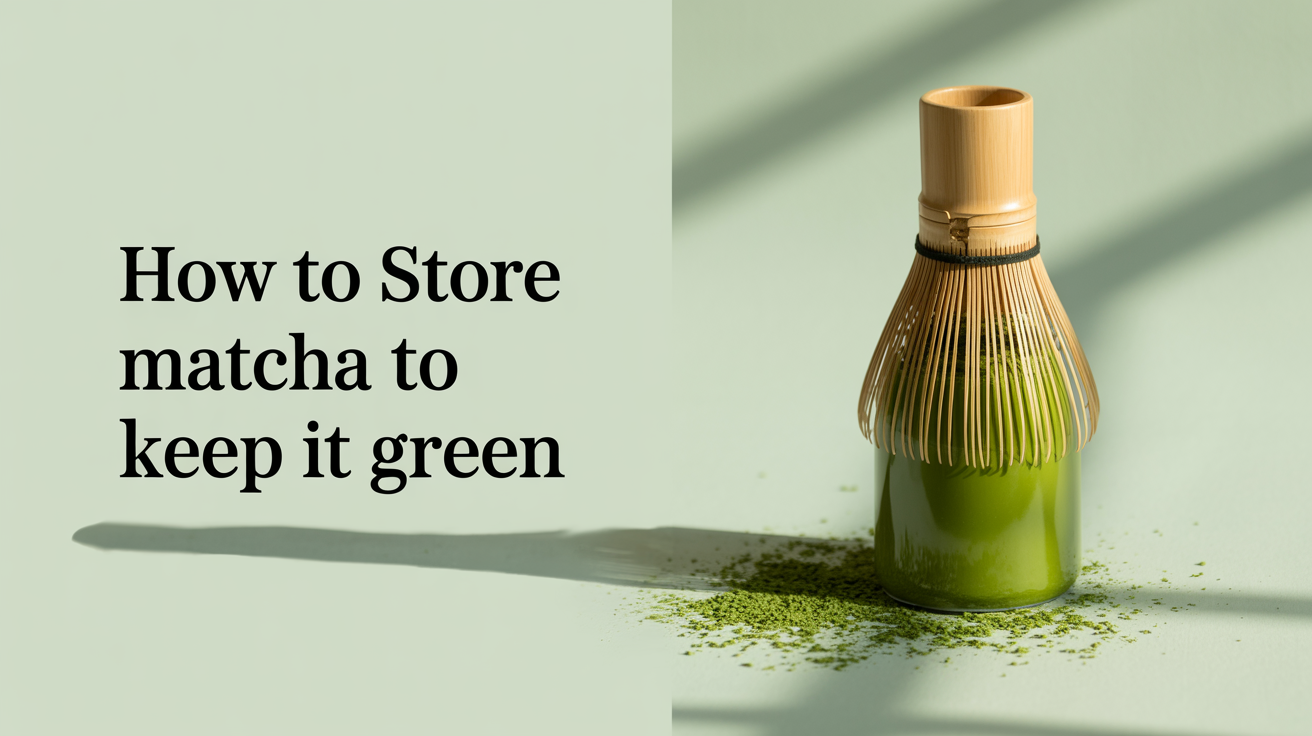
Matcha stays vivid and vegetal when it's kept away from four things: air, light, heat, and moisture. An airtight tin stored in a cool, dark cabinet is usually all you need.
Why Matcha Degrades So Quickly
Matcha is finely milled green tea leaf, and that enormous surface area is what makes it taste bright and grassy. It's also what makes it vulnerable. When oxygen, UV light, heat, or water vapor touch those tiny particles, the chlorophyll breaks down and the flavor compounds oxidize. The result is a dull, yellow-brown powder that smells flat and tastes harsh.
The Four Enemies of Fresh Matcha
Air (oxygen). Oxidation begins as soon as the tin is opened. Every time you lift the lid, a fresh burst of oxygen reaches the powder. The more surface area exposed per gram, the faster it happens.
Light, especially UV. Clear glass jars look attractive on a counter, but they accelerate color loss and flavor fade. Opaque or dark containers block the wavelengths that break down chlorophyll most aggressively.
Heat. Temperatures above roughly 25 C (77 F) speed up every degradation reaction. A spot next to the stove or under a sunny window is one of the worst places to keep a tin.
Moisture. Matcha powder is hygroscopic: it pulls water vapor from the air. Even moderate humidity causes clumping and speeds up breakdown significantly.
A fifth factor worth noting is strong odors. Matcha absorbs smells from neighboring foods. Stored near coffee or spices, it picks up off-flavors within a week.
Choosing the Right Container
The container matters as much as the location.
What to look for:
- An airtight seal, either a lid that clicks or screws down firmly, or a tin with a press-fit inner lid inside a screw cap
- Opaque material: matte tin, dark-glazed ceramic, or dark glass
- A size roughly matched to how much you buy at once, so you're not leaving a small amount at the bottom of a large container with a lot of headspace
Traditional Japanese ceremonial matcha tins are designed with exactly this in mind: small, double-lidded, and airtight. If you transfer matcha into a different container, make sure the new one is completely dry before adding powder.
What to avoid:
- Clear glass jars left on the counter in any light
- Plastic bags folded loosely at the top
- The original foil pouch used loosely between scoops (fine for very short-term use if resealed tightly every time, but not reliable beyond a week)
Cabinet, Fridge, or Freezer?
Where you keep matcha depends mainly on how fast you go through a tin.
The Cabinet (Best for Daily Use)
If you brew matcha every day and a 20-30 g tin lasts three to four weeks, a cool, dark cabinet works well. There is no condensation risk, and you don't have to wait for the powder to come to room temperature before you scoop. A pantry shelf or a lower cabinet on an interior wall, away from the stove and any window, is the right spot.
The Fridge (Good for Slower Use)
If you brew two or three times a week and a tin lasts six to eight weeks, the fridge extends freshness. There is one rule that cannot be skipped: let the tin come fully to room temperature before opening it. Cold matcha powder meeting warm room air creates condensation inside the tin, which is worse than no refrigeration at all. Set the sealed tin on the counter for at least 20-30 minutes before you open it.
Keeping the tin inside a small zip bag inside the fridge also reduces odor absorption from other foods.
The Freezer (Long-Term or Bulk Storage)
If you buy matcha in larger quantities or receive a tin you won't use for a few months, the freezer is a reasonable choice. Matcha sealed and frozen can hold its color and flavor for up to six months.
The condensation rule applies here even more strictly. A frozen tin needs at least an hour on the counter, still sealed, before opening. A practical approach is to portion out roughly a month's supply into a small fridge tin, and keep the rest frozen. That way the main stash is never repeatedly cycled between freezer temperatures and room temperature.
How Long Does Matcha Keep?
| Situation | Freshness |
|---|---|
| Sealed, unopened, stored properly | Up to the printed best-by date (often 12-18 months from production) |
| Opened, room-temperature cabinet | 3-4 weeks at peak; usable up to 6-8 weeks |
| Opened, refrigerated | 6-8 weeks at peak |
| Opened, frozen, thawed once | 3-4 months |
| Left in a warm or bright spot | Days to a couple of weeks |
One thing to keep in mind: the best-by date is measured from when the tea was packaged, not when you opened it. A tin that sat on a shop shelf for three months before you bought it has less runway than a tin shipped directly from the farm.
For more on how grade affects what you're tasting (and how quickly freshness shows), see the guide to ceremonial vs culinary matcha.
How to Tell When Matcha Has Gone Bad
A fresh tin of quality matcha has powder that is vivid, saturated green, somewhere between grass-green and a slightly bluish-green. The smell is clean and vegetal, faintly sweet, with a savory undertone.
Oxidized matcha looks and smells different:
- Color. The green shifts toward yellow-brown or olive drab. Sometimes only the surface layer dulls while the interior stays greener, because the surface has had more air contact. This is a clear sign oxidation is underway.
- Smell. Fresh matcha smells like clean, slightly sweet grass. Old matcha smells flat, papery, or faintly like hay. A dusty or stale scent is also common.
- Taste. Brew a small amount and taste it plain. Oxidized matcha tastes thin and bitter, with harsh astringency and none of the balancing sweetness or umami depth that makes a good bowl enjoyable.
A yellowed, hay-smelling tin is not dangerous. You can still use it in lattes, baked goods, or smoothies where other flavors cover the flatness. For a plain whisked bowl, though, the result will be a disappointment. If you're working on getting the bowl right, the technique guide on how to whisk matcha without lumps is worth reading alongside this.
Practical Habits That Protect Freshness
Small habits matter as much as the container itself:
- Buy in smaller amounts, more often. A fresh 20 g tin used in three weeks tastes better than a large 100 g bag slowly working through the pantry for five months.
- Always use a dry scoop. A single drop of moisture from a damp spoon starts clumping immediately and introduces localized humidity into the tin.
- Wipe the rim before closing. Powder caught in the lid seal creates a small gap that lets air in over time.
- Minimize the time the lid is off. Scoop what you need, close the tin, and then sift and prepare your bowl. Don't leave the lid off while you heat water or set up teaware.
- Keep the tin away from the coffee grinder, spice rack, and dishwasher. All three produce heat and odors that migrate more than you'd expect.
If you want to walk through the full brewing process from sifting to the first sip, the step-by-step matcha guide covers the whole routine in order.
Frequently Asked Questions
Does matcha go bad?
It doesn't spoil the way fresh food does, but it does degrade in a meaningful way. Oxidized matcha loses its color, aroma, and flavor over weeks. A tin that smells flat or looks yellow-brown is past its best. It's still safe to use in cooking or drinks where other flavors carry the cup, but a plain whisked bowl will taste harsh and thin.
Why is my matcha yellow?
Yellow powder is oxidized matcha. Chlorophyll, the compound responsible for the vivid green color, breaks down when exposed to oxygen, light, heat, or moisture. Once it has happened, there is no reversing it. Use the tin in baked goods or blended drinks where the color and flavor loss won't matter, and buy a fresh tin for drinking.
Can I store matcha in the fridge?
Yes, with one important step: let the sealed tin come to room temperature for at least 20-30 minutes before opening it. Opening a cold tin in a warm kitchen causes condensation inside the container, introducing the moisture you were trying to avoid. As long as you follow that step every time, the fridge meaningfully extends freshness for slower users.
How long does an opened tin of matcha last?
At room temperature in a sealed, opaque tin in a cool cabinet: three to four weeks at peak quality, and usable for up to six to eight weeks. Refrigerated, expect six to eight weeks at peak. Higher-grade matcha tends to show freshness changes more noticeably because you're tasting it without anything masking it.
Can I freeze matcha?
Yes, and it works well for bulk storage. Keep it in a sealed airtight container, portion out only what you'll use in a month, and avoid repeated freeze-thaw cycles. A frozen tin needs to sit on the counter, sealed, for at least an hour before opening to prevent condensation from forming inside.