Teaware & Ritual
How to Set Up a Small Tea Corner in Your Home
A practical guide to building a tea station at home: pick a spot, choose the core gear, organize your teas, and keep it tidy even in a small space.
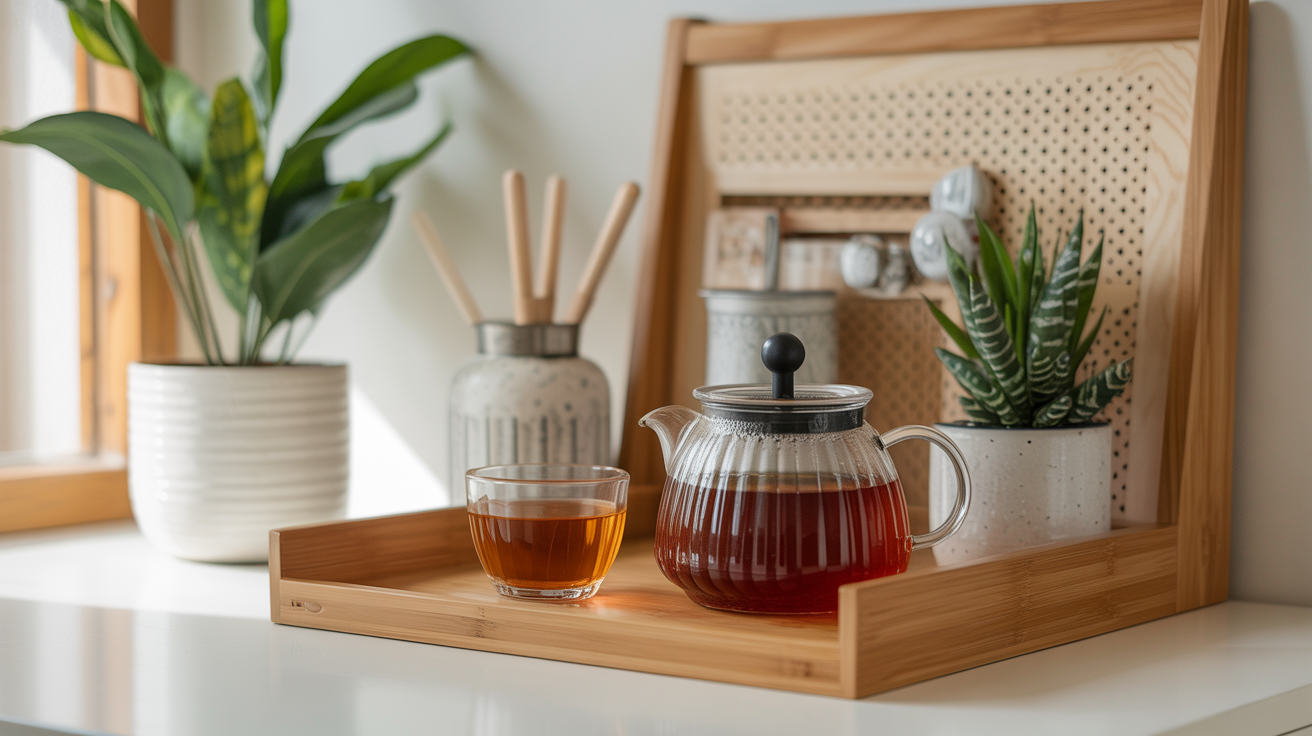
A tea station at home doesn't need to be elaborate. A tray, a kettle, and a few tins can get you there in an afternoon, and this guide walks through every piece of the setup, from picking a location to keeping the whole thing tidy as your collection grows.
Picking a Spot That Works
The best spot for a tea corner sits close to a power outlet, within a few steps of the sink, and out of direct sunlight. Those three conditions cover most of the practical issues: you need electricity for the kettle, running water nearby for rinsing, and shade to keep your teas from going stale.
A kitchen counter is the obvious choice, but it isn't the only one. A small rolling cart works well in apartments where counter space is tight. A narrow console table in a corner, a section of a bookshelf, or a wall-mounted ledge shelf can all hold a full setup as long as the surface is sturdy enough for a full electric kettle, which weighs roughly 1 to 2 kg loaded.
A few spots to avoid:
- Above or beside the stove. Steam and ambient heat over time can warp wooden trays and corrode tin lids.
- A windowsill with afternoon sun. UV light degrades tea faster than almost anything else, especially greens and white teas.
- Anywhere far from a sink. You will rinse your brewing vessel constantly, and a long walk means you'll skip that rinse.
If the best available spot gets some morning light, a closed cabinet door or a small curtain fixes the problem without moving the whole station.
The Core Gear for a Tea Station at Home
You don't need everything at once. Start with what you actually use, then add as the habit settles in.
Kettle
A temperature-controlled kettle is the most useful single piece of equipment. Green teas, white teas, and matcha call for water around 70 to 80°C; black teas and herbals are fine at a full rolling boil. A kettle that lets you dial the temperature removes the guesswork and protects delicate teas from bitterness caused by water that's too hot. A gooseneck spout also gives you better control over pour speed and direction, which matters more than it sounds once you start brewing loose leaf regularly.
Brewing Vessel
A teapot or gaiwan handles most brewing styles. A teapot holds more liquid and is easier to pour for multiple cups; a gaiwan gives you direct control over steep time and rinses clean between different teas. There's a closer look at both options if you're deciding which to start with. If you mostly make single cups and aren't ready to commit to either, a well-fitted infuser basket in a mug is a perfectly workable starting point.
Cups
Two or three cups is plenty. Wide, low cups without handles retain heat well and let you smell the tea before the first sip. The shape and material matter less than how comfortable the cup feels in your hand. You don't need a matched set.
Tea Storage
Tins with tight lids are the standard, and they hold up well. Loose leaf tea stays fresh when kept away from light, heat, moisture, and strong smells. Ceramic caddies and dark glass jars also work. Clear glass on an open shelf lets in too much light.
Label everything with the tea name and the date you opened it. Most loose leaf teas are at their best within 6 to 12 months of opening, though aged oolongs and pu-erh are exceptions and can improve with time in the right conditions.
Tray
A tray defines the workspace and catches drips and spills. Bamboo, wood, ceramic, and stone all work. It also makes the whole station easy to lift and move if you need the counter space for something else. The tray doesn't need to be large; 35 x 25 cm is enough to hold a kettle, a brewing vessel, two cups, and a small bowl.
Waste Bowl
A waste bowl, sometimes called a rinse bowl, holds rinse water, the first flash-rinse pour from a gaiwan, and spent leaves. Any small ceramic bowl works. A spare cereal bowl from the kitchen does the job; it doesn't need to match anything on the tray.
How to Organize Tea by Type
Grouping teas by type makes it easier to grab what you want, especially once your collection grows past four or five tins.
| Tea Type | Storage Notes | Shelf Life After Opening |
|---|---|---|
| Green & white | Most sensitive to heat and light; keep cool and shaded | 6 months |
| Oolong | Moderate sensitivity; tins work well | 12 months |
| Black | Least sensitive; stores easily at room temperature | 12 to 18 months |
| Herbal & blend | Many contain flowers and dried fruit; keep dry | 6 to 12 months |
| Matcha | Degrades quickly; refrigerate and use within 4 to 6 weeks of opening | 4 to 6 weeks |
A simple shelf arrangement: green and white teas in front (you'll reach for them first since they're most delicate), oolongs and blacks in a second row, herbals to one side, matcha in a small separate tin up front. If you have five or six tins total, alphabetical order or frequency of use works just as well as any system.
For infusers and strainers, keep them in a small jar or ceramic cup on the tray rather than in a drawer. A wet infuser left in a closed drawer goes moldy faster than you'd expect. Rinse it after every use, shake off the water, and let it sit open in the jar until it's dry.
Small-Space and Budget Options
A complete tea corner doesn't require much space or money. Here are practical adjustments for tighter setups.
Use a rolling cart. A two or three-shelf cart on wheels fits between appliances, holds everything you need, and rolls out of the way. Kettle on the bottom, tins on the middle shelf, workspace on top.
Stack vertically. A narrow shelf unit above the counter or wall-mounted puts the tins up out of the workspace without using any counter area at all. A basic spice rack handles a collection of six to eight tins.
Start with a mug and an infuser basket. You don't need a teapot or gaiwan on day one. A mug with a well-fitted basket infuser makes a clean cup, costs very little, and takes up almost no space on a tray.
Repurpose what you have. A small cutting board works as a tray. A glass jar holds infusers. A mason jar with a tight lid stores tea. You can build a functional station for well under $30 if you already own a few kitchen basics and are willing to start simple.
Store off the counter when not in use. If counter space is a real problem, keep the tins in a basket in a cabinet and put out only the kettle and tray. The act of taking out the basket and arranging the setup fits naturally into the small pause that brewing tea is good for anyway.
Frequently Asked Questions
Do I need a dedicated kettle, or can I use a regular one? A regular stovetop or electric kettle works fine for black teas and herbals. If you drink green, white, or oolong teas regularly, temperature control is worth the cost. A basic variable-temperature kettle starts around $40 to $60 and handles the full range of tea types without overheating delicate leaves.
How much counter space does a tea corner actually need? A tray around 35 x 25 cm holds a kettle, a brewing vessel, two cups, and a small waste bowl. That's the working footprint. Tins go on a shelf above or behind. The whole setup fits comfortably in a space smaller than an open laptop.
How do I keep teas from going stale? Away from light, heat, and moisture covers most of it. A closed tin on a shaded shelf is usually fine for black and oolong teas. Greens and whites are more sensitive and do better in a cooler spot away from the stove. Matcha is the one tea that benefits from refrigeration after opening, stored in its tin or an airtight container, and should be used within about a month.
Can I use different brewing vessels for different teas? Yes, and many people do. A gaiwan is easier to clean between strongly scented teas and gives you closer control over the steep. A teapot is better for relaxed, multi-cup sessions. Owning both gives you flexibility. Start with one and add the other when the need comes up naturally.
What's a good way to manage a growing tea collection? Label tins with the tea name and the opening date, grouped by type. Once you have more than ten tins, a quick list in a notes app helps you track what's there and what's running low. It also stops the common habit of buying more of a tea you already have three-quarters of a tin of at home.