Brewing Methods
How to Make a Tea Latte at Home
Learn how to make a tea latte at home: the concentrate-plus-milk formula, London Fog and chai recipes, frothing tips for dairy and oat milk.
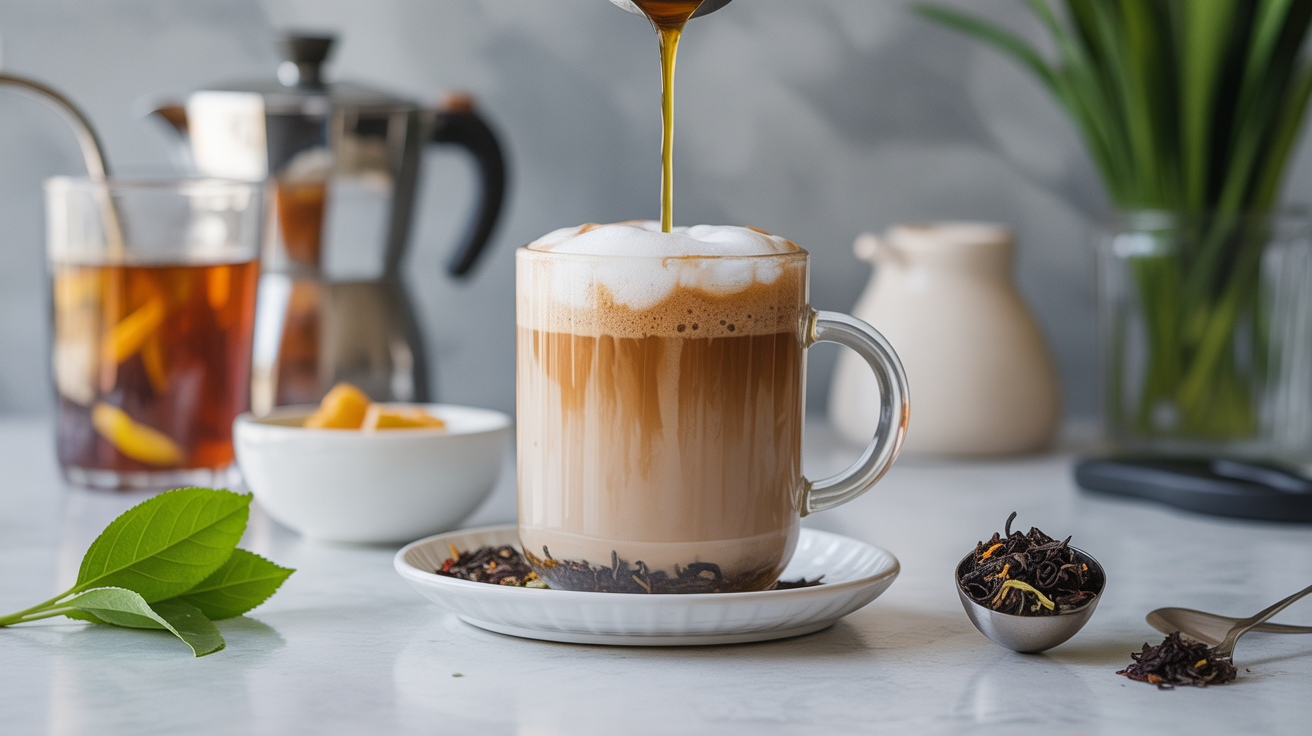
A tea latte is brewed tea concentrate mixed with steamed or frothed milk, and you can put one together in about ten minutes using gear you probably already own. The key is concentration: milk dilutes flavor, so the tea needs to be roughly twice as strong as a normal mug before you add anything else.
Note before you start: tea lattes and matcha lattes are different drinks. Matcha is whisked powder, not steeped leaf. This guide covers only steeped tea lattes.
The Basic Formula
Every homemade tea latte follows the same three-part structure: a strong tea concentrate, steamed or frothed milk, and an optional sweetener. Get the ratios right and the rest is just choosing which tea to use.
| Component | Amount |
|---|---|
| Tea concentrate | 3 to 4 oz (90 to 120 ml) |
| Steamed or frothed milk | 5 to 6 oz (150 to 180 ml) |
| Sweetener (optional) | 1 to 2 tsp honey, sugar, or syrup |
To make the concentrate, use twice the tea you normally would for the same amount of water. Two teaspoons of loose leaf (or two bags) per four ounces of water is a reliable starting point. Steep slightly longer than usual as well, around four to five minutes for most black teas. The result should taste strong on its own, almost too strong to drink plain. That's correct.
Temperature and Steeping Reference
| Tea Type | Water Temperature | Steep Time |
|---|---|---|
| Black (Earl Grey, Assam, Darjeeling) | 212°F / 100°C | 4 to 5 min |
| Chai masala blend | 212°F / 100°C | 5 to 6 min |
| Rooibos | 212°F / 100°C | 5 to 6 min |
| Chamomile or herbal | 212°F / 100°C | 5 to 7 min |
| Green tea | 175°F / 80°C | 2 to 3 min |
Black tea can absorb a longer steep when milk is involved because the milk softens tannins. Green tea is less forgiving and can still turn bitter, so watch the time.
If you want to refine your concentrate further, western-style brewing covers how small adjustments to leaf quantity and steep time change the final cup.
How to Froth Milk for a Tea Latte
You do not need an espresso machine. Four common methods work for frothing milk at home, and most people already have at least one.
Handheld electric frother Heat milk to around 150°F in a saucepan or the microwave (about 60 to 70 seconds for six ounces). Submerge the frother just below the surface and run it for 20 to 30 seconds, moving it slowly upward to incorporate air. This produces a light, airy foam for about $10.
French press Heat the milk, pour it into a clean French press (no coffee residue), and pump the plunger 20 to 30 times. The bubbles are a bit coarser than a frother but the result drinks well.
Jar shake method Pour warm milk into a jar, filling it halfway. Seal the lid and shake hard for 30 to 45 seconds. Remove the lid and microwave for 20 seconds to stabilize the foam. Works in a pinch.
Steam wand If you have an espresso machine, angle the pitcher slightly, submerge the wand just below the surface, and steam to 150°F. Tap the pitcher on the counter and swirl to break large bubbles before pouring.
Dairy and Non-Dairy Frothing Notes
| Milk Type | Frothing Behavior | Notes |
|---|---|---|
| Whole dairy | Rich, stable foam | Easiest to froth |
| 2% dairy | Lighter but consistent | Any method works |
| Barista oat milk | Excellent, creamy | Best non-dairy option |
| Regular oat milk | Thin, inconsistent foam | French press helps |
| Almond milk | Low protein, weak foam | Expect modest results |
| Soy milk | Good protein, can curdle | Let concentrate cool to 140°F first |
| Coconut milk (carton) | Sweet, moderate foam | Handheld frother works |
If oat milk separates when added to tea, the concentrate is either too hot or too acidic. Cool it to around 140°F before combining, or switch to a barista-formulated oat milk, which contains emulsifiers that prevent splitting.
London Fog: An Earl Grey Tea Latte
The London Fog is the most common homemade tea latte, and a good one to start with because Earl Grey is widely available and handles extra steeping time well. The vanilla note in the recipe is not optional in terms of flavor: it ties the bergamot and milk together in a way that just sugar does not.
What you need:
- 2 tsp loose Earl Grey or 2 bags
- 4 oz water at 212°F
- 5 to 6 oz milk of your choice
- 1 tsp vanilla extract or vanilla simple syrup
- Honey or sugar to taste
Steps:
- Steep Earl Grey in 4 oz of boiling water for 4 to 5 minutes, using double the usual amount of leaf.
- Remove the tea. Stir in vanilla and sweetener while the concentrate is still hot.
- Froth your milk using whichever method you have.
- Pour the concentrate into your mug first, then pour the frothed milk over it slowly.
- Spoon any remaining foam on top.
If your Earl Grey contains lavender, skip the vanilla or the flavor tips into soap. Plain bergamot Earl Greys pair well with both vanilla and honey.
This same concentrate technique works with any black tea you enjoy drinking on its own.
Chai Tea Latte
A chai latte follows a slightly different logic. Traditional masala chai simmers the tea and spices directly in milk and water together, rather than making a concentrate separately. This extracts the spice flavor more fully and gives the drink a richer body.
Stovetop chai method:
- Combine 1 cup milk with 1/2 cup water in a small saucepan.
- Add whole spices: 2 crushed cardamom pods, 3 to 4 slices of fresh ginger, 1/4 tsp ground cinnamon, 2 cloves, and a pinch of black pepper. Adjust to your taste.
- Bring to a gentle simmer over medium heat. Cook for 3 to 4 minutes to let the spices bloom.
- Add 2 tsp of Assam or another robust black tea. Simmer for 2 more minutes.
- Strain into a mug and sweeten with sugar, honey, or jaggery.
Shortcut with a pre-blended chai: Steep 2 tsp of a chai blend in 3 to 4 oz of boiling water for 5 minutes, then add frothed milk as you would for a London Fog. Less complex in flavor, but workable on a busy morning.
Pre-made liquid chai concentrates from grocery stores are convenient. Most are heavily sweetened, so use half concentrate and half milk and taste before adding more sugar.
Iced Tea Lattes
The same concentrate-plus-milk formula works cold. No frothing required.
- Brew the concentrate, then let it cool to room temperature before pouring over ice. Adding hot concentrate directly to ice melts it fast and thins the drink.
- Use roughly one part concentrate to one and a half parts cold milk over ice.
- Cold brew tea makes a naturally smooth, low-bitterness concentrate that works particularly well here. See how to make cold brew tea for the process.
An iced Earl Grey latte with oat milk and vanilla syrup, poured over a full glass of ice, drinks well on a warm afternoon. Use the same London Fog concentrate from above and simply skip the frothing step.
Frequently Asked Questions
Is a tea latte the same as a matcha latte? No. A matcha latte uses whisked matcha powder mixed directly into milk. It is not steeped and does not involve a concentrate. The flavor, color, and technique are entirely different. If you are interested in matcha specifically, that is its own preparation method.
Can I use tea bags instead of loose leaf? Yes. Use two bags where you would normally use one. Steep for the full doubled time, then remove the bags before adding milk. Most supermarket black tea bags hold up well. The flavor ceiling is lower than good loose leaf, but the result is a proper tea latte.
Why does my tea latte taste watery? The concentrate was not strong enough. Use more leaf (or more bags) or reduce the water volume. Some teas also need longer steep times than others. A light Ceylon steeped for 2 minutes will not have enough body to carry milk. A 5-minute Assam will.
What temperature should the milk be? Around 140 to 150°F (60 to 65°C). Above 160°F the proteins start to break down, which flattens the flavor and makes frothing less effective. At 150°F the outside of the pitcher should feel hot but just barely holdable. A small thermometer takes the guesswork out of this quickly.
Can I use a different brewing style for the concentrate? Yes. Multiple short steeps from a gaiwan or small clay pot can produce a naturally concentrated, layered brew that works beautifully in a latte, especially with a good oolong. It takes more attention but the flavor is different in a worthwhile way. Gongfu-style brewing explains the approach step by step.