Brewing Methods
How to Get Multiple Infusions From the Same Leaves
Good loose leaf tea is built for multiple steeps. Learn how to get 3–8 infusions from the same leaves with better flavor every round.
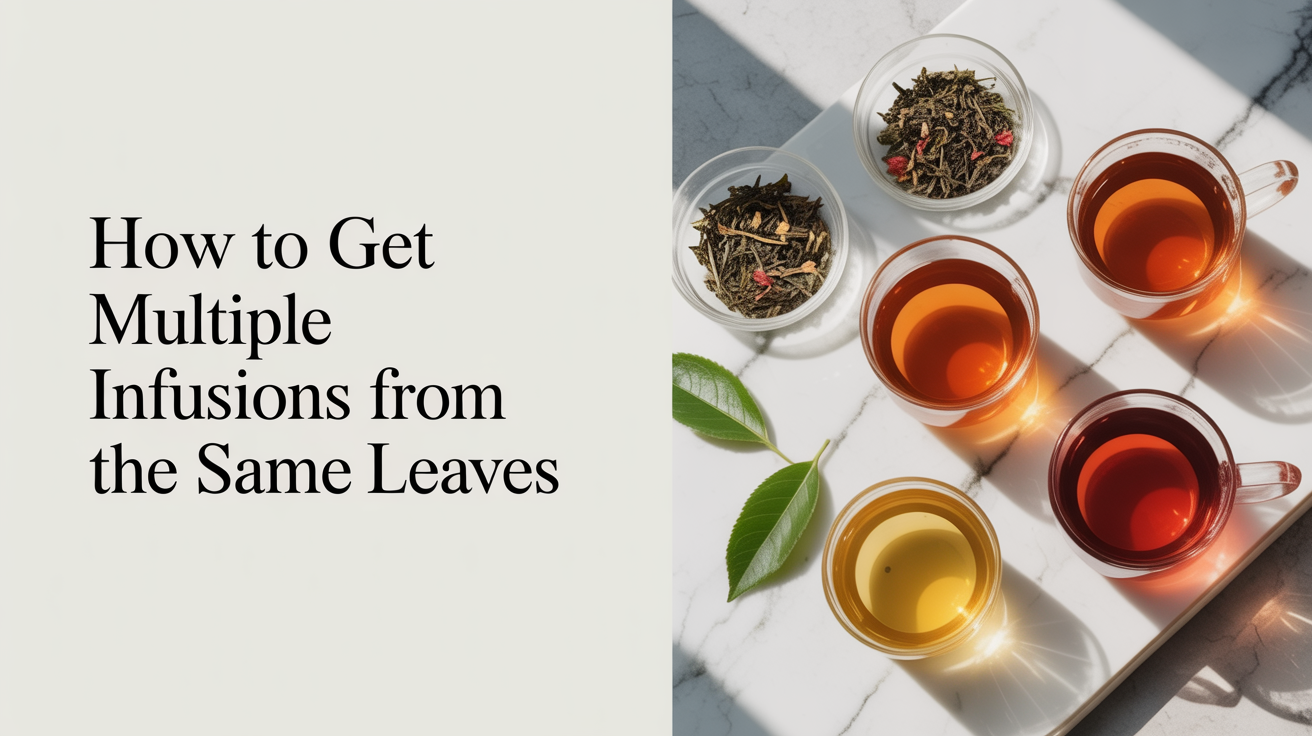
A box of tea bags gives you one shot. Loose leaf tea, brewed properly, gives you three, five, sometimes eight. That difference is not a marketing claim; it's basic leaf chemistry. High-quality leaves carry enough soluble compounds that a single steep only extracts a fraction of what's there. The second infusion pulls different compounds at different rates, and the flavor genuinely shifts rather than just fading.
If you've been tossing leaves after one steep, you've been leaving most of your tea in the trash. Here's how to stop doing that.
Why Leaves Hold Up Across Multiple Steeps
Tea flavor comes from three main categories of compounds: catechins and other polyphenols (astringency, body), amino acids like L-theanine (sweetness, umami, calm), and aromatic volatiles (the top notes you smell). These don't all dissolve at the same rate. Catechins extract quickly, especially in hot water. Amino acids take longer. Aromatics are even more temperature- and time-sensitive.
On the first infusion, you're capturing a dense mix of everything that dissolved fast. By the second infusion, astringency often drops and sweeter notes come forward because the catechin load is lower. Some drinkers find the second infusion their favorite for this reason. The third typically has less body but can carry pleasant floral or mineral notes that were masked earlier.
Bag tea doesn't reward resteeping because the leaves are shredded into tiny particles, which exposes maximum surface area. Everything extracts in 2–3 minutes, and the bag is spent. Whole and lightly broken loose leaf tea releases its compounds gradually, which is the whole point.
How Many Steeps to Expect by Tea Type
This varies a lot depending on leaf grade, your water temperature, and how you brew. These are practical averages for loose leaf:
| Tea Type | Typical Steeps | Notes |
|---|---|---|
| White (e.g., Silver Needle, Bai Mu Dan) | 3–5 | Delicate; use cooler water (75–80°C), short first steep |
| Green (e.g., Gyokuro, Dragonwell) | 3–5 | Sensitive to heat; 70–80°C to avoid bitterness |
| Oolong (lightly oxidized, e.g., Jin Xuan) | 4–7 | Good body retention across steeps |
| Oolong (heavily oxidized, e.g., Wuyi rock) | 5–8 | Rock oolongs are built for gongfu; remarkable longevity |
| Black (e.g., Darjeeling, Assam CTC) | 2–3 | CTC exhausts quickly; orthodox grades last better |
| Pu-erh (aged/ripe) | 6–10+ | Among the longest-lasting teas; flavors shift dramatically |
| Herbal/Rooibos | 1–2 | Technically not tea; compounds exhaust faster |
Pu-erh and aged oolongs consistently outperform expectations. A 10-gram session of aged sheng pu-erh through a small gaiwan can run 8–12 steeps over two hours without tasting flat.
The Core Technique: High Leaf, Short Steeps, Add Time Each Round
The principle is simple. Use more leaf than you would for a single western steep, brew short, and add 10–20 seconds with each subsequent infusion.
- Use a higher leaf-to-water ratio: roughly 1 gram per 30–40 ml for gongfu style, or 1 gram per 60–80 ml for a modified western approach
- First steep: 20–45 seconds (gongfu) or 60–90 seconds (western), depending on the tea
- Each subsequent steep: add 10–20 seconds to the previous time
- Keep water temperature consistent; don't compensate for spent leaves by using hotter water (it increases bitterness, not body)
- Pour completely between steeps, leaving no liquid in the vessel
The "pour completely" step is worth emphasizing. Residual tea left sitting on warm leaves continues extracting and becomes bitter. Drain fully, then start your next steep fresh.
A simple sequence for a green oolong using a 120 ml gaiwan and 6 grams of leaf:
- Steep 1: 30 seconds at 90°C
- Steep 2: 40 seconds
- Steep 3: 55 seconds
- Steep 4: 75 seconds
- Steep 5: 100 seconds
- Steep 6+: 2–3 minutes, then taste-test each
Western vs. Gongfu Re-Steeping
Western-style brewing uses a moderate leaf ratio (roughly 2–3 grams per 250 ml), 3–5 minute steeps, and typically yields 2–3 infusions before the leaves flatten out. It's a practical approach for mornings when you're not sitting with a timer.
Gongfu cha runs the opposite direction: high leaf, tiny vessel (60–150 ml), very fast steeps (15–45 seconds at the start), with careful attention to each pour. The compressed timeline means you're cycling through steeps quickly and the flavor arc across 6–8 rounds is easy to notice and enjoy. It's a more involved session, but it extracts more steeps from the same leaves and the character differences between rounds are more distinct.
You don't have to choose one or the other rigidly. A practical middle path: use a 200–250 ml teapot, 5–6 grams of leaf, and keep steeps under 2 minutes. You'll get 4–5 good rounds without the ceremony overhead.
A few technique differences matter:
- Vessel size: Smaller vessels make timing more precise and pour faster, preserving control
- Preheating: Gongfu rinse (a 5-second "wake up" steep poured off) opens the leaf and warms the vessel; useful but optional for western
- Pouring speed: Pour all at once into a sharing pitcher or mug; don't let the last drops sit while you pour the first
The Flash Rinse (Optional but Useful)
Some teas, especially compressed pu-erh and heavily fired oolongs, benefit from a quick rinse before the first proper steep. Pour hot water over the leaves, wait 5 seconds, pour it off. This isn't about removing pesticides (that claim is overstated); it's about loosening compressed or tightly rolled leaves so they open evenly. Count it as a "0th steep" and start your timer from steep 1.
Storing Leaves Between Steeps the Same Day
If you're not running all your steeps back-to-back, you can pause mid-session for a few hours without any real problem.
- Leave the lid slightly ajar so the leaves breathe rather than steam
- Room temperature is fine for up to 4–6 hours
- Don't refrigerate mid-session leaves; the condensation when they return to room temperature affects texture and flavor
- If you must stop overnight, leaves will usually give one more acceptable steep the next morning, but the session is mostly done
Timing matters more than you'd think. Leaves sitting wet and sealed for 8+ hours can develop off flavors, particularly with green teas. If you're doing a morning and afternoon session with the same leaves, that's reasonable. A 24-hour gap rarely rewards you.
For cold brew days, the math is different. Cold brew tea extracts at a much lower rate, and you can often resteep cold-brew leaves once more in cold water before they're finished.
How to Tell When the Leaves Are Done
The leaves will tell you. You don't need to count steeps obsessively.
- The liquor becomes very pale and watery with almost no aroma
- Sweetness and body disappear and you're left with faint vegetal or papery notes
- The leaves feel limp and have no spring to them when you look at them
When that happens, the session is over. Composting spent leaves is straightforward; they break down quickly and are good for soil.
One test worth doing: take a small sip before committing to a full cup of the later steeps. At steep 4 of a green tea, some drinkers find the lighter flavor pleasant; others find it insipid. Personal preference determines the actual endpoint, not a fixed number.
Resist the urge to brew longer to "get more out" of spent leaves. Extra time extracts astringent compounds that remained for a reason; the result is a thin, bitter cup rather than a flavorful one.
Frequently Asked Questions
How many times can you steep tea leaves before they're spent?
It depends on the tea type and how you brew. Delicate whites and greens typically last 3–5 steeps. Oolongs (especially rolled or rock oolongs) go 5–8. Pu-erh can run 8–12 or more in a proper gongfu session. Bag tea and lower-grade CTC black teas are usually spent after one steep. Using a higher leaf ratio and shorter steeps extends the count.
Does resteeping tea reduce its caffeine?
Yes. The bulk of caffeine extracts in the first 1–2 minutes of steeping, so the second infusion has noticeably less and later steeps have even less. If you're sensitive to caffeine, later steeps are gentler. If you want the full caffeine kick, the first steep carries most of it.
Can you resteep tea the next day?
Occasionally, but results are mixed. Spent wet leaves sitting overnight develop stale or sour notes, especially with green and white teas. Pu-erh and some robust oolongs are more forgiving. The better approach is to finish the session in one sitting, or accept that day-old leaves will produce one weak, so-so cup at best.
Is second infusion tea lower quality than the first?
Not necessarily lower quality, just different. Many experienced drinkers prefer the second steep of a quality oolong or pu-erh because the first steep's sharp edges and higher astringency soften. The flavor profile changes across steeps rather than uniformly declining. Third and fourth steeps of a good rock oolong can be exceptional.
Do you need special equipment to get multiple infusions?
No. A simple teapot with a strainer, a gaiwan, or even a mug with a mesh infuser works. The main variable is leaf-to-water ratio and discipline about steep times. That said, a small gaiwan or yixing pot designed for gongfu-style brewing makes short, controlled steeps easier to manage and is worth the modest investment if you drink tea daily.