Types of Tea
Herbal Tea vs. Real Tea: What Actually Counts as Tea
Is herbal tea real tea? Learn the difference between true teas from Camellia sinensis and herbal tisanes, including caffeine levels and brewing tips.
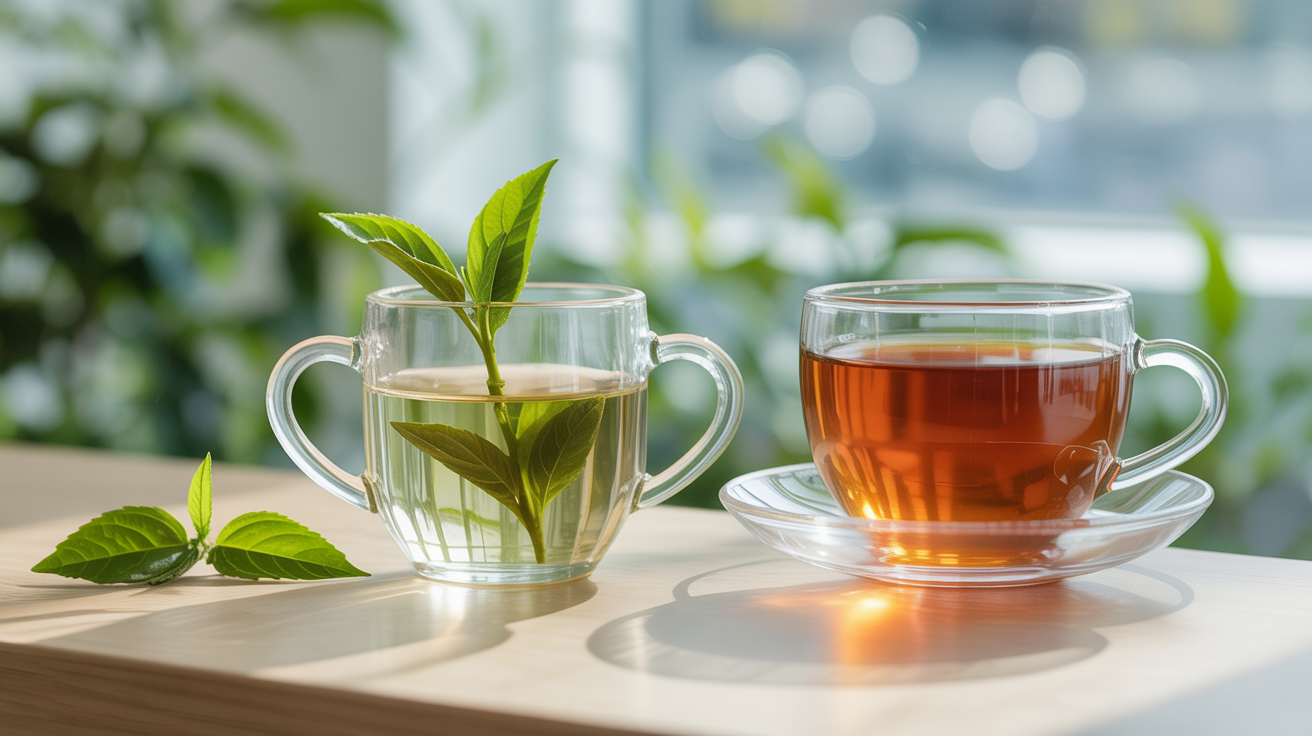
Herbal tea is not, technically, tea. True tea comes from a single plant species, and chamomile, peppermint, and rooibos do not belong to it. That said, the word "herbal tea" is used so widely that fighting it feels pointless. What matters practically is knowing why the distinction exists and what it means for your cup.
Quick answers
- Only green, white, oolong, black, and pu-erh come from Camellia sinensis. Everything else is technically a tisane, not tea.
- Tisanes are naturally caffeine-free, with a handful of exceptions: yerba mate, guayusa, and yaupon holly all carry caffeine despite not being true tea.
- True teas generally want cooler water and shorter steeps. Tisanes tolerate a full boil and a much longer steep.
- Rooibos, despite the nickname "red tea," is a South African legume, not a Camellia sinensis product, and it is caffeine-free.
- Reading the ingredient list is the only reliable way to know if a packaged "herbal tea" actually contains real tea leaves blended in.
What Makes a Tea a "True Tea"
Every true tea comes from Camellia sinensis, a flowering evergreen shrub native to parts of China, India, and Southeast Asia. The same plant produces green tea, black tea, white tea, oolong, and pu-erh. What differs between them is how the leaves are processed after harvest: whether they are oxidized, withered, fired, or aged, and for how long.
- Green tea is minimally processed and not oxidized, which keeps the leaves green and the flavor grassy or vegetal.
- White tea uses young buds and leaves with very light processing.
- Oolong sits between green and black on the oxidation spectrum.
- Black tea is fully oxidized, which turns the leaves dark and produces a stronger, more tannic cup.
- Pu-erh is fermented, sometimes for years, producing earthy, complex flavors unlike any of the above.
All of these share one origin: Camellia sinensis. If a product does not use leaves from that plant, it is not technically tea, no matter what the label says.
For a closer look at two of the most popular true teas, see green tea types, flavors, and how to brew each one and black tea explained: regions, styles, and how to brew it.
What Is a Tisane?
The formal term for herbal tea is a tisane (tih-ZAHN). A tisane is any hot or cold infusion made from plant material other than Camellia sinensis. That covers a lot of ground.
Common tisane categories:
| Type | Examples |
|---|---|
| Flower | Chamomile, hibiscus, lavender, rose hips |
| Leaf | Peppermint, lemon balm, spearmint, tulsi |
| Root | Ginger, licorice, turmeric, chicory |
| Bark | Cinnamon, slippery elm |
| Seed or berry | Fennel, elderberry, cardamom |
| Full-plant blends | Rooibos, lemon verbena, nettle |
Some of these come from a single ingredient. Others are blended products sold under names like "Sleepytime" or "Throat Coat." Whether a tisane uses one plant or twelve, none of them contain Camellia sinensis (unless a manufacturer adds it, in which case the product is technically a blend of true tea and herbal ingredients).
The word tisane traces back to the ancient Greek ptisane, meaning "peeled barley," and originally referred to a barley-water drink rather than anything herbal. It passed through Latin and Old French before landing in English as a general word for a medicinal infusion, and it did not become widely used in its current sense until the 20th century. In everyday English, "herbal tea" is still the far more common phrase; "tisane" mostly shows up among tea specialists and in European contexts.
Rooibos deserves a specific note here, since it is one of the most commonly mistaken tisanes. It comes from Aspalathus linearis, a broom-like legume grown almost exclusively in South Africa's Cederberg region, and the name is simply Afrikaans for "red bush." The "red tea" nickname you sometimes see on packaging is informal marketing, not a botanical claim; rooibos is not a tea in any technical sense, and it is naturally caffeine-free with lower tannin levels than green or black tea.
The Caffeine Difference
This is the most practical reason to care about the distinction.
True teas from Camellia sinensis contain caffeine. The amount varies depending on the tea type, where the leaves were grown, how they were processed, and how you brew it. As a rough guide:
- Black tea: roughly 40 to 70 mg per 8 oz cup
- Oolong: roughly 30 to 50 mg per cup
- Green tea: roughly 25 to 45 mg per cup
- White tea: roughly 15 to 30 mg per cup
These are general ranges, not precise figures. The same tea brewed hotter or longer will extract more caffeine. A tightly rolled oolong steeped for a short time will behave differently from a flat-leaf oolong left in the pot.
Most herbal tisanes contain no caffeine at all. Chamomile, peppermint, rooibos, hibiscus, and ginger are all naturally caffeine-free. This is why they are often sold as evening or sleep-support options.
A few herbal plants are exceptions. Yerba mate, guayusa, and yaupon holly all contain caffeine even though they come from non-Camellia plants. If you are cutting caffeine for health or sleep reasons, checking the label on anything marketed as "herbal" is worth doing.
How Brewing Differs
True teas and herbal tisanes have different tolerances for water temperature and steeping time. Understanding this stops you from producing a bitter cup or a weak, thin one.
Brewing true teas
True teas, especially green and white, are sensitive to heat. Water that is too hot can scorch the leaves and produce harsh, bitter flavors. Oolongs and black teas are more forgiving, but they still benefit from attention.
General water temperature starting points:
- Green tea: 70 to 80°C (160 to 175°F)
- White tea: 75 to 85°C (170 to 185°F)
- Oolong: 85 to 95°C (185 to 200°F), depending on oxidation level
- Black tea: 95 to 100°C (200 to 212°F)
Steeping time also matters. Most green teas do well at 1 to 2 minutes for a first steep. Black teas generally take 3 to 4 minutes before turning astringent. If you want to understand where oolong fits across that spectrum, oolong tea: the whole spectrum between green and black covers the range in detail.
Brewing herbal tisanes
Herbal infusions are generally more forgiving. Most do well with fully boiling water (100°C / 212°F) and a longer steep of 5 to 10 minutes. The exception is delicate flowers like chamomile, which can turn slightly bitter if steeped very long in very hot water. A gentle rule: pour water just off the boil and taste at 5 minutes.
Some tisanes, particularly roots and bark, actually benefit from simmering rather than just steeping. Ginger root releases more flavor when you simmer pieces in water for 10 to 15 minutes on the stovetop. Cinnamon bark behaves similarly.
Does the Label Actually Matter?
In everyday conversation, no. If someone says they drink herbal tea, everyone understands what they mean. The term is well established in English and unlikely to change.
Where the label matters:
Caffeine sensitivity. If you are avoiding caffeine completely, knowing that "true tea" always contains caffeine (and some herbal plants do too) lets you make an informed choice.
Brewing results. Applying black tea brewing logic to a chamomile bag works fine. Applying it to a green tea almost certainly produces a bitter result. The distinction helps you understand why different products need different treatment.
Ingredient transparency. Some packaged "herbal teas" are blends that include green or black tea leaves alongside herbs. Reading the ingredient list tells you whether you are buying a pure tisane or a mixed product.
For practical purposes at home: if you are unsure whether something contains caffeine, read the ingredient list. Camellia sinensis, green tea, black tea, white tea, or oolong listed as an ingredient means caffeine is present.
The Tea Hearth is an independent tea resource, not affiliated with any tea brand or shop. Information about herbs and caffeine is general in nature and not medical advice. Hot water and steam can scald, so brew with care.
Frequently Asked Questions
Is rooibos a tea? Rooibos is not a true tea. It comes from the Aspalathus linearis plant, native to South Africa, and contains no caffeine. It is a tisane. The name "red tea," which sometimes appears on packaging, is informal and not a botanical category.
Can I blend herbal ingredients with true tea? Yes, and many commercial products do exactly this. A blend of green tea with mint, or black tea with bergamot (Earl Grey), combines Camellia sinensis with other botanicals. These are sometimes called "flavored teas" rather than pure herbal tisanes.
Does herbal tea have health benefits? Many plants used in tisanes have been studied for various properties, including chamomile, ginger, and peppermint. That said, The Tea Hearth does not make health claims about specific herbs. If you are managing a health condition or taking medication, check with a qualified clinician before relying on any herbal infusion.
Why does my herbal tea taste better when steeped longer than my green tea? Herbal ingredients, especially roots and dried flowers, often need more time to release their flavor compounds. Green tea leaves, by contrast, release tannins and caffeine quickly, and prolonged steeping turns bitter. The two categories genuinely need different timing.
Are all caffeine-free teas herbal teas? Not exactly. Some true teas are marketed as "decaffeinated," meaning caffeine has been partially removed through a processing step. These still come from Camellia sinensis and retain some residual caffeine. Genuinely caffeine-free options are herbal tisanes made from plants that do not produce caffeine in the first place, like chamomile or rooibos.
Sources
- Wikipedia: Herbal tea covers the etymology of "tisane" and the botanical line between true tea and herbal infusions.
- Wikipedia: Rooibos confirms the plant's South African origin, its Afrikaans name, and its caffeine-free, lower-tannin profile.