Types of Tea
Darjeeling Tea: First Flush, Second Flush, and What They Mean
Learn what first and second flush Darjeeling teas actually are, how they taste different, and how to brew each one correctly at home.
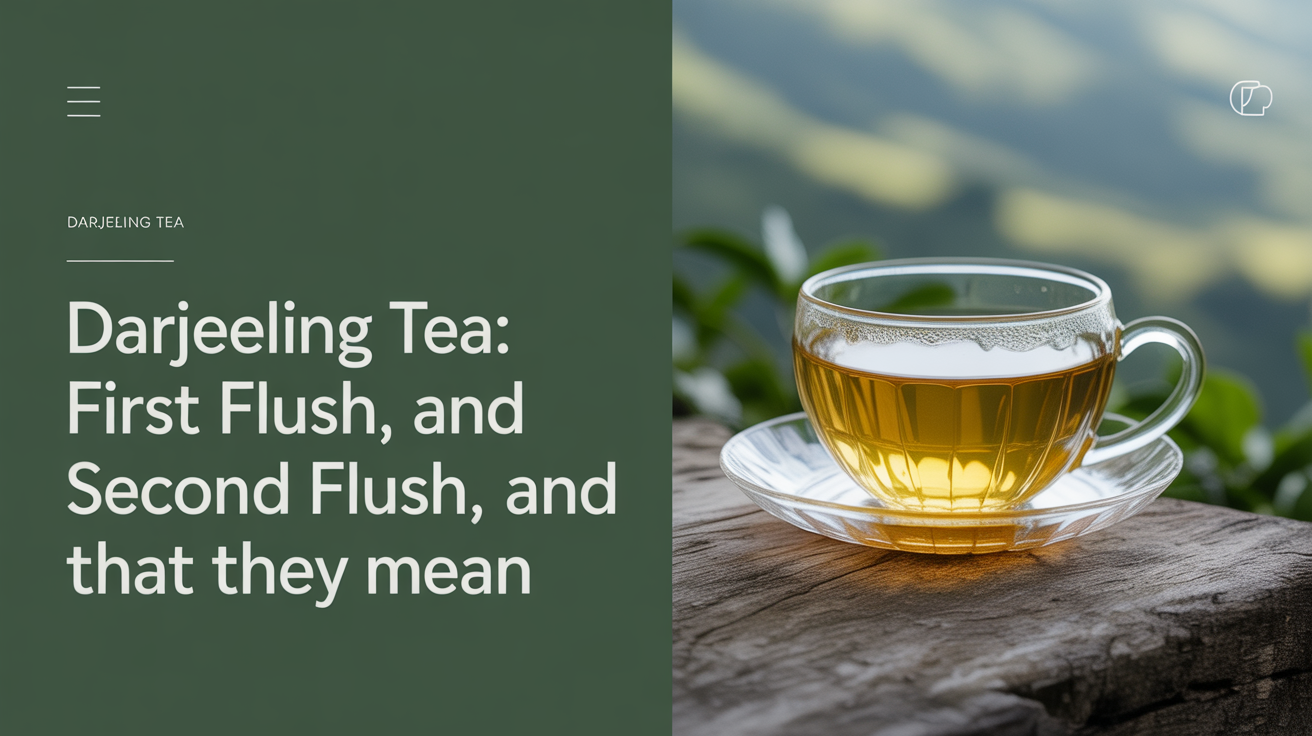
Darjeeling is a black tea (though some lots are processed closer to green or oolong) grown in a small mountain district of West Bengal, India, and the word "flush" simply tells you which picking season produced the leaves in your tin.
Quick answers
- First flush (late February through April) is light, floral, and pale gold. Second flush (May through June) is fuller-bodied with the classic muscatel note.
- Brew first flush cooler and shorter (80-85 C, 2-3 minutes), second flush hotter and slightly longer (90-95 C, 3-4 minutes).
- The muscatel character comes from a leafhopper insect biting the leaves, which triggers flavor compounds during processing.
- Darjeeling is a legally protected geographical indication. A lot of what is sold as "Darjeeling" worldwide is not genuine, so buy from a source that can name the estate.
- Neither flush wants milk. Try both plain before deciding whether to add it.
What Makes Darjeeling Different
Darjeeling sits at elevations between roughly 600 and 2,000 metres in the foothills of the Himalayas. The combination of altitude, cool mist, and the region's particular soil produces a character that no other growing area replicates. The most talked-about quality is muscatel: a dry, slightly grape-like note that shows up most strongly in summer pickings.
The tea plants grown here are largely the small-leafed China cultivar, Camellia sinensis var. sinensis, rather than the Assam variety used for most other Indian blacks. China-type plants grow more slowly in the cold, which contributes to the concentrated flavour per leaf.
Because Darjeeling is a black tea produced in a specific, protected region, it carries a geographical indication status in India, the first product in the country to receive that protection, back in 2004. Not everything labelled "Darjeeling" on a supermarket shelf is genuine estate tea. The Tea Board of India licenses a limited number of exporters and issues certification numbers specifically to cut down on the amount of "faux" Darjeeling sold on the global market, so buying from a reputable source that can name the estate and flush is the more reliable way to get the real thing than trusting the word "Darjeeling" alone.
First Flush: The Spring Picking
First flush Darjeeling is harvested from late February through April, when the plants break from their winter dormancy and push out the first new shoots of the year.
What it looks like
The dry leaf is typically light green to silvery-grey, sometimes with a faint golden tip. It tends to look more like a green or white tea than a conventional black, and that appearance reflects how it was processed. First flush leaves are often only lightly oxidised to preserve their fresh character.
How it tastes
- Light-bodied and bright
- Floral, with notes of fresh hay, sweet grass, or spring flowers
- A slight astringency that clears quickly
- Delicate and sometimes a little vegetal
First flush is often compared to a fine green tea in terms of weight. It is more fragile and less forgiving of high temperatures than most black teas.
Reading the label
Labels for first flush lots usually include the estate name, the year, and the flush number (FF or "First Flush"). Some include a lot code. Because the harvest window is short and estates produce limited quantities, genuine first flush is more expensive and sells out faster than second flush.
Second Flush: The Summer Picking
Second flush is harvested from May through June, after a short break following the first picking.
What it looks like
The dry leaf is darker: deep brown to bronze, with more pronounced orange or copper tones in the liquor when brewed. The leaves are larger and more fully oxidised than first flush.
How it tastes
- Medium to full body
- The muscatel character is most pronounced here: dry, fruity, faintly grape-like
- Rounder and less sharp than first flush
- Richer finish with some tannin
The muscatel note in second flush Darjeeling comes partly from a leafhopper insect, Empoasca flavescens, which bites the leaves during warm weather. The plant responds by producing compounds that convert during processing into the flavours drinkers associate with the best second flush lots. This is the same mechanism behind Taiwan's Oriental Beauty oolong, where leafhopper feeding is prized rather than treated as pest damage because it pushes the leaf toward fruitier, less bitter aromatics.
Reading the label
Second flush labels read "SF" or "Second Flush" alongside the estate and lot information. The colour of the brewed tea is one of the easiest ways to distinguish it from first flush without tasting: second flush pours a warm amber or orange-brown; first flush pours a pale gold or greenish-yellow.
How to Brew First and Second Flush
Because first and second flush Darjeeling are processed differently and have different chemical makeups, they do better at different temperatures and steep times. Water temperature is the most important variable to get right.
| First Flush | Second Flush | |
|---|---|---|
| Water temperature | 80-85 °C (176-185 °F) | 90-95 °C (194-203 °F) |
| Leaf amount | 2-2.5 g per 200 ml | 2-2.5 g per 200 ml |
| Steep time | 2-3 minutes | 3-4 minutes |
| Re-steep? | Yes, one or two more | Usually one more |
Why lower heat for first flush
First flush leaves are lightly oxidised. Treating them like a conventional black tea by pouring boiling water over them will scorch the delicate compounds responsible for the floral notes and leave you with a flat, bitter cup. The same logic applies to steeping time: pull the leaves at two to three minutes and taste. If it needs more, add thirty seconds, but avoid running past four minutes.
Why hotter water for second flush
More oxidised leaves need more heat to extract fully. At 80 °C, second flush Darjeeling tends to taste thin and the muscatel stays muted. Bringing the water up to the 90-95 °C range opens the flavour without tipping into bitterness, provided you do not over-steep.
Practical tips
- Use filtered or low-mineral water. Hard water with high calcium content competes with Darjeeling's subtle flavours.
- Warm your cup or teapot before brewing. Temperature drops fast at altitude-style thin cups or cold vessels.
- If you are using a kettle without temperature control, boil the water and let it sit for three to four minutes before pouring for first flush, or one to two minutes for second flush.
- Both flushes can handle one re-steep at slightly higher temperature and slightly longer time than the first infusion.
Why Darjeeling Does Not Take Milk
Darjeeling, unlike Assam or a robust English Breakfast blend, is not built for milk. The flavours that make it worth buying are the delicate floral notes of first flush and the muscatel of second flush. Milk coats the palate and binds to polyphenols in ways that mask exactly those qualities.
This is not a rule with any moral weight. If you prefer it with milk, brew it and add milk. But if you spent money on a named estate Darjeeling and have not tried it plain, taste it that way first.
Sugar works similarly: it softens astringency but dulls the distinctions between flushes. Try the tea without it for the first few cups of a new lot, then add sugar if you want.
Darjeeling is also a natural candidate for western-style single-cup brewing in a teapot or infuser rather than a pot shared around a table. The quantities are small, the steep time is short, and the cup changes noticeably as it cools, which is worth paying attention to.
Frequently Asked Questions
Is Darjeeling a black tea or a green tea?
Most Darjeeling is processed as a black tea through full or near-full oxidation, but some lots are intentionally made in a green or oolong style with lighter oxidation. First flush Darjeeling in particular is sometimes only partially oxidised, which is why it looks greener and tastes lighter than a standard black tea from Assam or Sri Lanka.
Can I use the same Darjeeling leaves more than once?
Yes. Both flushes respond reasonably well to a second infusion. For the second steep, increase your temperature by five degrees and your time by thirty to sixty seconds. Third infusions are possible but usually thin.
What does "muscatel" actually mean?
Muscatel refers to a dry, slightly grape-like flavour note. In wine, it comes from muscat grape varieties. In Darjeeling second flush, it develops during processing from compounds the tea plant produces in response to leafhopper feeding. It is most noticeable when the tea cools slightly from boiling to around 60-70 °C in the cup.
Why is first flush Darjeeling so expensive?
The spring picking window is short, the leaves produced are few, demand from buyers in Japan and Germany runs high, and genuinely good first flush lots are limited in quantity by estate. Prices increase if the year had good growing conditions, which intensify the floral quality buyers look for.
Does Darjeeling have more or less caffeine than other black teas?
Darjeeling made from the China cultivar tends to have slightly less caffeine per gram of dry leaf than Assam-type plants, but the difference is not dramatic enough to count on if you are caffeine-sensitive. A standard cup brewed at the recommended leaf-to-water ratio sits in the same ballpark as most other black teas, somewhere in the range of 40-70 mg per 200 ml cup, depending on steep time and leaf grade.
Sources
- Wikipedia: Darjeeling tea covers the region's 2004 geographical indication status and the certification trademark system referenced above.
- Wikipedia: Tea Board of India describes the certification-number system used to fight fraudulent Darjeeling labelling on the world market.