Types of Tea
Caffeine in Tea: How Much Is in Each Type
Plain-language caffeine ranges for white, green, oolong, black, pu-erh, and matcha, plus what actually drives the numbers in your cup.
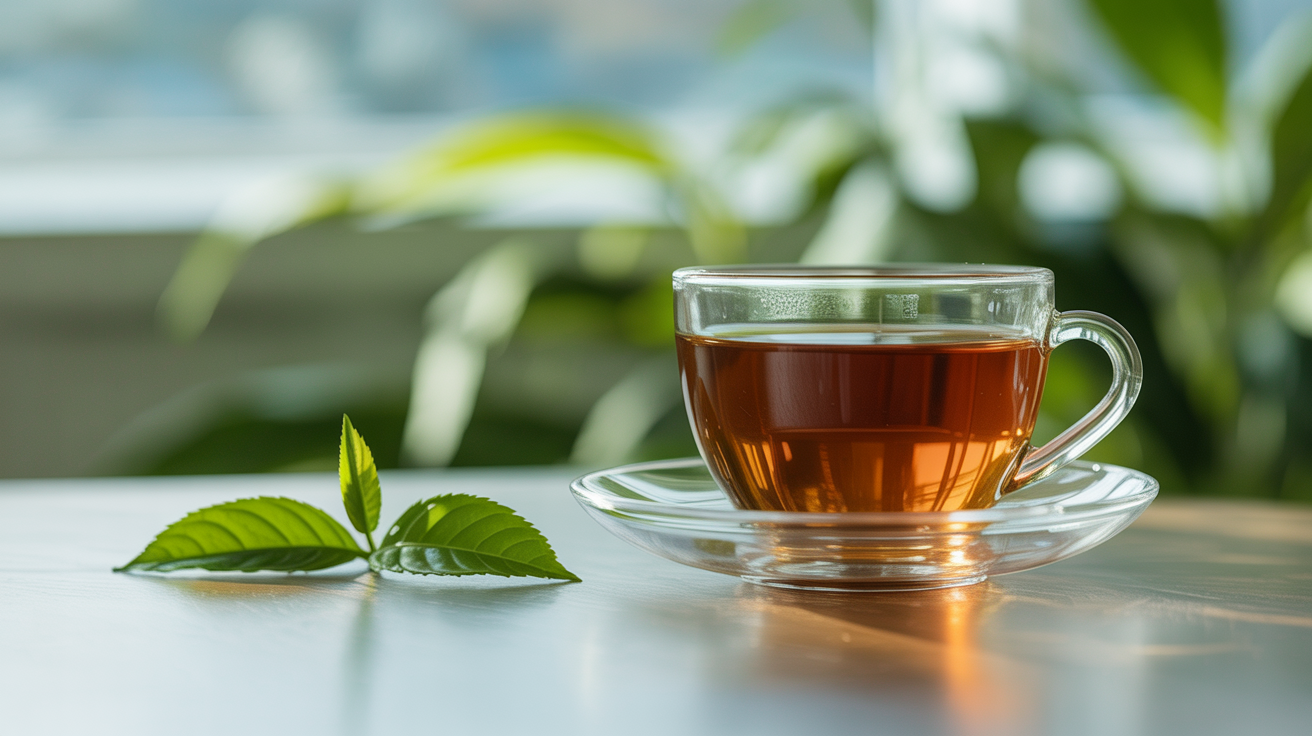
Tea does contain caffeine, and the amount shifts quite a bit depending on which type you pick and how you brew it. Here is a plain-language look at the numbers and the factors behind them.
Quick answers
- Leaf age, brew temperature, steep time, and how much leaf you use matter more than the tea category itself.
- Rough per-cup ranges: white 15-35 mg, green 20-45 mg, oolong 30-55 mg, black 40-70 mg, matcha 50-80 mg.
- Black tea is not automatically higher in caffeine than green. A finely cut CTC black steeped long will out-caffeinate a briefly steeped whole-leaf green.
- Herbal tisanes (chamomile, peppermint, rooibos, hibiscus) contain no caffeine at all; they are not from the tea plant.
- Most healthy adults tolerate up to about 400 mg of caffeine a day; individual sensitivity varies, and pregnant or breastfeeding people are generally advised to stay lower.
What Drives Caffeine in Tea
All tea made from the Camellia sinensis plant contains caffeine. The variation from cup to cup comes down to a handful of factors.
Leaf age and position on the plant. The youngest leaves and the bud at the tip of each shoot carry the highest caffeine concentration. Older leaves further down the stem contain less. This is one reason fine white teas made from buds can surprise people who assume they are low in caffeine.
How long and how hot you brew. Caffeine is water-soluble and releases quickly into hot water. A short steep at lower temperature pulls out less caffeine than a long steep at a near-boiling temperature. The gap between a one-minute green tea steep and a four-minute black tea steep makes a real difference.
How much leaf you use. More leaf per cup means more caffeine in the finished drink, regardless of type. Matcha is the clearest example: you consume the whole powdered leaf, not just an infusion, so the caffeine per serving is higher than most steeped teas.
Processing. The oxidation and firing process changes tea's character, but its effect on caffeine is modest compared to the factors above. Caffeine is relatively stable through most processing steps.
Caffeine Ranges by Tea Type
The numbers below are general ranges for a standard single serving of tea brewed in a typical home setting. Actual amounts vary by cultivar, origin, harvest, and your brew habits. Treat these as a loose guide rather than precise measurements.
| Tea Type | Approximate Range per Cup |
|---|---|
| White | roughly 15 to 35 mg |
| Green | roughly 20 to 45 mg |
| Oolong | roughly 30 to 55 mg |
| Black | roughly 40 to 70 mg |
| Pu-erh (shou/ripe) | roughly 30 to 70 mg |
| Matcha (prepared) | roughly 50 to 80 mg |
A few notes on the outliers:
White tea. The range is wide because white tea styles vary. A bud-only silver needle can sit toward the higher end of the white range due to the high caffeine content in new buds. A white peony, which includes leaves, often comes in lower. Short cold steeps reduce it further.
Pu-erh. Aged and fermented pu-erh can be unpredictable. Long storage and fermentation break down some compounds but caffeine is generally retained. The range is similar to oolong on the low end and approaches black tea on the high end.
Matcha. Because you whisk and drink the whole powdered leaf, matcha delivers more caffeine than most brewed teas in an equivalent-sized serving. If you make a thick ceremonial-style matcha with a smaller amount of water, the concentration goes up further. For more on working with matcha, see the Matcha & Whisked guides on this site.
Does Black Tea Always Have More Caffeine Than Green Tea?
This is probably the most common caffeine misconception in tea. The short answer is no, not always.
Black tea is fully oxidized, and green tea is not, but oxidation itself is not the main driver of caffeine. What matters more is which leaves were used, how finely they were broken up, and how long the tea is brewed.
A finely broken CTC-style black tea steeped for four minutes will typically deliver more caffeine than a whole-leaf green tea steeped briefly at 75°C. But a high-grade gyokuro, a shade-grown Japanese green tea that is deliberately grown to build up amino acids and caffeine, can match or exceed a mid-range black tea when brewed the same way.
The leaf grade matters too. Fannings and dust, the small particles found in most mass-market tea bags, release caffeine very quickly because they have more surface area. A bag of budget-brand breakfast tea steeped for five minutes will often outstrip a carefully steeped, whole-leaf single-origin green.
So rather than assuming black is always highest, think about the specific tea and how it is being prepared.
How Brewing Changes the Amount
If you want to manage caffeine, your brewing habits are the most practical lever you have.
Water temperature. Cooler water slows caffeine extraction. This is part of why cold-brew tea made by steeping in the refrigerator overnight ends up with less caffeine than hot-brewed tea, even when the same leaf is used.
Steep time. Cutting your steep by a minute or two can noticeably reduce caffeine without removing all of the flavor. With a strong oolong or a robust black, try pulling the leaves a little earlier and see how the cup changes.
Leaf-to-water ratio. Using less leaf per cup reduces caffeine proportionally. Gongfu brewing, where small amounts of leaf are steeped many times in short infusions, tends to spread caffeine across multiple small servings rather than concentrating it in one long steep.
Re-steeping. Later infusions of the same leaves generally contain less caffeine than the first steep because much of the caffeine has already leached out. The second and third steeps of a whole-leaf tea are often lower in caffeine while still being flavorful.
Herbal Tisanes Are Caffeine-Free
This is worth stating clearly because the word "tea" is used loosely. Herbal teas, technically called tisanes, are not made from Camellia sinensis. They are infusions of herbs, flowers, fruit, bark, or roots.
Chamomile, peppermint, rooibos, hibiscus, ginger, and similar infusions contain no caffeine at all. If you are looking to cut caffeine entirely, a well-made tisane in the evening is a genuinely satisfying option.
Rooibos is worth a specific mention because it is sometimes described as a red "tea" and brews a deep, warming cup that can feel like a full-bodied tea substitute. It is naturally caffeine-free.
A Brief Note on L-Theanine
Caffeine in tea does not act quite the same as caffeine in coffee, and L-theanine is part of the reason. L-theanine is an amino acid found almost exclusively in Camellia sinensis, first isolated from gyokuro leaves in 1950. It is present alongside caffeine in every cup of white, green, oolong, black, and pu-erh tea, typically making up one to two percent of a green tea leaf's dry weight.
The combination of caffeine and L-theanine is described by many tea drinkers as producing a calmer, more sustained alertness compared to coffee, though individual responses vary and the underlying research is still considered preliminary by reviewers. This is general information rather than a health claim. If caffeine sensitivity is a concern for you, speak with a qualified clinician.
Matcha tends to be higher in L-theanine than most other teas because the shade-growing process used to produce it increases L-theanine concentration alongside caffeine.
Frequently Asked Questions
Is the caffeine in tea the same compound as in coffee? Yes. Caffeine is caffeine regardless of whether it comes from tea, coffee, cacao, or any other plant source. The molecular compound is identical. What differs is the amount per serving and what accompanies it in the drink.
Does decaf tea have no caffeine at all? Decaffeinated tea still contains a small amount of caffeine, typically a few milligrams per cup. The decaffeination process removes most but not all of it. If you need to avoid caffeine entirely, herbal tisanes are the more reliable choice.
Does steeping for a shorter time remove much caffeine? It removes some. Caffeine is extracted relatively quickly, so the first minute of steeping pulls out a meaningful portion. Cutting a four-minute steep down to two minutes will likely reduce caffeine noticeably, though it will also change the flavor and body of the cup.
Why does matcha have more caffeine than brewed green tea if they both come from the same plant? With brewed green tea you steep the leaves in water and then discard them, drinking only the infusion. With matcha you whisk the whole ground leaf into water and drink all of it. You are consuming the full leaf content, including all the caffeine it contains, rather than just what dissolved into the water during a short steep.
Can I reduce caffeine by doing a quick first steep and discarding it? This is a common tip, and it does work to some degree. A short first rinse of around thirty seconds removes some caffeine from the leaves before your main steep. How much it removes depends on the tea and water temperature. It is not a precise method, but it can take the edge off for people who are moderately caffeine-sensitive.
How much caffeine is safe in a day? For most healthy adults, up to about 400 mg a day is not associated with harmful effects, though sensitivity varies by person and by health condition. That is a general population guideline, not a target to hit. If you have a heart condition, anxiety disorder, or are pregnant or breastfeeding, ask a clinician for a number specific to you.
The Tea Hearth is an independent tea resource not affiliated with any brand or tea grower. Notes about caffeine and L-theanine are general information, not medical advice. Hot water and steam can scald; brew with care.
Sources
- MedlinePlus (U.S. National Library of Medicine): Caffeine gives the 400 mg/day general guideline and the caffeine-sensitivity notes referenced above.
- NIH National Center for Complementary and Integrative Health: Green Tea notes no safety concerns for green tea as a beverage in adults, with caveats for concentrated extracts.
- Wikipedia: Theanine covers L-theanine's discovery, its concentration in tea leaves, and the current state of research, which reviewers still describe as preliminary.