Teaware & Ritual
Building a Simple Daily Tea Ritual at Home
Turn daily tea into a mindful ritual with a few simple steps. Water temps, steep times, the right tools, and a routine that actually sticks.
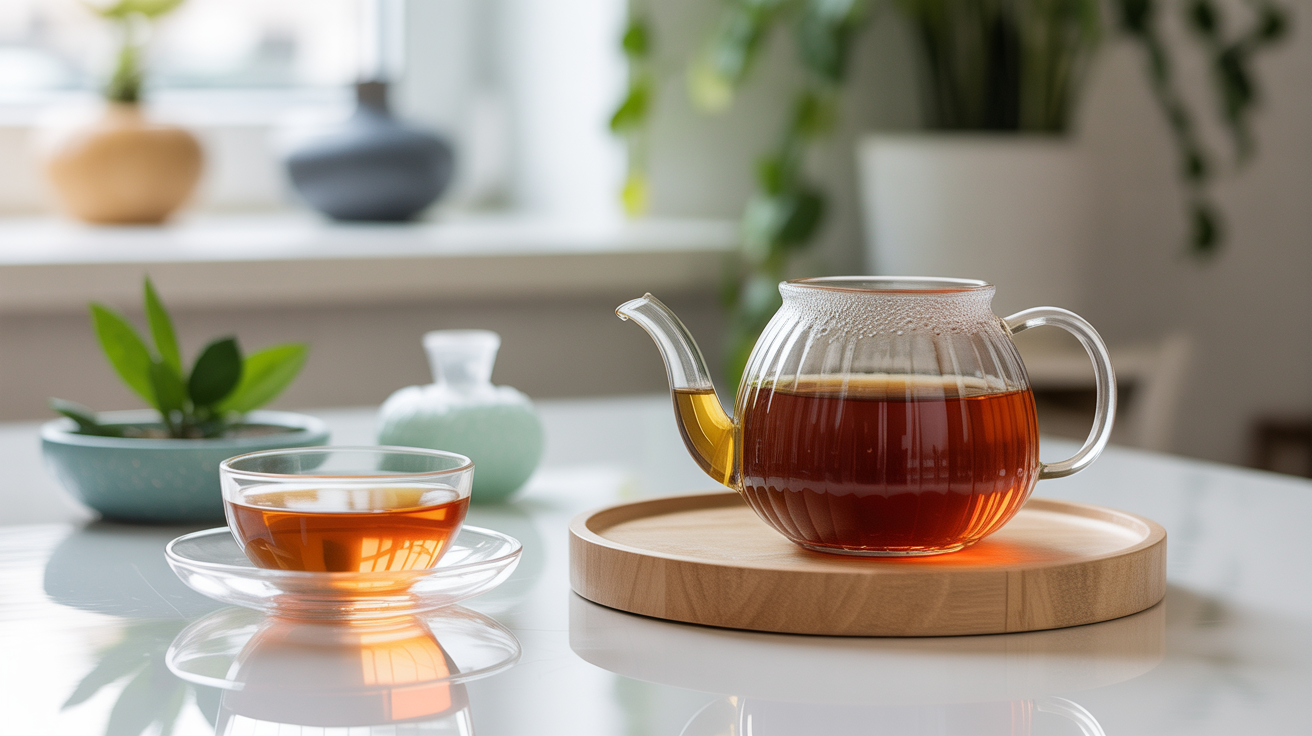
A tea ritual at home doesn't require a Japanese ceremony or a shelf of expensive ware. It starts with picking a specific time, using water at the right temperature, and paying attention for five minutes.
Before you brew
- Attach the ritual to something you already do daily. A floating, unanchored time slot rarely sticks.
- Water temperature matters more than leaf quality for most beginner mistakes. Get the table below onto your counter.
- Set a timer. Your internal sense of "two minutes" while distracted is unreliable.
- Habits take longer to feel automatic than people expect, often measured in weeks, not days, so give a new routine real time before judging it.
- Missing a day is not the same as breaking the habit. Missing ten in a row is.
Why a Routine Changes How Tea Tastes
Most people who say they don't like tea have drunk water that was too hot, leaves that steeped too long, or tea from a bag that sat in a drawer for two years. A ritual solves all three problems, not by adding ceremony, but by building small habits that eliminate those mistakes automatically.
When you brew tea at the same time each day, using the same cup and the same rough process, you start to notice the difference between a good steep and a flat one. That noticing is the whole point of how to make tea a ritual.
This is also just how habits work generally. Behavioral research finds that repeating an action in the same context, the same time, the same spot, the same cue, is what turns a deliberate choice into something closer to automatic. One frequently cited study found it took an average of 66 days for a new habit to feel automatic, with a wide range depending on the person and the behavior. The takeaway for a tea ritual is not to expect it to feel effortless in a week. Keep the anchor consistent and let the automaticity catch up.
Pick a Time and Anchor It
The easiest way to build any daily habit is to attach it to something you already do. Good anchor points for a daily tea ritual at home:
- Morning, right after the kettle runs for coffee (if you make coffee, the kettle is already on)
- Mid-morning, as a replacement for a second coffee
- Afternoon around 2-3 pm when energy tends to dip
- Evening, after dinner, which usually works best with a caffeine-free herbal or a very light white tea
Choose one slot and keep it for two weeks. One slot, practiced consistently, will become automatic faster than rotating between different times.
If you want to turn tea into a mindful pause rather than just a hot drink, add a single rule: no phone while the tea steeps. The steep time, usually two to four minutes, is built-in quiet. Use it.
Water: The Variable Most People Ignore
Water temperature has a bigger effect on a cup of tea than the quality of the leaves, in many cases. Here is a practical table to keep close:
| Tea Type | Target Temperature | Why |
|---|---|---|
| Green tea | 70-80°C / 158-176°F | Cooler water keeps the cup from turning bitter |
| White tea | 75-85°C / 167-185°F | Gentle heat preserves delicate floral notes |
| Oolong (light/green) | 85-90°C / 185-194°F | Medium heat; darker oolongs can go higher |
| Black tea | 90-100°C / 194-212°F | Full boil or near-boil extracts the body |
| Pu-erh | 95-100°C / 203-212°F | Hot water cuts through the earthy depth |
| Herbal (most) | Full boil, 100°C / 212°F | Roots, bark, and berries need the heat |
| Matcha | 70-80°C / 158-176°F | Boiling water scorches the powder |
If you're brewing green or white tea and the cup keeps tasting grassy or astringent, the water is almost certainly too hot. A variable temperature kettle removes the guesswork entirely and pays for itself in leaves you won't have to throw out.
For water quality, filtered tap water works well in most places. Heavily chlorinated water and very hard water both affect flavor. If your tea tastes flat or metallic at home compared to elsewhere, a basic carbon filter pitcher is worth trying before blaming the leaves.
Leaf-to-Water Ratios and Steep Times
These numbers are starting points, not fixed rules. Adjust up or down based on your preference.
Loose leaf, general guide:
- 1 teaspoon (roughly 2-3 grams) per 200-240ml (6-8 oz) of water
- Lighter, fluffy teas like white and some greens need a bit more by volume since they're less dense
Steep times by tea type:
- Green tea: 1.5 to 2.5 minutes
- White tea: 2 to 4 minutes
- Light oolong: 2 to 3 minutes
- Dark oolong: 3 to 4 minutes
- Black tea: 3 to 4 minutes
- Pu-erh (loose): 2 to 4 minutes, often re-steeped multiple times
- Herbal: 5 to 7 minutes (some roots and bark can go 10 or more)
Over-steeping is the most common beginner mistake with loose leaf. Set a timer. Two minutes feels very short when you're used to leaving a tea bag in for ten, but it's the right call for most greens.
If you want to get more from a single session of leaves, look into gaiwan brewing or a small teapot. Multiple short steeps coax different flavors from the same leaves across several small cups, which is one of the pleasures of a proper daily tea ritual.
Setting Up Your Ritual Space
The physical setup doesn't need to be elaborate. It needs to be functional and consistent.
The basics:
- A kettle that can hold or reach the right temperature
- A vessel for brewing (mug, teapot, gaiwan, or a simple infuser basket)
- A timer
- A place to set wet leaves after brewing so they don't drip across the counter
Additions once the habit is established:
- A dedicated small tray to keep everything in one spot
- A ceramic or bamboo rest for your infuser or strainer
- A second cup for someone else
The goal is to reduce friction. If your loose leaf lives in a different room from your kettle and your strainer is in a drawer across the kitchen, you'll default to a tea bag most mornings. Consolidating the tools in one spot makes the ritual the path of least resistance. Researchers describe this as strengthening the link between a cue and a behavior; the easier the action is to start, the faster it becomes the default.
For choosing a strainer or infuser, the shape and mesh size matter more than the material. A basket infuser with fine mesh gives the leaves room to expand and doesn't let fine particles through. Some infuser styles work better than others depending on your cup size and what you're brewing.
Making It Mindful Without Making It Complicated
Mindful tea drinking is often described as if it requires formal training. It doesn't. The practical version is this: do one thing at a time while you're brewing.
Boil the water. Measure your leaves. Smell the dry leaves before they go in. Watch the color change in the water as it steeps. Hold the cup with both hands for the first sip.
That's five deliberate small actions that pull you into the present for a few minutes. You don't need to know the philosophy behind it. The act is its own instruction. For reference, mindfulness itself is generally defined by researchers as simply holding attention on the present moment without judging it, which is exactly what a few minutes with a steeping cup gives you room to practice.
Over time, a daily tea ritual becomes a reliable marker in the day, a signal to your nervous system that something is shifting, either beginning or ending. That consistency is worth more than any specific brewing technique.
A few things to avoid when building the habit:
- Don't try to optimize everything at once. Pick one variable (temperature, steep time, water quality) and focus on it for a week before adjusting anything else.
- Don't stock too many teas at first. One or two you actually enjoy will build better habits than a large collection you feel obligated to finish.
- Don't skip the timer. Your sense of how long two minutes feels while distracted is unreliable.
Frequently Asked Questions
How long should a daily tea ritual take?
It can be as short as five minutes from boiling water to first sip, or as long as thirty if you're doing multiple steeps and sitting quietly. For a weekday morning, ten minutes is a realistic target. That includes the time to heat water, steep, and drink a cup before moving on with your day.
Does the type of tea affect how well the ritual works?
Not in a meaningful way. Pick a tea you actually like the taste of. If you're cutting back on caffeine, oolongs, white teas, and most herbal blends give you more flexibility than black tea or matcha. What matters more than the tea type is consistency in preparation over time.
Can you build a ritual with tea bags instead of loose leaf?
Yes. Tea bags are a valid starting point. The ritual is mostly about the time, the intention, and the consistent attention you bring to the process. That said, most tea bags use smaller, lower-grade leaf fragments, which is why switching to loose leaf often noticeably improves the cup without changing anything else about the routine.
What if I miss a day?
Start again the next day. A ritual missed once is not a broken habit. A ritual missed ten days in a row is a habit that needs to be restarted deliberately. If you keep missing days, look at the anchor time you chose and whether it's actually compatible with how your day runs.
Do I need a special cup for a tea ritual?
Not a special cup, but a consistent one helps. Using the same vessel every day is a small signal that this is a set-apart time. Choose a cup that feels good to hold. Porcelain and unglazed ceramic hold heat well. Glass lets you watch the color shift as the tea steeps, which is genuinely satisfying. A standard 200-240ml cup works for most single steeps without needing to think about ratios again.
Sources
- Wikipedia: Habit covers the context-cue-repetition mechanism and the 66-day average automaticity finding referenced above.
- NIH National Center for Complementary and Integrative Health: Meditation and Mindfulness defines mindfulness as attention on the present moment without judgment and outlines what current research does and doesn't support.