Brewing Methods
Brewing Tea in a French Press: What Works and What Doesn't
Learn how to brew loose-leaf tea in a French press: step-by-step instructions, best tea types, and what to watch out for as a beginner.
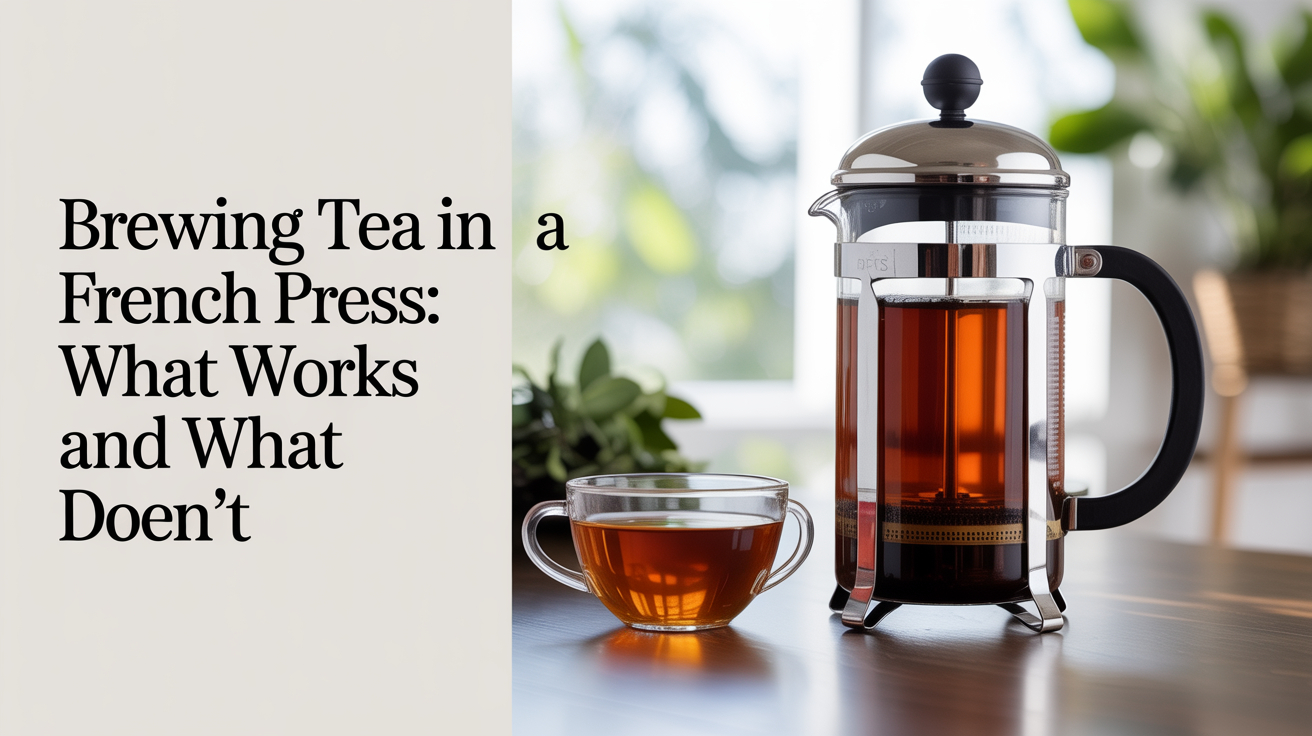
A French press makes a surprisingly capable tea brewer. If you already own one for coffee, it can pull double duty for loose-leaf tea with no extra gear required.
That said, a French press has real limits alongside its strengths. This guide covers both so you know what to expect before you start.
The short version
- Full immersion brewing means a French press works like a large teapot: even extraction, no fussy pour technique.
- Best matches are hearty black tea, rooibos, chunky herbal blends, ripe pu-erh, and yerba mate.
- Worst matches are fine leaves and buds, delicate greens, whites, silver needle, and anything powdered like matcha; they slip through the mesh.
- The single biggest beginner mistake: leaving brewed tea sitting on top of the plunger. It keeps steeping and turns bitter fast.
- Dedicate a press to tea if you can. Coffee oil residue is hard to fully rinse out and it shows up in a delicate cup.
Why a French Press Works for Tea
The French press uses full immersion brewing: the leaves sit in water for the entire steep, the same way they would in a teapot. That contact time lets the water extract flavor evenly, and you get a full-bodied cup without fussing over pour technique.
A few other things make it practical for tea:
- Volume. A standard 34 oz (1 liter) press brews four to six mugs at once. If you're making tea for a table, it beats steeping multiple small infusers in sequence.
- No loose parts. The press is one vessel. You measure, pour, wait, and plunge. Cleanup is a quick rinse.
- Visual feedback. You can see the leaves through the glass and judge how much they've expanded.
If you're just getting into loose-leaf brewing and want a method that doesn't require much equipment, the French press is a reasonable starting point. For a broader look at how loose-leaf brewing works in general, see how to brew loose-leaf tea: a complete beginner's guide.
Where It Falls Short
The French press's mesh plunger is designed for coffee grounds, which are coarser than many tea leaves. Most designs also leave roughly an inch of space below the plunger even at its lowest position, since the filter is built to separate rather than compress. With finer teas, that gap and the mesh both let particles through into your cup. That means:
- Sediment at the bottom. A small amount of leaf matter will end up in the brew. It's harmless but noticeable, especially if you drink to the last sip.
- Oil retention. Coffee oils coat the glass and the mesh over time. Tea is delicate about off-flavors, and residual coffee oils can come through in your cup if the press isn't washed well. If you use the same press for both, rinse thoroughly with hot water and a drop of dish soap before brewing tea.
- No temperature precision. The glass beaker loses heat faster than ceramic or cast iron. For teas that want cooler water (greens, whites), you'll need to pay attention to temperature rather than boiling straight from the kettle.
- Hard to do multiple steeps. Part of the appeal of good loose-leaf tea is brewing the same leaves two or three times. With a French press you either pour off the entire batch immediately or leave the leaves sitting in the liquid, which over-steeps quickly.
These are workable limits, not reasons to avoid the method. They just point toward which teas are a better match.
Which Teas Work Best (and Which to Skip)
Good candidates:
| Tea type | Why it suits a French press |
|---|---|
| Black tea (hearty styles) | High heat, longer steep, leaf size handles the mesh well |
| Rooibos | Naturally coarse cut, full-bodied flavor holds up to immersion |
| Herbal blends with larger pieces | Chamomile, peppermint, hibiscus, dried ginger all work well |
| Pu-erh (ripe/cooked) | Earthy, robust character that's hard to over-extract badly |
| Yerba mate | Traditional immersion brewer anyway; a press suits it |
Teas to avoid or approach carefully:
| Tea type | The problem |
|---|---|
| Delicate green tea | Fine leaves pass through the mesh; overheating is easy |
| White tea | Very low-density leaf, silt problem is worse |
| Silver needle or similar buds | Same as white; tiny hairs and particles everywhere |
| Fine-cut matcha | Never use a press for matcha; the powder goes straight through |
| Gyokuro | Requires precise cool water; hard to control in a glass vessel |
For teas that are too delicate for a press, a simple tea infuser or strainer gives you much better control over particle size and water temperature.
Yerba mate is worth a second look here, since it earns its spot on the "works well" list for a specific reason: it is traditionally brewed by filling a gourd about three-quarters full of dry leaf and topping it with 70-80 C water, a full-immersion method that is closer to a French press than to a typical Western tea steep.
Step-by-Step: How to Brew Tea in a French Press
1. Preheat the press
Pour hot water into the empty press, swirl it, and discard. This keeps the brew temperature from dropping sharply when you add the actual water. It takes thirty seconds and makes a real difference with teas that want a long, hot steep.
2. Measure your leaf
A general starting point is one teaspoon of loose leaf per 8 oz (240 ml) of water, but tea types vary:
- Black tea: 1 teaspoon per 8 oz
- Rooibos: 1 heaping teaspoon per 8 oz (it's light and airy)
- Herbal blends: 1 to 2 teaspoons per 8 oz depending on the herb
Add the leaf directly to the empty press. No infuser basket is needed.
3. Check your water temperature
Different teas need different temperatures. Most black teas and herbals can take water just off the boil (around 200 to 212F / 93 to 100C). If you're ever using a press for a heartier green tea, let the water sit for two minutes after boiling to bring it down to roughly 170 to 180F (77 to 82C).
A basic temperature-variable kettle removes the guesswork. If you don't own one, the "let it sit" method works fine for occasional use.
4. Pour and rest the lid
Pour the hot water over the leaves slowly. Place the lid on top with the plunger pulled fully up. This traps heat and steam inside while the tea steeps.
Do not push the plunger down yet.
5. Steep
Typical steep times:
- Black tea: 3 to 5 minutes
- Rooibos: 5 to 7 minutes
- Herbal blends: 5 to 10 minutes (many herbal ingredients need time to release)
Start at the shorter end and taste at the minimum time. You can steep longer on the next batch if the flavor is too light.
6. Press slowly and pour off immediately
Push the plunger down with steady, even pressure. Fast or forced plunging churns up sediment and forces more particles through the mesh.
Pour the entire brewed tea into cups or a carafe right away. If you leave the brew sitting on top of the plunger with the leaves below, it keeps extracting and will go bitter within a few minutes. This is the step most beginners miss.
7. Clean the press before the next use
Rinse the mesh and beaker with hot water right after use. Tea tannins stain glass quickly, and old leaf oils will affect your next cup. If you also use the press for coffee, a short soak with a drop of dish soap removes the coffee oils before you switch back to tea.
Comparing the French Press to Other Methods
If you've used a simple infuser ball before, the main difference is scale and body. A French press brews a larger volume and tends to produce a slightly fuller, more textured cup because more leaf surface is in contact with water throughout the steep.
For a minimalist alternative with even less equipment, grandpa-style brewing skips the strainer entirely and just brews the leaves directly in the cup. It suits some teas well and is worth knowing about as a backup method.
The French press sits between that hands-off style and a formal teapot setup. It's consistent, produces a good-sized batch, and requires almost no learning curve once you understand the steep time and the "pour off immediately" rule.
Frequently Asked Questions
Can I use a French press for both coffee and tea?
Yes, with one condition: wash the press thoroughly between uses. Coffee oils cling to the glass and the mesh. Even a faint coffee residue will show up in the flavor of a delicate tea. Hot water and a small amount of dish soap, followed by a rinse, is enough. If you drink primarily tea and only occasional coffee, consider keeping a dedicated press for tea.
Why is my French press tea bitter?
Bitterness almost always comes from over-steeping. Either the leaves sat in the water too long before you plunged, or you poured the brew slowly and left part of it in contact with the leaves after pressing. Try reducing steep time by a minute and pour off the entire brew immediately after pressing. Using water that's too hot for the tea type can also cause bitterness, so double-check temperature for whatever tea you're brewing.
Do I need to use a specific leaf size?
Larger, whole or broken leaf teas work best. Fine-cut teas, CTC (cut-tear-curl) style black teas, and anything described as "dust" or "fannings" will pass through the press mesh and create a gritty, murky cup. Look for loose-leaf teas labeled as "whole leaf" or "broken leaf" rather than tea-bag-grade cuts.
How much tea does a standard French press make?
A 34 oz (1 liter) press makes roughly four 8 oz mugs. A 17 oz (500 ml) press makes two. Measure your press by filling it with water and using a measuring jug if you're unsure of the size.
Can I reuse the leaves for a second steep?
You can try, but results are inconsistent compared to purpose-built teapots or a gaiwan. If you want to attempt a second steep, remove the pressed leaves from the carafe immediately, add them back to a rinsed press with fresh hot water, and steep for a minute or two longer than the first round. Hearty blacks and rooibos hold up better than most. For teas you specifically bought to steep multiple times, a dedicated steeper gives you more control.
Further Reading
- Wikipedia: French press covers the mesh filter design and the same "keeps steeping after the plunge" bitterness issue described above.
- Wikipedia: Yerba mate describes the traditional gourd-and-bombilla method, the full-immersion brewing style referenced in the "which teas work best" section.