Teaware & Ritual
A Beginner's Guide to the Japanese Tea Ceremony
Learn what the Japanese tea ceremony is, the philosophy behind it, the key utensils, the basic steps, and how to bring its spirit into your own home.
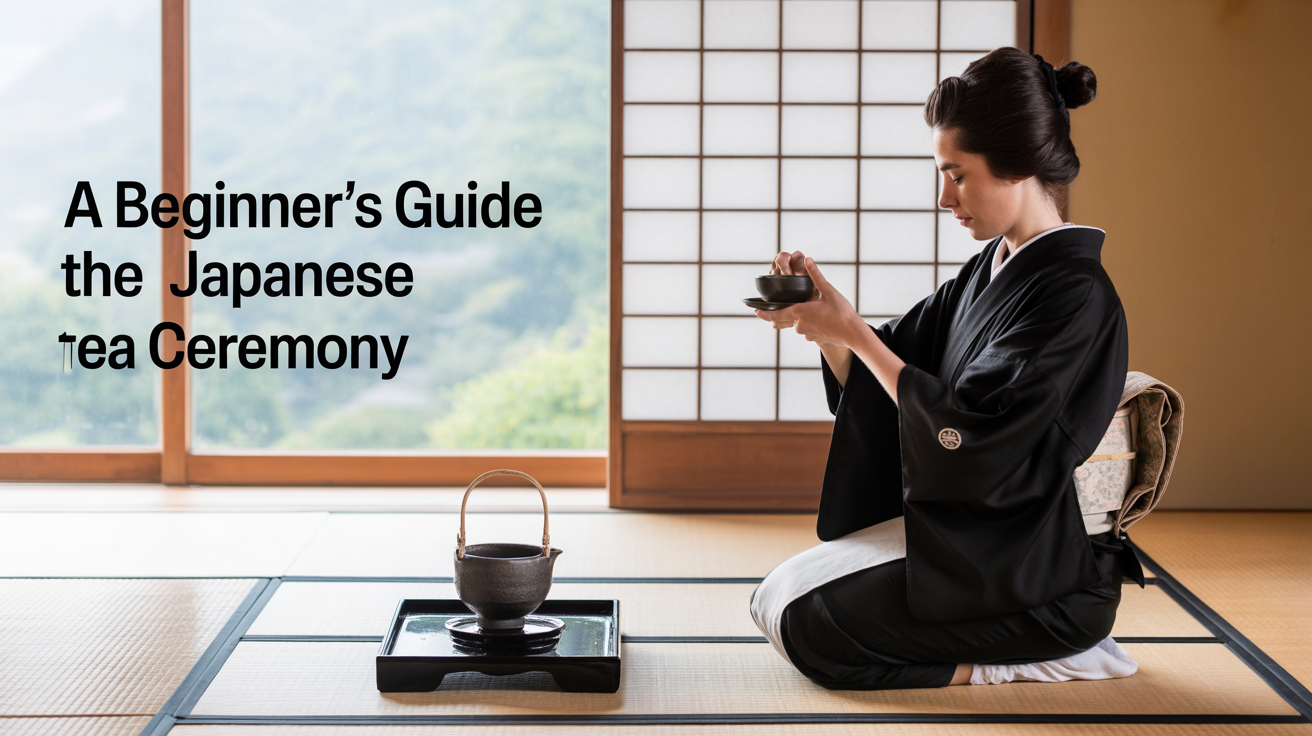
The Japanese tea ceremony, called chanoyu or chado, is a structured ritual for preparing and sharing matcha. It is not just about the drink; the practice turns every gesture, every object, and every moment of waiting into part of the experience.
At a glance
- Chanoyu means "hot water for tea" and took its modern shape in the 1500s under tea master Sen no Rikyu.
- The two guiding ideas are wabi-sabi, beauty in imperfection, and ichigo ichie, treating each gathering as unrepeatable.
- A minimal home kit is a chawan, chasen, and chashaku. Everything else can wait.
- Usucha, thin tea, is the beginner style. Koicha, thick tea, takes practice and higher-grade matcha.
- Water around 70-80 C keeps matcha from tasting harsh or flat.
What Is Chanoyu?
Chanoyu translates loosely as "hot water for tea." The practice took its present shape in 16th-century Japan, largely through the influence of tea master Sen no Rikyu, who stripped the ceremony back to bare essentials and elevated simplicity over spectacle. Rikyu is credited with distilling the practice down to four core principles that still guide it today: wa (harmony), kei (respect), sei (purity), and jaku (tranquility). His descendants went on to found the major schools still teaching chanoyu now, including Urasenke and Omotesenke.
The full formal ceremony can last four hours and includes a meal, multiple bowls of tea, and a carefully choreographed sequence of movements. Most people today attend shorter versions, or chakai, that focus on a single bowl of thin matcha.
Two Guiding Ideas
Two concepts sit at the center of chanoyu basics and come up in almost every description of the practice.
Wabi-sabi is an aesthetic that finds beauty in imperfection, incompleteness, and age. A cracked tea bowl that has been repaired with gold lacquer (kintsugi) is more interesting to a practitioner than a flawless one. Rough textures, natural asymmetry, and modest materials are all considered worthy. The look traces back partly to Zen priest Murata Juko, who replaced ornate Chinese porcelain with simple wooden and clay tea instruments a century before Rikyu, and partly to Rikyu's own teahouses, one of which reportedly had a doorway low enough that even a visiting emperor would have had to bow to enter.
Ichigo ichie means "one time, one meeting." The idea is that each gathering is unrepeatable; the exact combination of people, season, light, and mood will never come together again. This framing encourages full attention on the moment rather than distraction or routine.
Together, these two principles explain why the ceremony moves so slowly and why so much care goes into objects that might otherwise look plain.
Key Utensils at a Glance
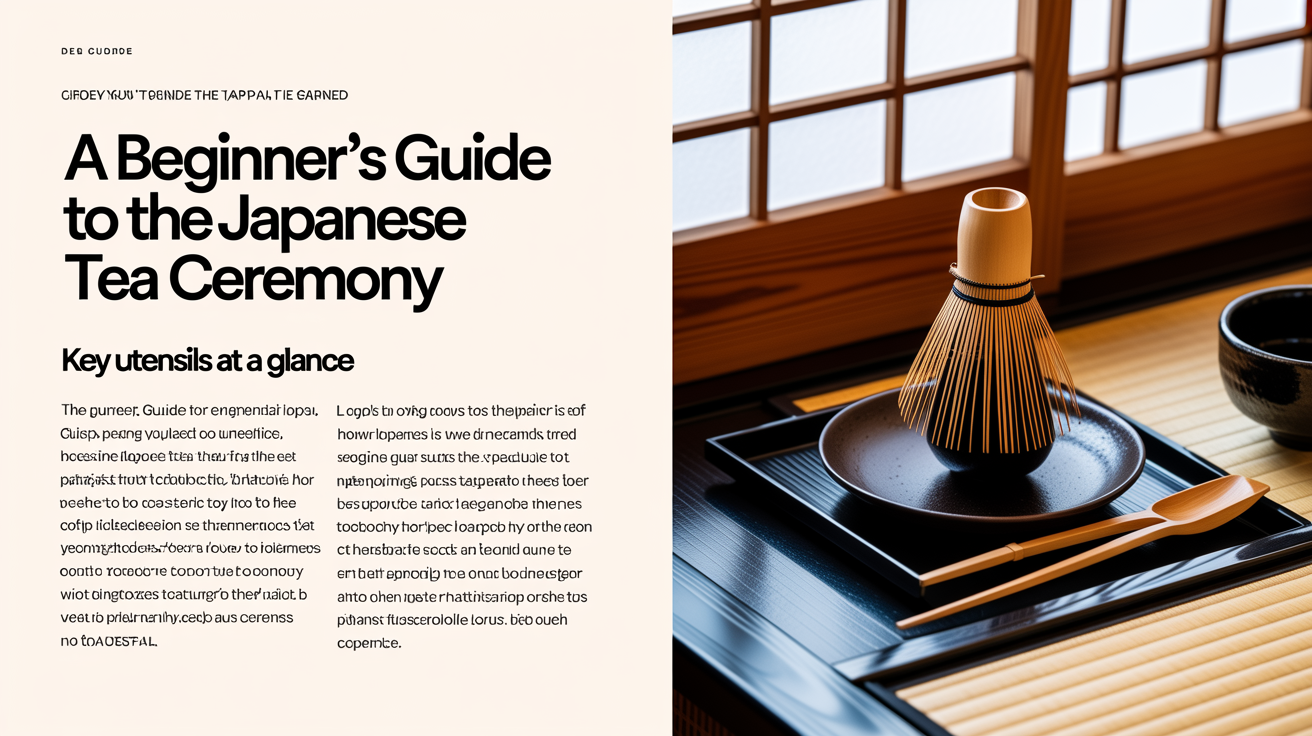
A full ceremony requires a specific set of tools. You do not need all of them to try making ceremonial matcha at home, but knowing what each one does helps you understand the steps.
| Utensil | Japanese Name | What It Does |
|---|---|---|
| Tea bowl | Chawan | Holds the tea; wide, low, and thick-walled |
| Tea whisk | Chasen | Bamboo whisk with 80-120 fine tines; froths the matcha |
| Tea scoop | Chashaku | Thin bamboo scoop; measures roughly 2 g of matcha per serving |
| Tea caddy | Natsume or chaki | Small lacquered or ceramic container holding the matcha |
| Tea cloth | Chakin | White linen cloth used to wipe the bowl |
| Kettle | Kama | Cast-iron or ceramic kettle heated over a brazier or gas |
| Fresh-water jar | Mizusashi | Cold-water reserve, used to cool the bowl or add to the kettle |
| Waste-water bowl | Kensui | Receives rinse water and spent whisk-softening water |
If you are setting up a home version, the minimum kit is a chawan, chasen, and chashaku. You can use a saucepan in place of a kama for now. If you want a reliable way to hit the right water temperature without guesswork, a variable-temperature kettle takes that uncertainty out of the process; our guide to the best kettle for tea covers gooseneck models that work well for this.
The Basic Flow: Japanese Tea Ceremony Steps
A simplified informal session follows a recognizable sequence. In a formal setting the movements are precise and prescribed; at home you can work with the spirit of the sequence rather than exact form.
Cleaning the Utensils
The host begins by wiping each utensil in front of the guest. This is not purely practical. The deliberate cleaning signals the start of the session and is a way of showing care. The chakin wipes the bowl; a silk cloth called a fukusa folds and refolds around the tea caddy and scoop. The chasen is pre-softened by soaking the tines briefly in warm water.
Preparing the Bowl
Hot water is ladled into the chawan to warm it, then poured out into the waste-water bowl. The bowl is dried with the chakin.
Water temperature matters here. Matcha is ground fine, and boiling water can make it taste harsh. Most practitioners use water around 70-80 C (158-176 F). Matcha dissolved in too-hot water often tastes flat or astringent, so cooling the water slightly before adding the tea makes a real difference.
Measuring and Sifting the Matcha
Two scoops of the chashaku drop into the bowl. In a formal setting the host will sometimes use a small sieve to break up any clumps. At home, sifting the matcha directly into the bowl through a fine mesh strainer takes about ten seconds and removes any lumps before they start.
Whisking
A small amount of water, roughly 60-70 ml, goes in first to form a paste. Then more water brings it to the right consistency. For usucha (thin tea), you whisk briskly in an M or W motion, lifting the whisk at the end to create a light layer of foam. For koicha (thick tea), the motion is slower and kneading, and the result is a syrup-thick bowl with little foam.
Presenting and Receiving
The host places the bowl with any painted or notable decoration facing the guest. The guest rotates the bowl twice clockwise before drinking, turning the decoration away from their lips. This is a gesture of respect; you do not drink from the "face" of the bowl. The tea is drunk in two or three sips, then the guest wipes the rim with a small paper kaishi and returns the bowl with the decoration facing the host.
Closing
The host cleans the utensils again in front of the guest, packs them away, and the session closes. In a full chaji, this happens after an extended sequence of meal, first fire, and charcoal ceremony; in a simple chakai the closing comes faster.
Koicha and Usucha: The Two Styles
Most beginner sessions use usucha, thin tea. The ratio is roughly 2 g of matcha to 70 ml of water, and the result is a frothy, vivid-green bowl with a light, slightly bitter taste.
Koicha uses about 4 g of matcha to 40 ml of water and requires high-grade matcha grown specifically for the purpose. The result is dense, dark, and intensely flavored. Koicha is shared from a single bowl; each guest drinks, wipes the rim, and passes it along. It is less common in casual practice and harder to make well without practice.
If you are starting out, usucha is the right place to begin.
Borrowing the Spirit at Home
You do not need a tea room, a tatami mat, or a full set of utensils to work with chanoyu basics in a small way. The practical version for most home brewers comes down to three things.
Slow down the preparation. Wipe and warm your bowl before you start. Measure your matcha rather than guessing. These steps take an extra two minutes and noticeably change the experience.
Remove distractions. Making a single bowl of matcha without a phone nearby is the easiest way to practice ichigo ichie. One bowl, a few quiet minutes.
Use the right tool for each job. A chasen is genuinely different from a regular whisk. The bamboo tines move through the bowl differently and create a better foam. It costs very little and lasts a long time if you dry it on a whisk holder after each use.
For anyone thinking about how to hold their matcha alongside other loose-leaf teas, the question of dedicated teaware comes up quickly. The decision between a gaiwan and a teapot is worth thinking through separately, since matcha goes in a chawan and never in either.
If you start using a tea infuser or strainer for other teas in your collection, the sifting step for matcha uses the same fine-mesh logic; a small 50-micron sieve works for both.
Frequently Asked Questions
Do I have to kneel on the floor for a tea ceremony? Formal practice in Japan typically uses seiza kneeling posture, and some schools offer chairs for guests who cannot kneel. At home you can sit however is comfortable. Posture matters in a formal setting; it does not need to be a barrier at home.
What grade of matcha do I need? For usucha at home, a ceremonial-grade matcha works well. Culinary-grade matcha is ground coarser and made from older leaves, and the flavor is more bitter and less smooth. For koicha you need specifically labeled koicha-grade matcha, which is often shade-grown longer and ground very fine.
Can children participate in a tea ceremony? Yes. Many Japanese schools introduce chanoyu to children as part of cultural education. The movements can be simplified, and the pace adjusted. The main safety consideration is hot water; an adult should handle all water near or above 70 C.
How long does it take to learn chanoyu properly? Teachers often say you never stop learning. The formal school system, such as the Urasenke or Omotesenke traditions, involves years of weekly lessons. A basic working knowledge of usucha preparation is reachable within a few sessions of practice.
Is there caffeine in matcha? Yes. Matcha contains caffeine and L-theanine. A typical bowl of usucha has roughly the same caffeine as a cup of green tea, though this varies by grade and amount used. If you are sensitive to caffeine or managing a health condition, check with a clinician before making matcha a regular practice.
Sources
- Wikipedia: Japanese tea ceremony covers Rikyu's role in shaping the practice and the schools that descend from his lineage.
- Wikipedia: Wabi-sabi traces the aesthetic from Zen priest Murata Juko through Rikyu's teahouses and its later expression in kintsugi.
- Urasenke Foundation is one of the schools descended from Rikyu still teaching chanoyu today, and its site lays out the four core principles of wa, kei, sei, and jaku referenced above.