Herbal & Wellness
Rooibos: The Caffeine-Free Red Tea Explained
What is rooibos tea? Learn where it comes from, how to brew it, its flavor profile, and what makes it a popular caffeine-free choice.
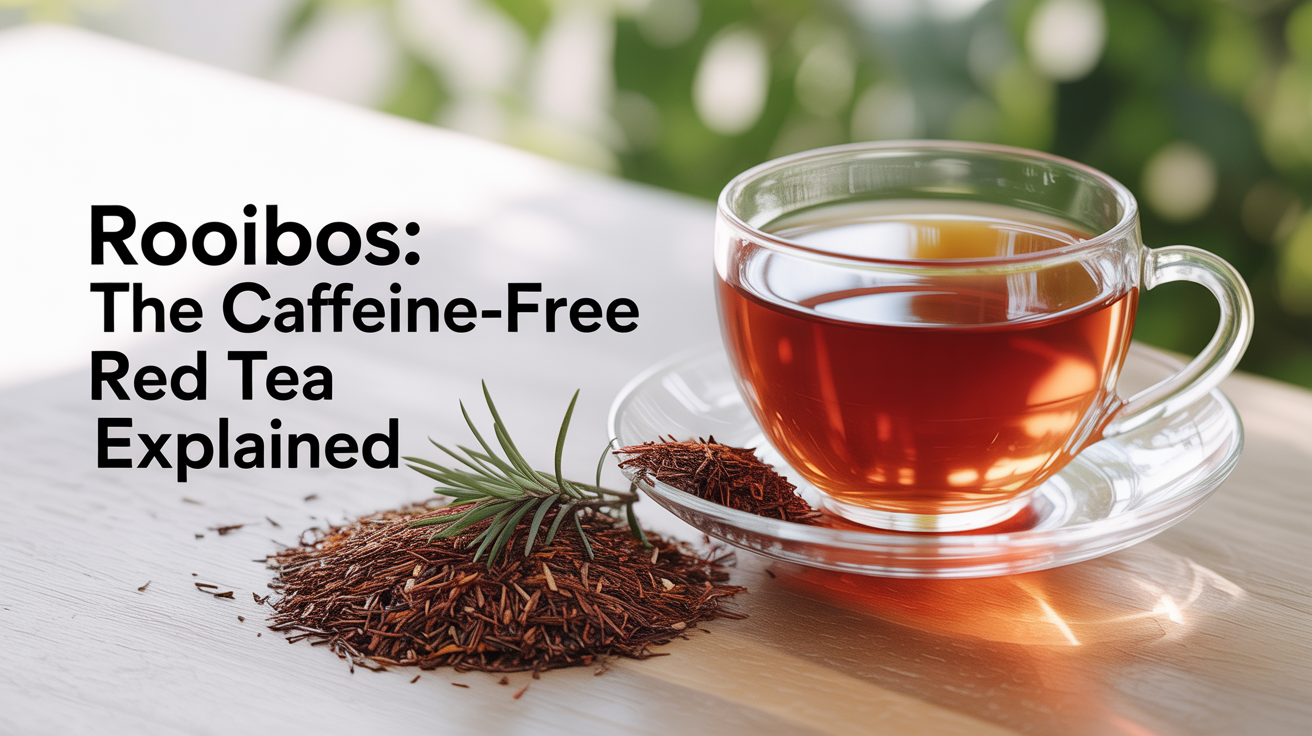
Rooibos is a caffeine-free herbal infusion made from the needle-like leaves of a South African shrub called Aspalathus linearis. It goes by the name red bush tea because the leaves develop a deep rusty-red color during the oxidation step of processing.
Where Rooibos Comes From
Rooibos grows only in the Cederberg region of South Africa's Western Cape, roughly 200 kilometers north of Cape Town. The plant thrives in the region's sandy, acidic soils and dry mountain climate. It cannot be cultivated commercially anywhere else with the same results, which is why South Africa produces almost all of the world's supply.
The word "rooibos" (pronounced ROY-boss) is Afrikaans for "red bush." Khoisan indigenous peoples brewed it long before European settlers arrived. It became a commercial crop in the early 20th century when a Russian immigrant named Benjamin Ginsberg recognized its potential and began trading it as an affordable local alternative to imported teas.
Today, rooibos is exported worldwide and is especially popular in Japan, Germany, and the Netherlands, where loose-leaf consumption is common.
Red Rooibos vs. Green Rooibos
Most rooibos on the market is the oxidized red variety, but you may also find green rooibos. Here is what distinguishes them:
| Red Rooibos | Green Rooibos | |
|---|---|---|
| Processing | Oxidized (fermented) | Unoxidized, quickly dried |
| Color | Deep amber-red | Golden-yellow |
| Flavor | Earthy, sweet, slightly nutty | Grassier, lighter, more delicate |
| Price | Widely available, affordable | Rarer, usually more expensive |
| Antioxidants | Good levels | Higher levels, different profile |
For most beginners, red rooibos is the natural starting point. Its mellow, sweet flavor is forgiving to brew and works well both hot and cold.
What Does Rooibos Taste Like?
The flavor is mild, slightly sweet, and earthy. It has a natural sweetness that many people describe as vanilla-adjacent, without any added flavoring. The cup is smooth with a low level of tannins, so it rarely tastes bitter even if you steep it longer than intended. That low-tannin quality also makes it a workable base for milk, honey, or spices if you want something in the style of a chai.
Compared to black tea, rooibos has no astringency. Compared to chamomile, it is earthier and less floral. Compared to peppermint tea, it is softer and less sharp on the palate.
The cup's red-brown color is deep and attractive. It looks substantial, which makes it satisfying to drink in the evening when you want something that feels like a proper tea without the caffeine.
How to Brew Rooibos
Rooibos is one of the most forgiving herbs to brew. It does not turn bitter from high temperatures or long steeping the way green or black tea does. Here are the key parameters:
Water temperature: Full boiling, around 212°F (100°C). Unlike green teas, rooibos benefits from the hottest water you can bring to a boil.
Leaf ratio: 1 teaspoon of loose rooibos per 8 oz (240 ml) of water. Push this to 1.5 teaspoons if you want a richer, darker cup.
Steep time: 5 to 7 minutes for a standard cup. You can go longer without penalty; many people leave it 10 minutes or steep it as a concentrate for lattes.
Vessel: A simple infuser mug, a teapot with a strainer, or a French press all work fine. Rooibos needles are thin and short, so use a fine-mesh infuser rather than a large-coil one to avoid grit settling in the cup.
Cold Brew Rooibos
Rooibos cold brews cleanly. Add 2 heaping teaspoons per 8 oz of cold water, then refrigerate for 8 to 12 hours. The result is smooth, lightly sweet, and pleasant over ice. Sliced citrus or fresh ginger added to the jar during the brew adds a gentle lift to the finished drink.
Rooibos Latte
Brew a double-strength cup (2 teaspoons per 8 oz, steeped 7 minutes) and top with steamed or frothed milk in roughly a 1:1 ratio. Add a small amount of honey or cinnamon if you like. Rooibos holds up well to milk in a way that many delicate herbal teas do not.
Rooibos Tea Benefits Worth Knowing
Rooibos contains no caffeine, making it a practical option for people who are sensitive to caffeine, pregnant, or looking for a beverage they can drink in the evening without disrupting sleep. Because it is naturally caffeine-free, it also lacks the L-theanine that tea from Camellia sinensis carries.
Rooibos does contain antioxidants, including a compound called aspalathin that is found almost exclusively in rooibos. Research on rooibos antioxidants is ongoing and most studies are still in early stages, so the specifics are not settled science. What is accurate to say is that rooibos provides antioxidant compounds, is low in tannins, and is naturally free of oxalic acid, making it gentler on the stomach than some other teas for people who notice digestive sensitivity.
It is also low in theophylline, the stimulant present in most true teas. For people looking for a drink they can enjoy at night, rooibos is a reasonable caffeine-free option. If sleep is a specific goal, it pairs well with the herbs covered in the best teas for sleep.
One note on health claims: rooibos is a pleasant, safe herbal beverage. It is not a treatment for any condition. If you are pregnant, nursing, taking medication, or managing a health condition, check with a clinician before relying on rooibos or any herb for health purposes.
Buying and Storing Rooibos
Rooibos is widely available in both loose-leaf and bagged form. Loose-leaf gives you more control over the ratio and tends to produce a cleaner, fuller cup. When shopping for loose-leaf, look for bright, consistent needle-like pieces rather than a lot of fine dust or broken-down material, which can produce a murky brew.
Practical storage guidelines:
- Keep rooibos in an airtight container away from light, heat, and strong odors
- A tin or opaque jar stored in a cupboard works well
- Rooibos has a longer shelf life than most teas because it is low in the volatile aromatic compounds that fade quickly in green teas; well-stored rooibos will hold its character for 18 to 24 months
- Store away from coffee or strongly scented spices, as rooibos will absorb nearby odors over time
- Loose-leaf is easier to portion accurately than a tea bag; once you settle on a ratio you like, it is simple to replicate
Frequently Asked Questions
Is rooibos actually tea?
Technically, no. True tea comes from the Camellia sinensis plant. Rooibos is an herbal infusion made from Aspalathus linearis, a completely different species. The word "tea" is used loosely to describe many brewed beverages, so you will see rooibos called a tea regularly, but the more precise term is herbal infusion or tisane.
Does rooibos have any caffeine at all?
No. Rooibos is naturally and completely caffeine-free. It does not contain caffeine at any stage of growth or processing. This distinguishes it from yerba mate, green tea, and black tea, all of which contain caffeine naturally.
Can you steep rooibos for too long?
Unlike green or white tea, rooibos is very forgiving. Steeping it 10 or 15 minutes instead of 7 will produce a stronger, more concentrated cup but will not make it bitter or astringent the way over-steeped black tea does. If you consistently find the flavor too intense, reduce the amount of leaf rather than cutting steep time dramatically.
What is the difference between rooibos and honeybush?
Honeybush (Cyclopia species) is a South African herbal infusion sometimes confused with rooibos. Both grow in the Western Cape, both are naturally caffeine-free, and both are often sold alongside each other. Honeybush has a noticeably sweeter and more floral flavor profile compared to the earthier, nuttier character of rooibos. They are worth trying side by side if you want to explore South African herbal teas further.
Is rooibos safe during pregnancy?
Rooibos is generally considered a reasonable option during pregnancy because it is caffeine-free and low in tannins. However, as with any herb, it is worth checking with your midwife or doctor before making it a daily staple. The information here is general, not medical advice.