Herbal & Wellness
Chamomile Tea: Benefits, Brewing, and What to Expect
What chamomile tea actually does, how to brew it properly, and who should be careful with it.
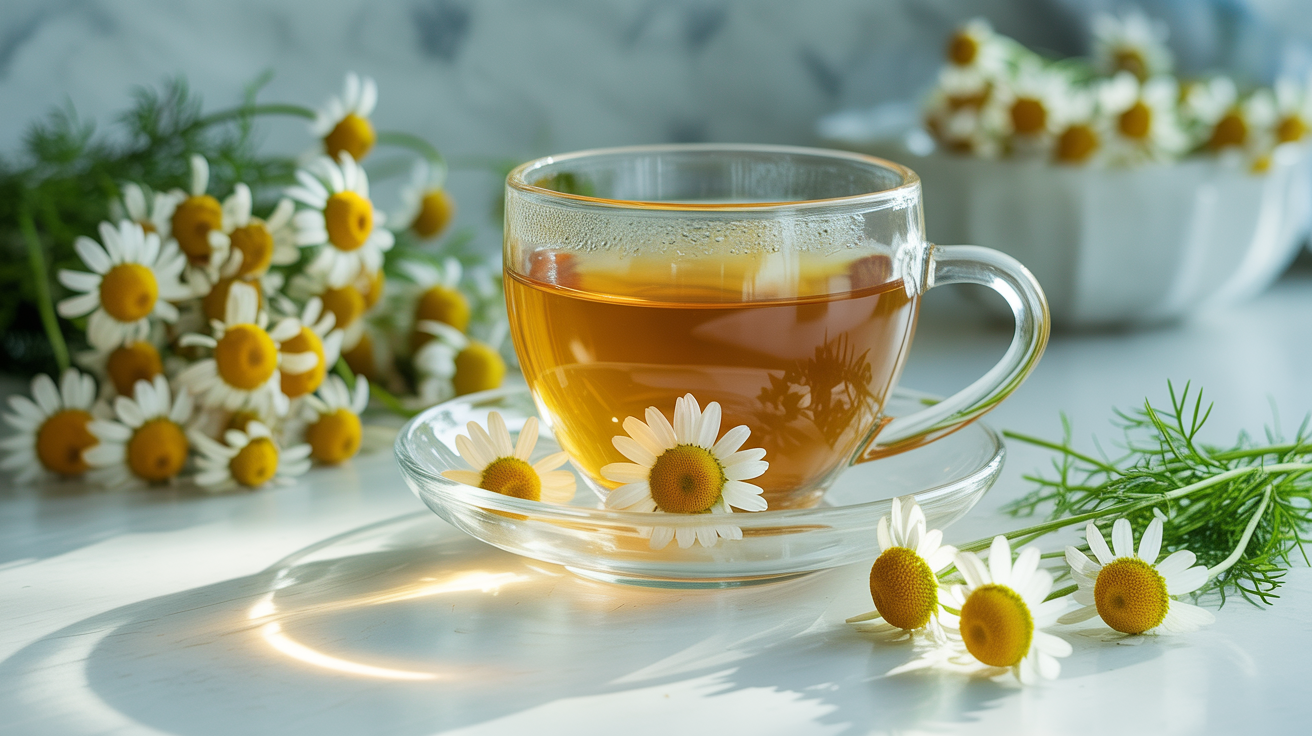
Chamomile has been used as a medicinal plant for thousands of years across Europe, North Africa, and western Asia. Today it is probably the most recognisable herbal tea on the market, sold in every grocery store and recommended in every article about winding down before bed. Some of that reputation is deserved; some of it outpaces the evidence. This article covers what chamomile actually is, what studies say (and don't say) about its effects, how to brew it to get the best flavour and potency, and who should think twice before making it a daily habit.
This is general information, not medical advice. If you have a health condition or take medication, talk to your doctor before using chamomile regularly.
German vs Roman: Which Chamomile Is in Your Cup?
Most chamomile tea sold commercially is German chamomile (Matricaria chamomilla, also called M. recutita). It is the one with hollow, cone-shaped flower heads, a higher concentration of the active compound apigenin, and a mild, apple-like scent. Roman chamomile (Chamaemelum nobile) is lower-growing, has solid flower heads, and carries a slightly more bitter, grassy flavour. Roman chamomile is more common in essential-oil applications and in some European herbal traditions.
For drinking purposes, German chamomile is the standard. When a package just says "chamomile tea," it is almost certainly German chamomile. The two are not interchangeable in herbal medicine formulations, but as a daily relaxing tea, either is fine.
The key phytochemicals in German chamomile are:
- Apigenin - a flavonoid that binds to GABA receptors in the brain, which is the likely mechanism behind chamomile's calming effects
- Alpha-bisabolol - found in the essential oil; has some anti-inflammatory activity in lab studies
- Chamazulene - gives the steam-distilled essential oil its distinctive blue colour; anti-inflammatory in vitro
- Various other flavonoids and coumarins - present in smaller quantities
What the Evidence Actually Shows
Sleep
Chamomile tea for sleep is the most widely cited use, and there is reasonable (though not overwhelming) evidence behind it. A 2011 randomised controlled trial in BMC Complementary and Alternative Medicine found that people with chronic primary insomnia who took chamomile extract (270 mg twice daily) fell asleep about 15 minutes faster and woke up less in the night than those on placebo, though total sleep time did not differ significantly. A 2017 study in Journal of Advanced Nursing found that new mothers who drank chamomile tea reported better sleep quality in the first two weeks postpartum.
These are modest effects, and most studies use standardised extracts rather than a brewed cup. A mug of tea will deliver considerably less apigenin than a capsule. Still, the combination of a warm drink, a relaxing ritual, and some real pharmacological activity makes chamomile a reasonable part of a wind-down routine. For a broader look at which herbal teas have sleep evidence behind them, see the best teas for sleep.
Anxiety
The clearest clinical evidence for chamomile is actually in anxiety, not sleep. A 2016 long-term trial in Phytomedicine followed participants with moderate-to-severe generalised anxiety disorder over 38 weeks. Those who continued chamomile extract after initial remission had significantly lower relapse rates than those who switched to placebo. This is a promising finding, but again it used a standardised pharmaceutical extract. Tea is not a replacement for treatment.
Digestion
Chamomile has a long folk history as a digestive herb, used for gas, bloating, and stomach cramps. The antispasmodic effects of chamazulene and alpha-bisabolol have been demonstrated in laboratory settings on smooth muscle tissue. Human clinical data is thin, though a combination product of chamomile, peppermint leaf, and other herbs has shown benefit for functional dyspepsia in a few small trials. If you find a cup after dinner settles your stomach, that is plausible and not just placebo, but the evidence for chamomile alone is not conclusive.
Summary Table: Benefits vs Evidence Quality
| Claimed Benefit | Evidence Quality | Notes |
|---|---|---|
| Reduced sleep latency | Moderate (small RCTs) | Studies use extracts, not brewed tea |
| Anxiety relief | Moderate (1 larger trial) | Standardised extract; clinically significant |
| Digestive comfort | Weak (lab + folk use) | Mostly in vitro or combination products |
| Anti-inflammatory | Preclinical only | No strong human trials for systemic use |
| Blood sugar support | Early (1 pilot study) | Not enough data to draw conclusions |
How to Make Chamomile Tea
Loose Flowers vs Bags
Whole dried chamomile flowers produce a fuller, more fragrant cup than most commercial bags, which often contain powdered or chopped flower heads that lose volatiles faster. You can buy loose German chamomile from reputable herb suppliers; look for flowers that are pale yellow-white with tight centres and a distinct apple-like scent. Older flowers smell flat and dusty.
That said, quality bagged chamomile from specialist tea companies (not the cheapest supermarket brand) is perfectly fine for daily drinking. The convenience is real.
Brew Parameters
Getting the temperature and steep time right matters more with chamomile than with, say, black tea. Boiling water can destroy some of the delicate volatile compounds that give chamomile its characteristic scent and some of its active constituents.
| Parameter | Recommendation |
|---|---|
| Water temperature | 90-95°C (194-203°F) - just off boil |
| Loose flowers | 2-3 g per 240 ml (8 oz) |
| Bag | 1 bag per 240 ml |
| Steep time | 5-10 minutes (longer than most teas) |
| Cover the cup | Yes - traps volatile compounds |
Covering the cup while it steeps is a detail that most people skip, but it makes a noticeable difference. The steam carries off the very compounds that make chamomile calming and aromatic. A saucer on top of the mug is enough.
Five minutes gives a lighter, sweeter cup. Ten minutes is more concentrated and slightly more bitter. For sleep, lean toward the longer steep with more flowers. For casual afternoon drinking, five minutes is pleasant.
What It Tastes Like
Chamomile has a gentle, slightly sweet flavour with a clear apple-like note and a faint earthiness underneath. It is not assertive. People who find plain chamomile too mild often add a small slice of fresh ginger (which pairs well and adds warmth) or a teaspoon of honey. It also pairs naturally with other calming herbs like passionflower or lemon balm if you want a more complex blend.
If you enjoy warming herbal teas with a bit more character, ginger tea and peppermint tea are worth exploring as counterpoints to chamomile's softness.
Chamomile Tea Side Effects and Who Should Be Cautious
Ragweed Allergy
This is the most important caution. Chamomile is in the Asteraceae (daisy) family, which also includes ragweed, chrysanthemums, and marigolds. People with known ragweed allergy have a meaningful risk of cross-reacting to chamomile. Reactions range from mild oral allergy symptoms (itching, tingling mouth) to, in rare cases, anaphylaxis. If you have hay fever triggered by ragweed, start with a very small amount and watch for symptoms, or avoid chamomile entirely.
Pregnancy
Chamomile in large or regular doses is generally avoided during pregnancy. There is some evidence that high doses of German chamomile extracts have uterotonic effects in animal models. Occasional cups are not known to cause harm, but there is not enough human safety data to recommend it freely during pregnancy. Discuss with your midwife or obstetrician.
Blood Thinners
Chamomile contains coumarins, compounds with mild anticoagulant activity. Drinking chamomile tea while taking warfarin (Coumadin) or other blood thinners could theoretically enhance the anticoagulant effect and increase bleeding risk. Several case reports exist of elevated INR in patients who combined chamomile with warfarin. This does not mean one cup will cause a problem, but regular consumption is worth discussing with your doctor if you are on anticoagulants.
Drug Interactions (General)
Because apigenin acts on GABA receptors, using chamomile alongside sedating medications (including benzodiazepines, certain antihistamines, or alcohol) may compound sedative effects. This is a theoretical concern more than a well-documented one, but worth noting for people on CNS-active medications.
Frequently Asked Questions
How much chamomile tea should I drink per day?
Most studies on chamomile use 1-3 cups per day, and that range appears safe for most healthy adults. There is no established upper limit, but very high intakes (say, 5-6 strong cups daily) increase the chance of mild side effects like nausea. For sleep purposes, one cup 30-45 minutes before bed is the typical starting point.
Does chamomile tea actually make you sleepy?
Chamomile contains apigenin, which binds to benzodiazepine receptors in the brain and has measurable sedative effects in animal models. Human trials show modest but real reductions in sleep latency. Whether you feel noticeably sleepy from a single cup depends on your individual sensitivity, how strong you brew it, and how much you have had to eat. Some people find it clearly calming; others notice nothing. It is not a knockout sedative, but it is not just hot water either.
Can I drink chamomile tea if I'm on medication?
It depends on the medication. The main concerns are blood thinners (warfarin, heparin, aspirin in high doses), sedatives, and immunosuppressants. For most common over-the-counter medications, chamomile at normal tea quantities is unlikely to cause problems. If you take any prescription medication regularly, check with your pharmacist before adding chamomile as a daily habit.
Is loose chamomile better than bags?
Quality loose dried flowers give a more aromatic, potent cup than most commercial teabags, simply because the flowers retain more of their volatile oils when whole. But a good bagged chamomile (from a reputable supplier) is more than adequate. The bigger variables are freshness, steep time, and covering the cup while it steeps.
Does chamomile tea have caffeine?
No. Chamomile is not derived from the tea plant (Camellia sinensis) and contains no caffeine. It is entirely caffeine-free, which is part of why it is a popular evening drink.