Herbal & Wellness
How to Blend Your Own Herbal Tea at Home
Learn how to make herbal tea blends with a simple base, supporting, and accent herb framework. Ratios, storage tips, and three starter recipes.
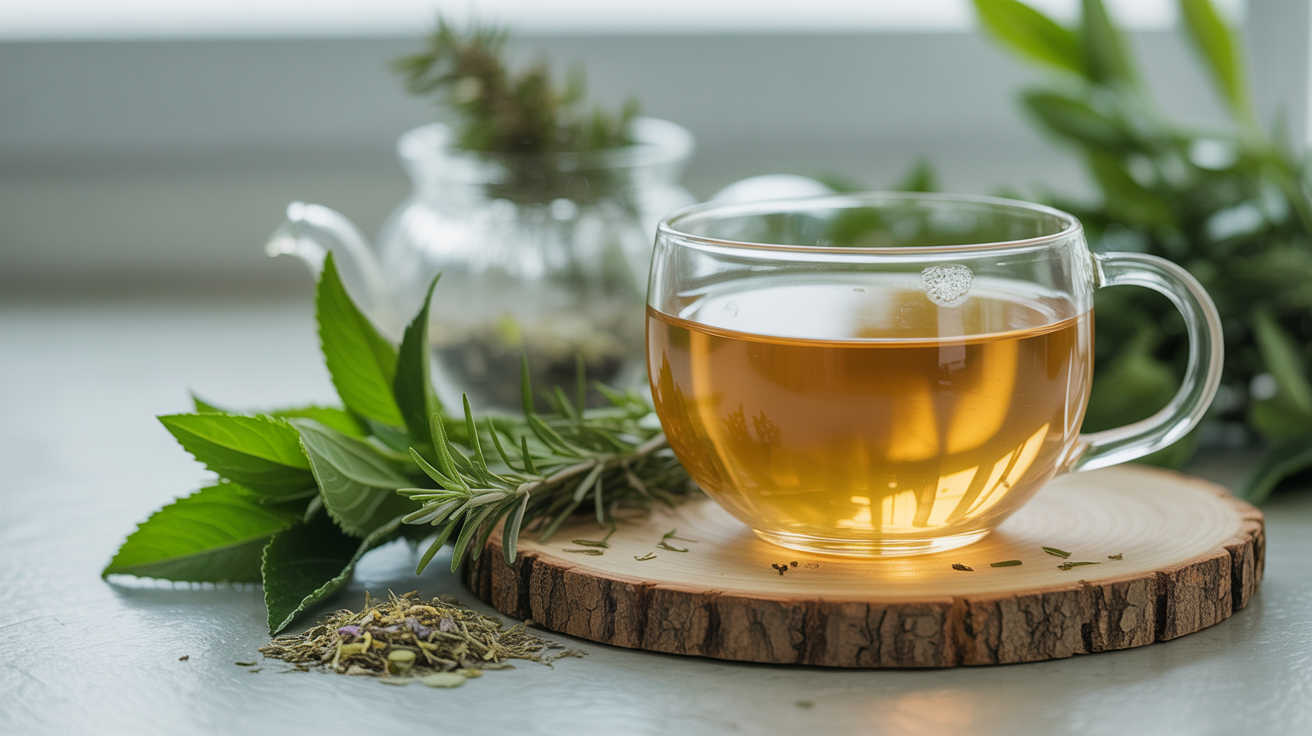
Making your own herbal tea blends at home is straightforward once you know a three-part framework: pick a base herb that carries the cup, add a supporting herb for depth, then finish with a small accent for aroma or brightness.
The guides and recipes below are general information. They are not medical advice. If you are pregnant, nursing, taking medication, or managing a health condition, check with a clinician before using any herb regularly.
The Base, Supporting, and Accent Framework
Most good tisane blends follow the same logic that cooks use when building a sauce: a dominant element, a secondary layer, and a finishing note. Think of it in thirds by weight, though you will fine-tune from there.
Base herb (50 to 60 percent of the blend) The base is what you actually taste when you close your eyes. It should be mild enough to drink in volume, hold up to a full steep, and play well with other flavors. Rooibos, chamomile, and lemon verbena are reliable bases because they are naturally caffeine-free, have a rounded body, and do not go bitter if you brew them a minute too long.
Supporting herb (25 to 35 percent) The supporting herb gives the blend a second flavor layer without taking over. Peppermint adds a cooling note on top of a chamomile base. Lemongrass adds citrus brightness to a rooibos base. Hibiscus brings tartness and a deep red color. One well-chosen supporting herb is usually enough.
Accent herb (5 to 15 percent) Accents are high-impact ingredients you use in small amounts. Fresh-cut ginger is strong, so 10 percent dried ginger goes a long way. Rose petals add scent more than flavor. Lavender buds can overwhelm a blend quickly, so start at 5 percent and taste before adding more.
This three-part structure keeps blends cohesive. When a homemade tisane tastes muddy or flat, it is usually because too many herbs share the spotlight at equal ratios.
Common Herbs to Keep on Hand
You do not need a large pantry to blend well. These ten ingredients cover a wide range of flavor profiles and work across many blends.
| Herb | Flavor profile | Role in a blend |
|---|---|---|
| Chamomile | Mild, slightly apple-like, floral | Base or supporting |
| Rooibos | Sweet, nutty, earthy, full-bodied | Base |
| Peppermint | Cool, clean, sharp | Supporting or accent |
| Lemongrass | Bright citrus, grassy | Supporting |
| Hibiscus | Tart, cranberry-like, vivid color | Supporting or accent |
| Ginger (dried) | Spicy, warming, peppery | Accent |
| Rose petals (dried) | Floral, lightly sweet | Accent |
| Lemon verbena | Clean lemon, herbal | Base or supporting |
| Lavender buds | Floral, soapy if overused | Accent only |
| Spearmint | Softer than peppermint, minty | Supporting |
Buy your dried herbs from a reputable source that shows a harvest or best-by date. Older herbs lose their volatile oils quickly, and a blend made from two-year-old chamomile will taste like straw regardless of your ratios.
How to Measure and Mix
For a small test batch, work in teaspoons. A batch of about 10 teaspoons gives you enough to brew four or five cups and decide whether the blend needs adjusting before you commit to a larger jar.
A starter formula for a 10-teaspoon batch:
- 6 tsp base herb
- 3 tsp supporting herb
- 1 tsp accent herb
Mix dry ingredients in a small bowl. Rub the blend lightly between your fingers to crack any coarser pieces (dried ginger coins, for example) and release some of the essential oils so you can smell the finished blend before you even brew it. That sniff test tells you a lot. If the accent dominates the dry blend, it will dominate the cup.
Adjusting your ratios
After a first brew, make notes. Common adjustments:
- Blend tastes thin: increase the base or swap in rooibos for extra body
- Blend tastes harsh or bitter: reduce hibiscus or ginger; brew cooler (around 90 to 95 C / 195 to 200 F) or for less time
- Blend tastes flat: add a brighter supporting herb like lemongrass or a small amount of lemon peel
- Blend tastes soapy: cut lavender by half
Small moves matter. Shift any single ingredient by half a teaspoon per batch, taste, then decide.
Brew ratio for blended tisanes
Use 1.5 to 2 teaspoons of your blend per 250 ml (8 oz) of water. Most herbal tisanes do well at full boiling water (100 C / 212 F) for 5 to 7 minutes. Delicate florals like rose petals and chamomile prefer water around 90 to 95 C and a shorter steep of 4 to 5 minutes to avoid a bitter note.
Storing Homemade Tisane Blends
Proper storage is what separates a blend that tastes bright in three months from one that goes dull in three weeks.
Store your blends in:
- A dark glass jar with a tight-fitting lid
- A tin with a gasketed lid
- A ceramic canister kept away from direct light
Avoid clear glass on a windowsill, plastic zip bags for long-term storage (they let in air and absorb odors), and any container near a stove or steam source.
Label every jar with the blend name and the date you made it. Most homemade blends hold their flavor well for six to twelve months if stored correctly. After that, the aromatic oils fade. The blend is not harmful, just flat.
Keep strong accents like dried ginger and cinnamon in their own separate containers and add them to a batch fresh. These spices can overpower lighter florals if they share a jar for months.
Three Starter Recipes
These blends use the framework above and ingredients from the table. Each recipe is written as a 10-teaspoon batch.
Calm Chamomile and Mint
A clean, light blend. Chamomile carries the cup, peppermint adds a cooling lift, and a small amount of rose petals adds fragrance without weight. This one works well in the evening.
- 6 tsp dried chamomile flowers
- 3 tsp dried peppermint leaf
- 1 tsp dried rose petals
Brew: 1.5 tsp per 250 ml, water at 92 C / 197 F, steep 5 minutes.
Rooibos Ginger Lemongrass
Warming, slightly spicy, with a citrus note. Rooibos gives this blend body and a natural sweetness, so it needs no added sugar.
- 6 tsp rooibos
- 3 tsp dried lemongrass
- 1 tsp dried ginger, roughly crumbled
Brew: 2 tsp per 250 ml, full boiling water, steep 6 to 7 minutes. Works well as a cold infusion too: use the same ratio and steep in cold water in the fridge for 8 hours.
Hibiscus Berry Mint
Tart and vivid, this blend is good iced. Hibiscus gives a deep ruby color and a cranberry-like tartness. If it tastes too sharp on its own, a small amount of rooibos softens it.
- 5 tsp dried hibiscus petals
- 3 tsp dried spearmint leaf
- 2 tsp rooibos
Brew: 1.5 tsp per 250 ml, full boiling water, steep 5 minutes. Pour over ice or let cool and refrigerate. Add a strip of fresh lemon peel to the cup for a brighter finish.
If you are looking for blends specifically designed around sleep or unwinding, the article on the best teas for sleep covers which herbs are most commonly used for that purpose.
For a deeper look at one of the most useful single herbs in the pantry, see the guide on peppermint tea, which covers growing, brewing temperature, and what to expect from the cup.
Frequently Asked Questions
What is a tisane? A tisane is any infusion made from plant material other than the Camellia sinensis plant. That means chamomile, hibiscus, peppermint, and rooibos are all technically tisanes, not teas. The word "herbal tea" is used loosely in everyday language to mean the same thing. Both terms are fine for home use.
Can I use fresh herbs instead of dried? Yes, with a few adjustments. Fresh herbs contain much more water, so you need roughly three times the volume compared to dried. A teaspoon of dried peppermint is roughly equivalent to a tablespoon of fresh peppermint leaves. Fresh herbs also have a shorter shelf life in a blend, so only make small single-cup amounts if you are working with fresh material.
How do I know if my dried herbs are still good? Crush a small pinch between your fingers and smell it. A herb that is still viable has a clear, distinct aroma. If it smells faint or like dry paper, it has lost most of its essential oils and will make a weak cup. Age is the most common culprit, but exposure to heat, light, or humidity speeds up the process.
Do blended tisanes interact with medications? Some herbs have known interactions with common medications. Chamomile, for example, may interact with blood thinners. This guide covers general flavor-blending techniques, not therapeutic use. If you take any medication regularly, check with a pharmacist or doctor before making a new herbal blend part of your daily routine.
How much blend should I make at once? Start small. A 10-teaspoon test batch lets you brew the blend four or five times and adjust before you commit to a larger quantity. Once you have a ratio you like, scaling up to 50 or 100 grams is straightforward: keep the same percentages and multiply. Most home blenders work in batches of 50 to 100 grams, which fits comfortably in a standard half-pint mason jar.